Vehicles & Innovations
The automotive industry stands at a pivotal crossroads where traditional engineering meets cutting-edge technology. Vehicles & innovations represent more than incremental improvements—they embody a fundamental reimagining of how we design, power, and interact with automobiles. From electric powertrains that eliminate tailpipe emissions to artificial intelligence systems that enhance safety, these advancements are reshaping every aspect of personal and commercial transportation.
Understanding these innovations matters because they directly impact purchasing decisions, environmental footprints, and daily driving experiences. Whether you’re considering your next vehicle purchase or simply curious about where the automotive world is heading, grasping the core technologies and trends empowers you to make informed choices. This comprehensive resource breaks down the key innovation categories transforming modern vehicles, explaining what they are, why they matter, and how they interconnect to create the mobility ecosystem of tomorrow.
How Are Electric and Alternative Powertrains Revolutionizing Vehicles?
The transition from internal combustion engines to alternative propulsion systems represents perhaps the most visible innovation in contemporary automotive design. This shift addresses multiple concerns simultaneously: reducing greenhouse gas emissions, decreasing dependence on fossil fuels, and lowering long-term operating costs for vehicle owners.
Battery Electric Vehicles (BEVs)
Pure electric vehicles eliminate the traditional engine entirely, relying on high-capacity lithium-ion battery packs and electric motors. Recent advancements have dramatically improved range capabilities, with many models now exceeding 300 miles on a single charge. The driving experience differs notably from conventional vehicles—instant torque delivery provides rapid acceleration, while regenerative braking systems recapture energy during deceleration. Charging infrastructure continues expanding globally, though charging times still vary from 30 minutes at fast-charging stations to several hours using standard home outlets.
Hybrid and Plug-In Hybrid Systems
Hybrid vehicles combine traditional engines with electric motors, creating a bridge technology for drivers not ready to commit fully to electric power. Conventional hybrids use the electric motor primarily to assist the engine and cannot be plugged in, while plug-in hybrids (PHEVs) offer the ability to charge the battery externally and drive on electric power alone for limited distances—typically between 20 and 50 miles. This dual-power approach addresses range anxiety while still providing substantial fuel economy improvements and reduced emissions during daily commuting.
Hydrogen Fuel Cell Technology
Fuel cell vehicles generate electricity onboard by combining hydrogen with oxygen, producing only water vapor as a byproduct. While offering rapid refueling times comparable to gasoline vehicles and extended range, this technology faces infrastructure challenges—hydrogen refueling stations remain scarce in most regions. The technology holds particular promise for commercial vehicles and long-haul transportation where battery weight becomes problematic.
What Safety Innovations Are Making Vehicles Smarter and Safer?
Modern vehicles incorporate layers of active and passive safety systems that work together to prevent accidents and protect occupants when collisions occur. These technologies represent a paradigm shift from purely reactive safety measures to predictive systems that anticipate and mitigate dangers before they escalate.
Advanced Driver Assistance Systems (ADAS)
ADAS encompasses a suite of electronic systems that support drivers through various technologies. Adaptive cruise control maintains safe following distances by automatically adjusting speed based on traffic flow. Lane departure warning and lane-keeping assist systems detect unintentional drifting and can gently steer vehicles back into their lanes. Automatic emergency braking systems use radar and cameras to identify imminent collisions and apply brakes if drivers don’t respond in time. Together, these features create a safety net that compensates for human attention lapses, which cause a significant percentage of accidents.
Collision Avoidance and Detection Technologies
Sensors positioned around the vehicle create a 360-degree awareness zone. Blind spot monitoring alerts drivers to vehicles in adjacent lanes that mirrors might miss. Rear cross-traffic alert warns of approaching vehicles when backing out of parking spaces. Pedestrian detection systems can identify people in the vehicle’s path, triggering automatic braking to prevent or mitigate impact. These systems rely on sensor fusion—combining data from cameras, radar, ultrasonic sensors, and sometimes lidar to create a comprehensive environmental picture.
Structural and Occupant Protection Advances
Beyond electronic systems, materials science innovations have transformed vehicle structures. Ultra-high-strength steel and aluminum alloys create crumple zones that absorb impact energy while maintaining rigid passenger compartments. Airbag systems have evolved beyond simple frontal deployment to include side curtains, knee airbags, and even external pedestrian airbags. Seat belt pretensioners tighten restraints milliseconds before impact, while load limiters prevent excessive chest compression during the collision itself.
How Is Connectivity Transforming the Driving Experience?
The integration of internet connectivity and smart technologies has converted vehicles from purely mechanical devices into rolling computers and entertainment hubs. This connectivity enables features that enhance convenience, entertainment, and vehicle functionality while creating new paradigms for how vehicles interact with infrastructure and other road users.
Infotainment systems now mirror smartphone capabilities, offering navigation with real-time traffic updates, streaming audio services, voice assistants, and smartphone integration through platforms like Apple CarPlay and Android Auto. Over-the-air software updates allow manufacturers to add features, improve performance, and fix bugs without requiring dealer visits—a capability previously associated exclusively with consumer electronics.
Vehicle-to-everything (V2X) communication represents the next frontier, enabling cars to exchange information with other vehicles, traffic signals, and road infrastructure. This technology can alert drivers to hazards beyond their line of sight, coordinate traffic flow to reduce congestion, and provide critical data for autonomous driving systems. Remote vehicle management through smartphone apps allows owners to lock or unlock doors, start engines, monitor vehicle health, and even locate their cars in crowded parking areas.
What Role Does Autonomous Technology Play in Vehicle Innovation?
Autonomous driving technology exists on a spectrum from simple assistance features to full self-driving capability. Understanding the levels of automation helps clarify what current vehicles can actually do versus future possibilities that remain in development.
The industry uses a six-level classification system. Level 0 represents no automation, while Level 1 includes single features like adaptive cruise control. Level 2, where most advanced current production vehicles operate, combines multiple systems—vehicles can simultaneously control steering and acceleration under supervision, but drivers must remain attentive and ready to intervene. Level 3 allows conditional automation where vehicles handle driving in specific scenarios, though drivers must be prepared to resume control when requested. Levels 4 and 5 represent high and full automation respectively, where vehicles can handle all driving tasks in defined conditions (Level 4) or all conditions (Level 5) without human intervention.
The technology relies on sophisticated sensor arrays, powerful onboard computing systems, and machine learning algorithms trained on millions of miles of driving data. Cameras identify road markings, signs, and traffic signals. Radar sensors track moving objects and measure distances. Lidar creates detailed three-dimensional maps of the environment. Processing this sensor data in real-time to make safe driving decisions represents one of the most complex computational challenges in modern technology. While fully autonomous vehicles remain largely in testing phases, the component technologies are already improving safety and convenience in today’s vehicles.
How Are Materials and Design Innovations Shaping Modern Vehicles?
Beyond powertrains and electronics, innovations in materials science and aerodynamic design contribute significantly to vehicle performance, efficiency, and sustainability. These less visible advancements often enable the more prominent technological features to function effectively.
Lightweighting strategies reduce vehicle mass without compromising safety, directly improving efficiency regardless of powertrain type. Advanced materials like carbon fiber composites, once exclusive to exotic sports cars, are increasingly appearing in mainstream vehicles. Aluminum body panels and structural components offer significant weight savings compared to traditional steel while maintaining strength. Even steel itself has evolved, with advanced high-strength grades providing better crash protection with less material.
Aerodynamic refinement reduces drag, allowing vehicles to slip through air more efficiently. Active aerodynamic elements—adjustable grille shutters, deployable spoilers, and even shape-changing body panels—optimize airflow for different driving conditions. For electric vehicles, where every efficiency gain translates directly to extended range, designers obsess over drag coefficient reductions measured in hundredths of a point. Underbody panels, streamlined mirror alternatives using cameras, and carefully managed airflow around wheels all contribute to this optimization.
Sustainable materials increasingly replace conventional automotive components. Recycled plastics, natural fiber composites, and bio-based materials reduce environmental impact while meeting durability and safety requirements. Some manufacturers now use recycled ocean plastics in interior components, reclaimed rubber in floor mats, and plant-based materials for seat cushions and trim pieces.
What Environmental and Sustainability Innovations Are Emerging?
The automotive industry faces increasing pressure to address its environmental footprint throughout the entire vehicle lifecycle—from manufacturing through operation to eventual recycling. Sustainability innovations extend far beyond simply switching to electric powertrains, encompassing manufacturing processes, material sourcing, and end-of-life considerations.
Manufacturing facilities increasingly rely on renewable energy sources, with some plants achieving carbon-neutral operations through solar arrays, wind power, and energy storage systems. Water recycling systems minimize consumption, while waste reduction programs divert materials from landfills through recycling and repurposing. Some manufacturers have committed to eliminating single-use plastics from their production facilities and packaging materials.
Battery recycling and second-life applications address concerns about electric vehicle environmental impacts. Batteries that no longer meet automotive performance requirements—typically when they’ve degraded to around 70-80% of original capacity—can serve for years in stationary energy storage applications, supporting renewable energy grids. Eventually, battery recycling processes recover valuable materials like lithium, cobalt, and nickel for reuse in new battery production, creating circular economy loops that reduce mining demands.
Circular economy thinking influences vehicle design from the start. Designing for disassembly allows easier separation of materials during recycling. Standardizing components across multiple models improves remanufacturing economics. Some manufacturers now consider recyclability metrics alongside traditional performance criteria during the design phase, ensuring that today’s innovations don’t become tomorrow’s environmental challenges.
This exploration of automotive innovations reveals an industry in profound transformation. The technologies reshaping vehicles today—from electric powertrains and autonomous capabilities to connected features and sustainable materials—represent interconnected advances that collectively redefine transportation. As these innovations mature and new breakthroughs emerge, staying informed empowers you to appreciate the engineering achievements surrounding us and make thoughtful decisions about the vehicles that will carry us into the future.
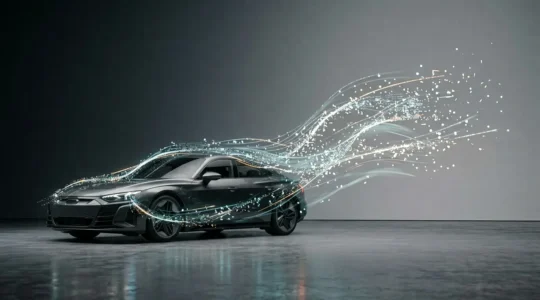
Who Actually Owns the Data Your Connected Car Generates?
The shocking truth is you don’t own your car’s data; automakers and third parties do, and they’re monetizing it. Your vehicle tracks everything from your weight to your driving style,…
Lire la suite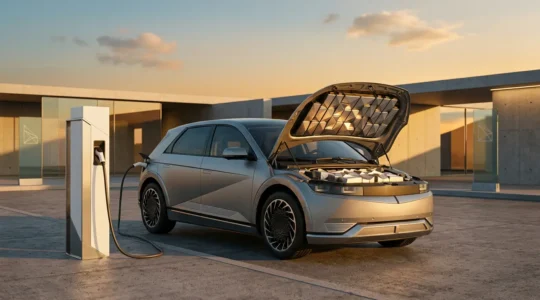
Should You Buy an EV Now or Wait for Solid-State Batteries?
Waiting for a solid-state EV means delaying years of gas-free driving for a technology that won’t be mainstream and affordable until the 2030s. Solid-state batteries promise revolutionary gains in range…
Lire la suite
LiDAR vs. Radar: Which Sensor Technology Is Safer in Heavy Rain?
While radar’s fundamental physics give it an inherent advantage, the critical safety determinant in adverse weather is not the sensor type alone, but the system’s quantifiable performance degradation under specific…
Lire la suite
How AI Prediction Models Reduce Fleet Accident Rates by 30%?
The key to drastically reducing accidents isn’t just monitoring drivers; it’s using AI to predict the complex chain of events—the risk cascade—that leads to a collision. AI analytics cut through…
Lire la suite
How to Retrofit Modern Tech into Classic Cars Without Ruining Their Value?
Retrofitting modern technology into a classic car is less about what you add and more about respecting the vehicle’s original engineering and knowing the critical decision points. True value preservation…
Lire la suite
How to Fix « Suspension Fault » Errors Without Replacing the Entire Shock Absorber?
The « Suspension Fault » warning light is often a misleading signal designed to sell expensive shocks, but the true failure is frequently a much cheaper electrical or sensor-related issue. Most « failed »…
Lire la suite
How to Safely Remap Your ECU for Better Fuel Economy Without Voiding Warranty?
Contrary to a widespread myth, remapping your ECU does not automatically void your entire vehicle warranty. Your warranty rights are often protected by consumer laws that require a manufacturer to…
Lire la suite
How to Distinguish Functional Aero Kits from Cosmetic Plastic That Increases Drag
True aerodynamic function is not determined by aggressive looks or expensive materials, but by visible evidence of sound engineering principles. Functional components show clear signs of managing airflow and have…
Lire la suite