Ecology & Sustainable Mobility
The way we move through cities and across countries is undergoing a fundamental transformation. From hybrid vehicles that blend combustion and electric power to cargo bikes replacing delivery vans in urban centers, sustainable mobility encompasses a vast ecosystem of technologies, techniques, and decisions that affect both our wallets and the planet.
Yet navigating this landscape can feel overwhelming. Should you charge your electric vehicle to 100%? Why does your hybrid lose efficiency in winter? What exactly is V2I technology, and will it ever reach your commute? These questions reflect real concerns from drivers, fleet managers, and businesses seeking to reduce their environmental footprint without sacrificing practicality.
This resource breaks down the essential pillars of ecology and sustainable mobility. Whether you own a hybrid struggling on highway drives, manage a fleet facing emission regulations, or consider switching delivery operations to cargo bikes, you will find foundational knowledge here. Think of this as your compass for greener transportation—helping you understand not just what solutions exist, but why they work and when they make sense for your situation.
Why Do Hybrid Vehicles Underperform in Certain Conditions?
Hybrid vehicles promise fuel savings by combining internal combustion engines with electric motors. The electric component shines during city driving—frequent stops allow regenerative braking to recapture energy that would otherwise be lost as heat. However, this efficiency advantage has limits that surprise many owners.
The Highway Efficiency Paradox
On highways, hybrids behave almost like conventional cars. Sustained high speeds require continuous power that the electric motor alone cannot provide, forcing the gasoline engine to do most of the work. The battery becomes dead weight rather than an efficiency booster.
Drivers who primarily commute on highways may find their fuel savings significantly lower than advertised figures suggest—sometimes achieving only marginally better economy than comparable gasoline-only vehicles.
Temperature’s Impact on Battery Performance
Cold weather presents another challenge. Lithium-ion batteries resist charging and discharging when temperatures drop, reducing available electric assistance by up to 30% in freezing conditions. The engine must compensate, burning more fuel.
Preconditioning the cabin while plugged in—letting the battery warm itself using grid power—can mitigate this loss. Many drivers skip this step without realizing its importance for winter efficiency.
Maximizing Efficiency Through Driving Modes
Understanding your hybrid’s driving modes transforms performance. Most vehicles offer several options:
- EV-only modes for short, low-speed distances
- Eco modes that favor the electric motor
- Power modes prioritizing throttle responsiveness
Knowing when to switch—saving EV mode for stop-and-go traffic rather than highway on-ramps—can mean the difference between achieving 50 MPG and falling short of 35 MPG.
How Do Emission Standards Affect Vehicle Performance?
Modern emission regulations impose strict limits on nitrogen oxides (NOx) and particulate matter. Meeting these standards requires sophisticated systems working in harmony: catalytic converters, diesel particulate filters (DPF), selective catalytic reduction (SCR) using AdBlue, and exhaust gas recirculation (EGR) valves.
The Hidden Cost of Non-Compliance
Tampering with emission systems—whether removing catalytic converters or blocking EGR valves—carries consequences beyond legal fines that can reach $2,500 or more during inspection. These modifications often hurt performance in unexpected ways.
Removing a catalytic converter actually reduces low-end torque because modern engines are tuned to work with specific backpressure. Blocking EGR increases combustion temperatures, accelerating NOx production and engine wear simultaneously.
Maintaining SCR and AdBlue Systems
For diesel owners, SCR systems require attention. AdBlue crystallizes when vehicles sit unused for extended periods or make only short trips under 50 miles weekly. These crystals clog injectors, triggering warning lights and reducing efficiency.
Prevention strategies include:
- Regular vehicle use with occasional longer drives
- Proper storage temperatures for AdBlue fluid
- Cleaning procedures for already-affected injectors
Balancing Power and Emissions
ECU remapping offers a tempting path to more power, but responsible tuning finds the sweet spot between performance and ecological compliance. Aggressive maps that ignore emission parameters create problems at inspections and accelerate catalyst degradation. Skilled tuners can improve throttle response while keeping emission systems functional.
What Charging Strategies Extend EV Battery Life?
Electric vehicle batteries represent significant investments, and charging habits directly influence their longevity. Understanding the chemistry behind lithium-ion cells helps explain why certain practices matter more than others.
DC Fast Charging vs. AC Charging
DC fast chargers push electricity directly into the battery at high rates, generating heat as electrons flow quickly. Frequent fast charging stresses battery cells more than slower AC charging. However, modern thermal management systems mitigate damage effectively.
The practical advice: use fast charging when needed for travel, but default to slower home charging for daily use.
Why Charging Slows After 80%
Charging speed drops dramatically as batteries approach full capacity. This happens because the final 20% requires careful voltage management to avoid damaging cells. Think of it like filling a glass of water—you can pour quickly at first, but must slow near the top.
For long trips, stopping at 60-80% and moving to another charger often gets you to your destination faster than waiting for a complete charge.
Temperature Management During Charging
Hot batteries charge slowly to protect themselves. Effective strategies include:
- Parking in shade before charging sessions
- Preconditioning before arrival at chargers
- Avoiding charging immediately after spirited driving
- In winter, preconditioning to warm the battery for faster charge acceptance
How Does V2I Technology Reshape Urban Driving?
Vehicle-to-Infrastructure (V2I) communication represents the next frontier in transportation efficiency. Your car receives data from traffic signals, adjusting speed recommendations to minimize stops. The dashboard suggesting 35 mph between lights is not arbitrary—it is calculated to catch green signals consecutively.
Current V2I implementations reduce idle time at red lights by approximately 20% in equipped corridors. This translates directly to fuel savings and reduced emissions. However, availability remains limited to specific cities and routes where infrastructure investment has occurred.
The technology also raises questions. Connected systems create potential cybersecurity vulnerabilities—researchers have demonstrated theoretical attacks that could manipulate signal timing. As deployment expands, security protocols must evolve alongside connectivity features.
Can Cargo Bikes Replace Delivery Vans?
Urban logistics face a paradox: delivery demand grows while cities restrict vehicle access and parking becomes scarcer. Cargo bikes—particularly electric-assisted models—offer a compelling alternative for last-mile delivery in dense areas.
Speed and Efficiency Advantages
In congested downtown environments, cargo bikes frequently outpace vans. They navigate narrow streets, bypass traffic jams, and park immediately at delivery points. Studies show cargo bikes completing more deliveries per hour than vans in city centers during peak traffic.
Cost Considerations
E-bikes require a fraction of the maintenance and fuel costs of diesel vans:
- No engine oil or transmission service
- No particulate filter regenerations
- Electricity costs typically under $1 per day
However, payload limitations restrict cargo bikes to lighter deliveries—they complement rather than replace van fleets entirely.
Practical Challenges
Operators must navigate legal considerations regarding parking, cycling lane access, and cargo requirements. Securing high-value goods on open cargo platforms demands creative solutions. Rider fatigue on hilly routes requires careful e-assist calibration and thoughtful route planning.
Which Eco-Driving Techniques Deliver Immediate Results?
Regardless of vehicle type, driving behavior significantly affects fuel consumption. Simple habit changes yield measurable savings without any modifications.
Coasting to stops rather than late braking preserves momentum and reduces fuel burned during subsequent acceleration. For diesel vehicles, shifting earlier—around 1,500-2,000 RPM rather than 2,500 RPM—keeps engines in efficient operating ranges.
Reducing highway speed from 65 to 55 mph can improve fuel economy by 15% or more, though this requires accepting longer journey times. The relationship between speed and fuel consumption follows an exponential curve—small speed reductions yield disproportionate savings.
The widespread warm-up practice—idling engines before driving—wastes fuel on modern vehicles. Contemporary engines reach operating temperature faster under light load than at idle. The most effective warm-up involves driving gently for the first few minutes.
Timing matters too. Avoiding rush hour reduces both idle time and the aggressive acceleration-braking patterns that heavy traffic encourages—benefiting fuel economy while reducing mechanical wear.
Sustainable mobility is not a single solution but an ecosystem of choices. Whether optimizing a hybrid’s efficiency, protecting an EV battery through thoughtful charging, keeping a diesel compliant with emission standards, or exploring cargo bikes for urban deliveries, each decision contributes to broader environmental goals. Start with what applies most directly to your circumstances, implement changes gradually, and measure results.
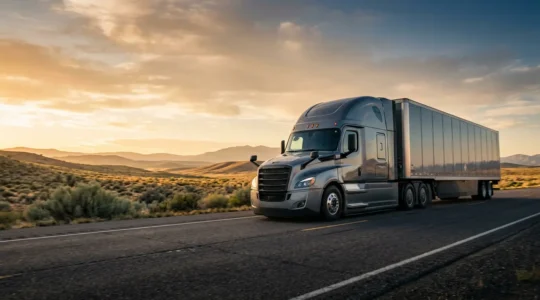
How to Reduce Fuel Consumption by 15% Without Buying New Trucks?
You can achieve significant fuel savings by transforming driver behavior, not by investing in new hardware. Mastering momentum through strategic coasting and anticipation is the single most effective way to…
Lire la suite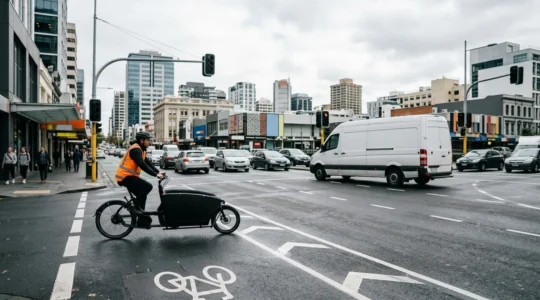
Cargo Bikes vs. Vans: Which Is Faster for Downtown Deliveries?
The debate isn’t just whether cargo bikes are cheaper—it’s that delivery vans are fundamentally inefficient for dense city logistics. Vans lose the last-mile race due to ‘dead time’: urban delivery…
Lire la suite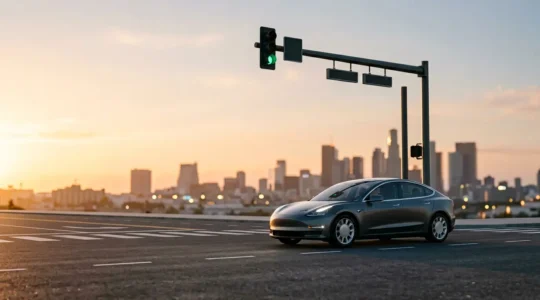
How V2I Technology Reduces Your Idle Time at Red Lights by 20%?
V2I technology reduces idle time not by simple countdowns, but by creating a predictive, coordinated traffic grid that re-engineers and optimizes city-wide flow. It enables Green Light Optimized Speed Advisory…
Lire la suite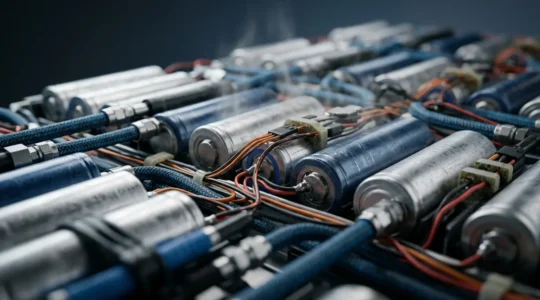
Does DC Fast Charging Degrade Your Battery Life More Than AC Charging?
The real threat to your EV’s battery isn’t DC fast charging itself, but how you use it; mastering a few key strategies has a far greater impact on long-term health…
Lire la suite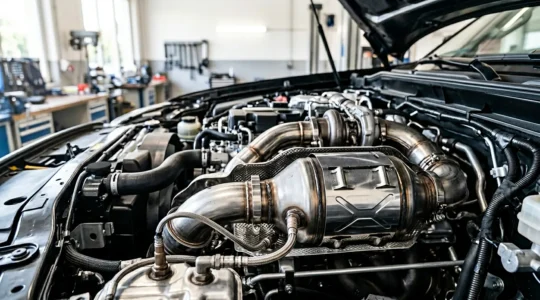
How to Legally Reduce NOx Emissions in Older Diesels and Avoid City Bans
In summary: Ignoring or deleting emission control systems is a short-term, illegal fix that often increases harmful NOx emissions and guarantees failure in Low Emission Zones (LEZ). True compliance comes…
Lire la suite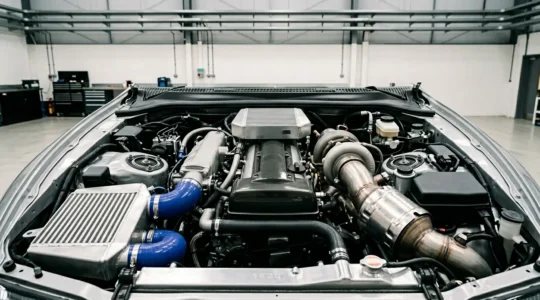
How to Maintain Peak Horsepower While Meeting Euro 6 Emission Standards
Contrary to popular belief, achieving Euro 6 compliance doesn’t require sacrificing horsepower; it demands a deeper understanding of emission system physics to unlock performance legally. Removing components like catalytic converters…
Lire la suite
Why Your Hybrid Vehicle Might Not Be Saving You Money on Highways?
The frustrating gap between your hybrid’s advertised MPG and its real-world highway performance isn’t your fault; it’s a misunderstanding of the vehicle’s core powertrain logic. Highway driving forces constant engine…
Lire la suite