Auto Parts & Accessories
Your vehicle contains thousands of individual components working together in precise harmony. Understanding these parts—what they do, when they fail, and how to choose replacements—transforms you from a passive car owner into an informed decision-maker. Whether you’re dealing with an unexpected repair, planning preventive maintenance, or considering performance upgrades, knowledge about auto parts saves money and prevents costly mistakes.
The automotive aftermarket industry offers overwhelming choices: OEM, OES, aftermarket, remanufactured, and performance parts all compete for your attention. Each category serves different needs and budgets. A wrong choice might void warranties, compromise safety, or simply waste money on unnecessary premium components. This resource breaks down the major categories of auto parts and accessories, explaining what matters most for each type and helping you navigate decisions with confidence.
From the precision components inside your engine to the GPS tracker protecting your vehicle from theft, every part tells a story about engineering trade-offs. Understanding these trade-offs puts you in control of your vehicle’s maintenance, performance, and longevity.
Engine Internal Components: Where Precision Meets Longevity
The engine represents the single most expensive assembly in your vehicle, and its internal components operate under extreme conditions. Temperatures exceeding 1,000°F, pressures above 1,000 PSI, and rotational speeds of 6,000+ RPM demand precision-engineered parts. Small deviations in component specifications create cascading failures.
Pistons, Rings, and Cylinder Wear
Piston rings maintain the critical seal between combustion chamber and crankcase. When ring gaps become excessive—even by fractions of a millimeter—oil consumption skyrockets. A vehicle consuming one quart of oil every 1,000 miles typically indicates ring wear or improper ring gap specifications. For turbocharged daily drivers, the forged versus cast piston debate matters significantly due to the additional thermal stress forced induction creates.
Crankshaft and Rotating Assembly
Subtle vibrations often signal crankshaft balance issues long before catastrophic failure. The crankshaft’s rotating mass must remain perfectly balanced; even small weight variations create harmonic vibrations that accelerate bearing wear. Quality replacement crankshafts undergo precise balancing procedures that budget alternatives often skip.
Valvetrain Components
Hydraulic lifters, camshafts, and timing components work in synchronized precision. That ticking sound from your engine bay often indicates collapsing hydraulic lifters—a warning that escalates from annoying to engine-damaging if ignored. Cylinder head longevity depends heavily on choosing valve-related components that meet genuine specifications, not just visual appearance.
Fuel and Air System Parts: The Hidden Efficiency Killers
Fuel efficiency depends on dozens of small components working correctly. Many drivers overlook these parts until fuel costs climb noticeably. Understanding which inexpensive components secretly drain your fuel budget enables proactive maintenance.
- O2 sensors: A sluggish oxygen sensor can waste approximately $200 annually in excess fuel by providing inaccurate readings to the engine computer
- Air filters: Restricted airflow forces the engine to work harder, though modern fuel-injected engines compensate better than carbureted predecessors
- Vacuum hoses: A simple $5 cracked hose creates rough idling and triggers rich fuel mixtures that hurt economy
- Spark plugs: Iridium plugs outlast copper significantly, making them cost-effective for daily commuters despite higher upfront prices
Fuel injector maintenance represents another overlooked area. Cleaner additives help, but understanding the appropriate mileage intervals for treatment prevents both under-maintenance and unnecessary expense.
Suspension and Steering: Safety You Cannot See
Suspension components deteriorate gradually, making failures easy to ignore until they become dangerous. That clunk over bumps isn’t just annoying—it potentially signals components approaching failure points where wheel separation becomes possible.
Control Arms and Their Materials
Stamped steel and aluminum control arms offer different performance characteristics. Steel absorbs impacts better and bends before breaking, while aluminum’s lighter weight improves handling but may crack under severe pothole strikes. Your driving environment should influence this choice.
Bushings: Rubber vs. Polyurethane
Rubber bushings provide the compliant, comfortable ride manufacturers engineer into vehicles. Polyurethane alternatives offer greater precision and durability but transmit more road noise and harshness. For comfortable daily driving, factory-style rubber often remains the better choice despite shorter lifespan.
Tie Rods and Critical Safety Components
Budget tie rod ends sometimes contain metallurgical flaws that remain invisible until emergency braking puts them under maximum stress. This represents one area where saving money creates genuine safety risks. Replacing chassis components in the correct sequence also prevents redundant labor costs—understanding this sequence saves significant money during comprehensive suspension refreshes.
OEM vs. Aftermarket: Understanding Your Options
The choice between OEM (Original Equipment Manufacturer), OES (Original Equipment Supplier), and aftermarket parts confuses many vehicle owners. Each category has legitimate applications depending on the specific component and your priorities.
When OEM Justifies the Premium
Crash-tested components like bumper reinforcements demonstrate measurable safety differences between genuine and generic parts. Body panels affect resale value disproportionately—paying 30% more for OEM panels typically returns that investment when selling the vehicle. Critical safety components warrant the OEM premium.
The OES Strategy
OES parts come from the same suppliers that manufacture OEM components but sell through independent channels at reduced prices. Understanding which parts share this origin lets you purchase genuine-quality components for significantly less than dealer pricing—sometimes half the cost.
Warranty Considerations
Concerns about warranty voiding often prove exaggerated. However, documenting that replacement parts meet specifications protects you during warranty claims. Understanding how to prove your oil filter didn’t cause engine damage prevents denial of legitimate warranty coverage.
Wheels: Engineering Beyond Aesthetics
Wheel selection involves engineering considerations beyond visual appeal. Weight, construction method, and dimensional specifications all affect vehicle behavior, durability, and even perceived performance.
Weight and Performance Perception
Reducing unsprung weight—mass not supported by suspension—dramatically improves acceleration feel. Saving 5 pounds per wheel creates responsiveness that drivers often describe as feeling like additional horsepower. This occurs because the engine no longer works as hard to rotate heavy wheels.
Construction Methods Compared
Cast, flow-formed, and forged wheels represent increasing levels of strength and cost:
- Cast wheels offer affordability but less strength-to-weight ratio
- Flow-formed wheels stretch cast barrels under pressure, improving strength while moderating cost
- Forged wheels provide maximum strength at premium prices typically reserved for performance applications
Fitment Calculations
Wheel offset determines how the wheel sits within the fender. Incorrect calculations lead to rubbing, accelerated bearing wear, or the need for fender modifications. Understanding bolt patterns, center bore, and offset prevents expensive fitment mistakes.
Brake Systems: More Than Just Stopping
Modern brake systems range from conventional steel rotors to exotic carbon-ceramic setups. Understanding your options prevents overspending on unnecessary technology while ensuring adequate stopping power.
Carbon-ceramic brakes offer weight savings and fade resistance but come with quirks: cold-morning squealing, reduced initial bite, and replacement costs exceeding $2,000 per rotor if damaged. For most daily-driven vehicles, quality conventional brakes provide adequate performance at a fraction of the cost.
Pad compound selection—ceramic versus semi-metallic—affects brake dust production, noise levels, and rotor wear. Ceramic compounds keep wheels cleaner but may sacrifice some cold-weather bite. Semi-metallic pads offer stronger initial response but create more dust and noise.
Performance Modifications: Legal Street Upgrades
Modifying vehicles for improved performance requires navigating legal requirements that vary by jurisdiction. Understanding these regulations prevents citations, failed inspections, and voided insurance coverage.
- Exhaust modifications: Resonated systems achieve improved sound without exceeding legal decibel limits that straight pipes violate
- Intake systems: CARB EO numbers certify that intake systems meet emissions requirements—lacking this certification creates inspection and insurance problems
- Suspension lowering: Improper alignment after lowering destroys tires within 2,000 miles; professional alignment following manufacturer specifications prevents this waste
- Brake upgrades: Big brake kits versus upgraded pads present different value propositions depending on your actual driving needs
Undeclared modifications may void insurance claims regardless of whether they contributed to an accident. Transparency with insurers protects your coverage.
Vehicle Security and GPS Tracking Accessories
Vehicle theft remains a persistent concern, and tracking technology has evolved significantly. Understanding different approaches helps protect your investment effectively.
GPS vs. Radio Frequency Tracking
GPS trackers provide precise location data but can be jammed by sophisticated thieves. Radio frequency alternatives work differently, offering complementary capabilities. Professional recovery services often recommend layered approaches using multiple technologies.
Installation Considerations
The OBD port—where mechanics plug diagnostic tools—represents the worst location for trackers despite convenient power access. Experienced thieves check this location first. Hardwired installations in less obvious locations dramatically improve recovery chances. For trailers and equipment requiring months of tracking without external power, specialized long-life battery units provide extended monitoring.
Legal and Ethical Boundaries
Tracking technology legally protects your property but becomes illegal when used to monitor people without consent. Understanding the legal distinction between anti-theft tracking and stalking prevents serious legal consequences.
When theft occurs, the first hour proves critical for recovery. Understanding when and how to activate recovery mode—and working effectively with law enforcement—maximizes the chances of getting your vehicle back intact.

GPS vs. Radio Frequency Trackers: Which Is Best for Recovering Stolen Cars?
Effective vehicle recovery is not a choice between GPS and RF; it’s the result of a layered security strategy that defeats a professional thief’s predictable attack sequence. Professional thieves anticipate…
Lire la suite
How to Mod Your Car for Performance—and Stay Street-Legal
The key to modifying your car without attracting police attention or voiding your insurance isn’t avoiding mods, but understanding and documenting your compliance with specific technical and legal thresholds. Legality…
Lire la suite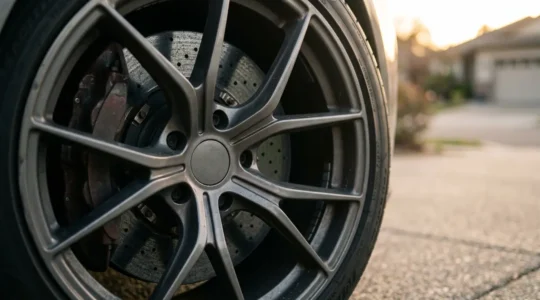
Are Carbon-Ceramic Brakes Worth the Cost for a Daily Driven Sports Car?
For most daily-driven sports cars, converting from carbon-ceramic to high-quality steel brakes is the smarter financial and practical choice. Carbon-ceramic brakes’ performance advantages are only realised at extreme temperatures that…
Lire la suite
How to Choose Alloy Wheels That Survive Potholes & Preserve Ride Quality
Choosing the right wheels for bad roads isn’t about sacrificing style for strength; it’s about understanding the physics of impact management as a complete system. Flow-formed wheels offer a smart…
Lire la suite
Why Paying 30% More for OEM Body Panels Protects Your Resale Value?
Your insurance company’s push for aftermarket parts is a calculated move to save them money now, at the direct expense of your vehicle’s future value and safety. Inferior aftermarket parts…
Lire la suite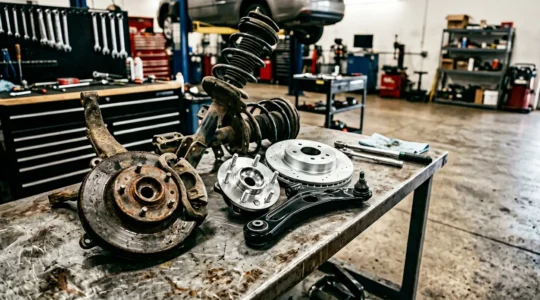
How to Cure Steering Wobble and Restore « New Car » Handling for Under $600?
Steering wobble is a critical safety warning from your car’s chassis, not a simple tire issue. The « clunk » you hear is often a ball joint on the verge of separation,…
Lire la suite
Which 3 Low-Cost Parts Are Secretly Ruining Your Gas Mileage?
Your car is likely wasting fuel not because of a major failure, but due to a few cheap, degraded components that operate silently in the background without triggering a check…
Lire la suite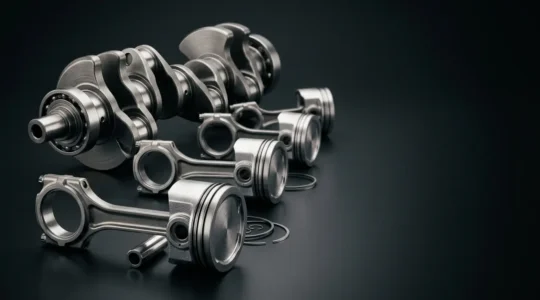
How to Extend Engine Life by 50,000 Miles Using Precision Components?
Achieving an extra 50,000 miles isn’t about magic additives; it’s about eliminating the microscopic failures that begin the day an engine is assembled. The physics of component interaction, where a…
Lire la suite