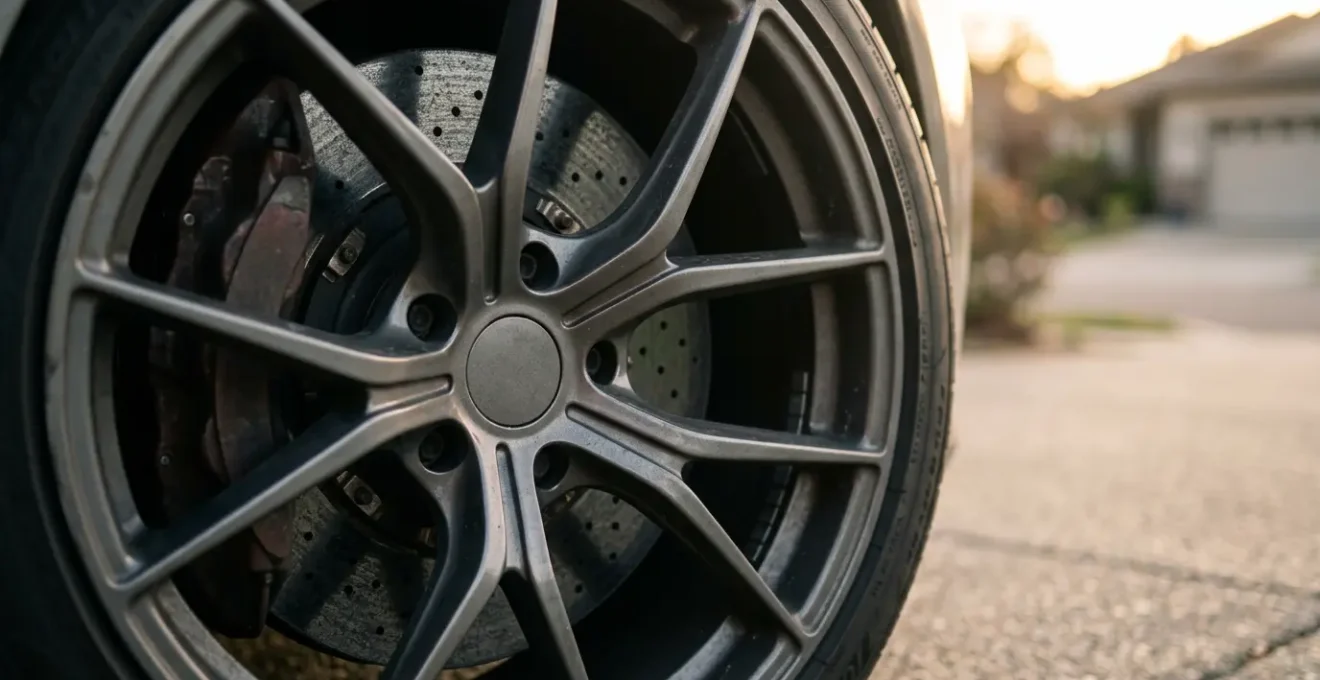
For most daily-driven sports cars, converting from carbon-ceramic to high-quality steel brakes is the smarter financial and practical choice.
- Carbon-ceramic brakes’ performance advantages are only realised at extreme temperatures that are rarely, if ever, reached on public roads.
- Their high replacement costs and vulnerability to expensive chipping during routine service like a tire change outweigh their benefits of low dust and long life for street use.
Recommendation: Opt for a professionally engineered iron rotor conversion kit. It delivers comparable street performance, eliminates cold-weather weakness and fragility risks, and significantly reduces long-term ownership costs.
That multi-thousand-dollar estimate for your sports car’s brake service is sitting on the passenger seat, and the number is hard to ignore. Your vehicle is equipped with carbon-ceramic brakes (CCBs), the pinnacle of automotive braking technology, once reserved for motorsport and supercars. They promise incredible performance and longevity, but now you’re faced with the reality of their ownership cost. As a service advisor for luxury vehicles, I see this scenario frequently. Owners are sold on the track-ready performance but live with the street-level compromises.
The common debate is « track vs. street, » but that’s too simplistic. The real question is whether the unique characteristics of CCBs align with the reality of daily driving—traffic, cold mornings, and the occasional pothole. The allure of minimal brake dust and a long theoretical lifespan is strong, but it comes with a set of operational quirks and financial risks that are often glossed over. The most significant of these are poor performance when cold and a shocking vulnerability to damage from seemingly minor mistakes.
But what if the choice isn’t just to accept the high cost or sell the car? This article moves beyond the spec sheet to give you a service advisor’s perspective on the practical realities of living with these brakes. We will dissect why they feel weak on a cold day, explore the safe way to convert to a more sensible steel system, and uncover the hidden pitfalls that can lead to a surprise $2,000 bill. This is not about convincing you that CCBs are « bad, » but about empowering you to decide if they are right for *your* use case, or if a switch to iron is the most logical path forward.
This guide will walk you through the critical factors to consider, from performance nuances to the real-world financial implications. By understanding the ‘why’ behind their behavior and costs, you’ll be equipped to make the best decision for your vehicle and your wallet.
Summary: The Daily Driver’s Dilemma: Evaluating Carbon-Ceramic Brakes
- Why Carbon-Ceramic Brakes Squeal and Feel Weak on Cold Mornings?
- How to Convert Carbon-Ceramic Rotors to Steel Without Upsetting the ABS?
- The Wheel Change Mistake That Chips Ceramic Rotors and Costs $2,000
- Ceramic vs. Semi-Metallic: Which Pad Compound Keeps Wheels Cleaner?
- When to Weigh Your Rotors: The Unique Wear Indicator of Carbon-Ceramics?
- Big Brake Kits vs. Upgraded Pads: Which Actually Stops Faster on the Street?
- Why Saving 5 lbs Per Wheel Feels Like Adding 20 Horsepower?
- Big Brake Kits vs. Upgraded Pads: Which Actually Stops Faster on the Street?
Why Carbon-Ceramic Brakes Squeal and Feel Weak on Cold Mornings?
That unnerving squeal as you pull out of your driveway, followed by a pedal that feels momentarily wooden and unresponsive, is one of an owner’s most common complaints. This isn’t a defect; it’s a fundamental characteristic of the technology. Unlike iron brakes that work consistently across a wide temperature range, CCBs are designed for peak performance at very high temperatures—temperatures you will never reach on your morning commute. Their effectiveness relies on establishing a proper friction interface between the pad and the rotor. For this to happen, a thin layer of pad material must be deposited onto the rotor’s surface. When the brakes are cold, this transfer layer is absent or incomplete.
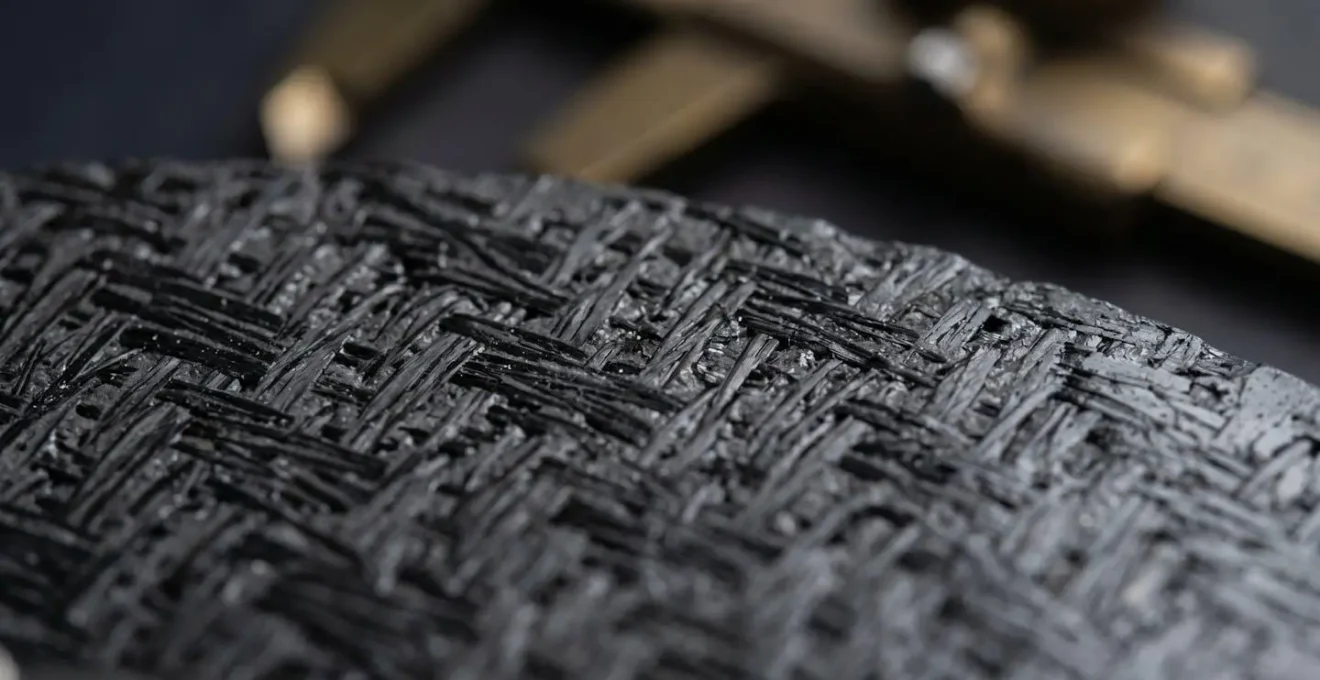
As you can see in the microscopic texture of the material, the interaction is key. Without heat, the pad simply scrapes against the hard silicon-carbide surface of the rotor, resulting in low friction, poor initial bite, and often, high-frequency vibrations that we hear as a loud squeal. This is especially pronounced in damp or cold conditions. Experienced owners, such as a Ferrari FF driver successfully using CCBs through Canadian winters, adopt a specific warm-up protocol. They drive gently for the first several minutes, using the brakes lightly and frequently to build up just enough heat to establish that crucial transfer layer before demanding full performance. This is the operational reality of CCBs: they require conscious adaptation from the driver that a standard iron system does not.
How to Convert Carbon-Ceramic Rotors to Steel Without Upsetting the ABS?
Given the compromises of CCBs for street use, converting to a high-quality iron rotor system is a very popular and logical path. However, it’s not as simple as swapping out the discs. A modern sports car’s safety systems, particularly the Anti-lock Braking System (ABS) and Electronic Stability Program (ESP), are deeply integrated and calibrated for the exact hardware installed at the factory. Simply changing rotor materials or sizes can have dangerous consequences for system integrity. The system’s computer expects a certain response from a given pedal input, and changing components alters that response.
As brake systems engineering experts point out, this can have a cascading effect on vehicle stability. In their technical guide, they state:
The ABS/ESP implements learning logic to modify the next control cycle based on the activity in the current control cycle, any time spent re-learning these characteristics will ripple through the control cycles, with possible impacts to stability, steerability, and stopping distance.
– Brake Systems Engineering Team, ABS and Brake Kit Fundamentals technical guide
The key is to choose an engineered conversion kit from a reputable manufacturer. These kits are not just generic iron discs; they are designed to mimic the exact dimensions (diameter and offset) of the original CCB rotors. This ensures that the factory caliper, brake lines, and, most importantly, the ABS/ESP programming, function exactly as intended. In a documented test, a vehicle’s performance with a Girodisc iron conversion was compared to the original CCBs. The data showed that braking G-force and pressure curves were virtually identical, proving that a well-engineered conversion provides the same braking performance with seamless ABS integration, all without needing expensive dealer recalibration.
The Wheel Change Mistake That Chips Ceramic Rotors and Costs $2,000
Perhaps the most significant, yet least discussed, downside of carbon-ceramic brakes for a daily driver is their fragility. Unlike iron rotors which are ductile and can withstand minor impacts, CCB rotors are extremely hard but also brittle. This creates a significant financial risk during the most routine service: changing a wheel. A single moment of carelessness by a technician—or you—can lead to a catastrophic failure. If a heavy wheel is not perfectly aligned with the hub studs and is allowed to slip and hit the edge of the rotor, it can easily cause a chip. The same risk exists if a lug wrench or a socket is dropped and hits the rotor.
A chip on the edge or surface of a CCB rotor is not a cosmetic issue. It compromises the structural integrity of the entire disc. Due to the immense forces and temperatures involved in braking, a chipped rotor is considered unsafe and cannot be repaired. The only solution is a full replacement, which can easily cost $2,000 to $5,000 for a single rotor. This is a painful lesson many owners learn the hard way. Tire shops unfamiliar with CCBs are a major source of this type of damage. Even shops that are aware of the risk must take extreme precautions, often using specialized guide pins and two technicians to ensure the wheel is mounted without ever touching the rotor’s surface.
For a daily driver that sees seasonal tire swaps or may need a flat repaired on the road, this inherent fragility adds a layer of anxiety and potential cost that simply doesn’t exist with a robust iron brake system. It’s a prime example of a track-focused benefit (extreme hardness) becoming a real-world liability.
Ceramic vs. Semi-Metallic: Which Pad Compound Keeps Wheels Cleaner?
One of the most praised benefits of a factory CCB system is the almost complete lack of visible brake dust. The pads formulated for carbon-ceramic rotors produce a very fine, light-colored dust that doesn’t cling to wheels, keeping them looking pristine. This is a major aesthetic advantage for any owner. However, when considering a conversion to iron rotors, the choice of brake pad becomes critical to either maintaining this benefit or accepting a trade-off. The two most common pad compounds for performance street use are ceramic and semi-metallic.
Ceramic pads are the champions of cleanliness. They are engineered with dense ceramic materials and non-ferrous fibers. Like their CCB-specific cousins, they produce a light-colored, non-adhesive dust that is far less visible on wheels. They also offer smooth, quiet operation and are very kind to the surface of the rotors, promoting longer life. For a daily-driven luxury sports car where low noise and clean wheels are a priority, high-quality ceramic pads are the ideal choice to pair with an iron rotor conversion. They best replicate the low-dust experience of the original CCB system.
Semi-metallic pads, on the other hand, are built for performance above all else. They contain a high percentage of steel, copper, and other metallic fibers. This composition provides excellent heat transfer and a much higher friction coefficient, resulting in a stronger initial bite and superior fade resistance at high temperatures. The downside is significant: they produce a heavy, dark, and sticky dust that will quickly coat your wheels. They also tend to be noisier and wear rotors more quickly than ceramic pads. While they offer more aggressive performance, that performance is typically far beyond what is necessary or usable for street driving, making the trade-off in dust and noise a poor one for a daily driver.
When to Weigh Your Rotors: The Unique Wear Indicator of Carbon-Ceramics?
With traditional iron brakes, assessing wear is simple. You look for a minimum thickness, often stamped on the rotor hub, and measure it with calipers. CCBs, however, wear in a completely different way. Their long life is not due to superior abrasion resistance but to their ability to withstand extreme heat. The primary wear mechanism is not friction but oxidation—at extreme temperatures, the carbon fiber matrix within the rotor literally burns away, turning into a gas. This means the rotor loses mass and density over time, but its thickness remains almost unchanged. Visually inspecting a CCB rotor tells you very little about its remaining life.
This leads to the unique service procedure for CCBs: weighing them. Manufacturers specify a minimum allowable mass for each rotor. During a major service, the rotor must be removed from the car and placed on a precise scale. If its weight is below the minimum threshold, it has lost too much of its internal carbon structure to safely dissipate heat and must be replaced, even if it looks perfect. This is a non-negotiable safety measure. In addition to weight, technicians also look for specific wear markers—small dots embedded in the rotor surface. As the rotor wears, these dots become less visible. Once they are gone, it’s another clear indication that the rotor has reached the end of its service life.
Action Plan: Auditing Your CCB Suitability
- Track Your Trips: For one week, log every car trip. Note how many are short (under 10 minutes) vs. long (over 30 minutes). A high percentage of short trips means your brakes rarely reach optimal temperature.
- Document Usage: Note how often you need to brake hard versus gently coasting in traffic. CCBs need occasional hard stops to keep the rotor surface clean; constant gentle use can lead to glazing.
- Assess Your Environment: Do you frequently drive on roads with loose gravel or in areas with heavy construction? This increases the risk of debris causing a catastrophic chip.
- Review Service History: How many times per year do you swap wheels (e.g., for winter tires)? Each swap is a risk event. Tally the number of tire shop visits.
- Cost-Benefit Calculation: Get a quote for an iron conversion kit (rotors + pads). Compare this one-time cost to the price of a single replacement CCB rotor. This number will put your financial risk into clear perspective.
This complex wear process debunks the myth that CCBs « last forever » in all conditions. While they can have a very long life under ideal (track) conditions with proper heat cycling, their life in a daily driving scenario is much harder to predict and is not immune to wear.
Big Brake Kits vs. Upgraded Pads: Which Actually Stops Faster on the Street?
There’s a common misconception that bigger brakes and larger rotors automatically mean shorter stopping distances. This leads many to believe that a Big Brake Kit (BBK) with massive multi-piston calipers is the ultimate street upgrade. While BBKs are essential for track cars that need to manage extreme heat over many laps, their primary benefit is fade resistance, not a dramatic reduction in a single 60-0 mph stop. On the street, you will almost never generate enough heat to cause a modern, well-maintained factory brake system to fade.
The single most important factor determining your car’s stopping distance from a legal speed is your tires. Your brakes don’t stop the car; they stop the wheels. It’s the four small contact patches of rubber on the pavement that do the actual work of decelerating the vehicle. As long as your brake system has enough force to engage the ABS—which virtually any modern performance car system can do with ease—the ultimate limit on braking is tire grip, not brake torque. A BBK doesn’t increase tire grip.
Therefore, for street driving, the most effective and cost-efficient way to improve braking « feel » and initial bite is not a multi-thousand-dollar BBK, but a simple pad upgrade. Changing from a standard OEM pad to a high-performance street pad (either ceramic for low dust or semi-metallic for aggressive bite) can completely transform the character and responsiveness of your brake pedal for a fraction of the cost. You get a sharper, more confident feel without adding unnecessary weight or complexity. For street use, investing in high-quality tires and the right pad compound will yield far more noticeable results in stopping performance than simply increasing rotor size.
Key takeaways
- Carbon-ceramic brakes’ benefits are primarily for high-heat track use; they offer compromises (cost, fragility, cold performance) for daily driving.
- A properly engineered iron rotor conversion offers comparable street performance and safety while drastically reducing ownership costs and risks.
- For street use, stopping power is limited by tire grip, not brake size. Upgrading pads and tires is more effective and economical than a Big Brake Kit.
Why Saving 5 lbs Per Wheel Feels Like Adding 20 Horsepower?
While the focus is often on the stopping power of brakes, the weight of the brake components themselves has a profound impact on a car’s overall performance. This is due to the concept of unsprung mass. Unsprung mass is the weight of all components not supported by the vehicle’s suspension, which includes the wheels, tires, and brake assemblies. Reducing this weight pays dividends in acceleration, handling, and ride quality that are far more significant than a similar reduction in « sprung » weight (like the body or interior).
The reason it feels so impactful is rotational inertia. A lighter wheel and brake rotor require less energy to spin up (accelerate) and slow down (brake). This is where carbon-ceramic brakes have a massive advantage. For example, testing on a BMW M4 revealed that CCB rotors save approximately 15 pounds per corner compared to their iron counterparts. That’s a total of 60 pounds of unsprung, rotating mass. A common rule of thumb in performance circles is that every 1 pound of unsprung weight reduction is equivalent to a 4-8 pound reduction in sprung weight in terms of its effect on handling.
This reduction allows the suspension to work more effectively, keeping the tire in better contact with the road over bumps and imperfections. The result is a car that feels more nimble, turns in more sharply, and responds more quickly to driver inputs. While « feels like adding 20 horsepower » is an anecdotal expression, it captures the tangible improvement in acceleration and responsiveness that comes from freeing the engine from the task of spinning up heavy components. This is one of the few undisputed benefits of CCBs that can be appreciated on the street, though it comes at a significant cost when converting *to* steel, as you are re-introducing that weight to the system.
Big Brake Kits vs. Upgraded Pads: Which Actually Stops Faster on the Street?
We’ve established that for a single stop, tire grip is the limiting factor, making pad choice more critical than rotor size. But what about the core purpose of a Big Brake Kit (BBK)—managing heat and resisting fade? This is where the context of « street driving » is paramount. Brake fade occurs when components get so hot that the pads can no longer effectively grip the rotor. This is a very real danger on a racetrack after several consecutive laps of braking from 150 mph. On public roads, this scenario is virtually non-existent.
A BBK is a heat management solution. Its larger rotors act as bigger heat sinks, and its multi-piston calipers distribute pressure more evenly, all to endure lap after lap of punishment. But for a daily driver, even an aggressively driven one on a canyon road, you are not performing repeated, maximum-G braking maneuvers from triple-digit speeds. The time between corners and the lower energy levels involved mean your stock performance brakes (even an iron system) have more than enough time to cool down and operate well within their intended temperature range. You are paying a premium for a thermal capacity you will never use.
The argument again returns to the pads. A high-quality performance street pad provides a much higher friction coefficient and better initial bite than a standard pad. This translates to a more immediate and confident braking feel, which is often misinterpreted as « stopping faster. » While the ultimate stopping distance may not change (it’s still limited by tires), the pedal response is dramatically improved. Upgraded pads, paired with high-performance brake fluid to prevent boiling under spirited driving, offer 99% of the perceivable performance benefits of a BBK on the street, for about 10% of the cost. For the sports car owner who primarily drives on the road, investing in a BBK is an exercise in aesthetics, not a practical performance upgrade.
As a service advisor, my goal is to align your vehicle’s setup with your actual usage. For the vast majority of sports car owners, the daily-driving equation points away from the exotic appeal of carbon-ceramics and toward the robust, predictable, and financially sensible performance of a high-quality iron system. The decision is yours, but it should be an informed one.