
The constant battle with your Lane Keep Assist isn’t your fault; it’s a design flaw in how the system communicates.
- Most systems are rigid, rule-based followers, not intelligent co-pilots that understand nuance.
- Environmental factors (rain, faded markings) and hidden calibration drift drastically reduce reliability.
Recommendation: Mastering this technology means learning its rigid logic, anticipating its failures, and knowing precisely when to turn it off to reclaim control.
That sudden, unwelcome tug on the steering wheel feels like a phantom force. You’re driving carefully on a familiar country road, giving a wide berth to the crumbling edge, when the car decides it knows better, nudging you back toward the center. This constant fight between driver and machine is a common, frustrating, and potentially dangerous experience for anyone who drives with modern Advanced Driver-Assistance Systems (ADAS) outside of pristine, multi-lane highways. The promise of safety becomes a source of annoyance and mistrust.
Most explanations for these systems are simplistic, boiling down to « it helps you stay in your lane. » But this fails to address the core of the problem. The technology isn’t a thinking co-pilot; it’s a rigid, rule-based algorithm following a simple command: stay between the painted lines it sees. It doesn’t understand context, like potholes, cyclists, or the need for a ‘courtesy dodge’. The conflict you feel is a fundamental breakdown in human-machine communication.
The key to ending this struggle isn’t just finding the ‘off’ button. It’s about understanding the system’s simplistic « language » and its operational limits. This article, from the perspective of a vehicle usability tester, will deconstruct the technology. We’ll explore the critical difference between a warning and an intervention, show you how to manage the system in confusing scenarios like construction zones, explain why it quits in the rain, and empower you to know when the safest action is to disable it entirely. It’s time to go beyond the marketing and learn how to truly master the technology in your car.
To navigate this complex topic, we’ve broken down the key issues you’re facing. This guide will provide a clear, user-focused analysis of how to manage your vehicle’s lane-keeping technology for both safety and comfort.
Summary: Lane Assist on Narrow Roads: Helpful Safety Feature or Dangerous Annoyance?
- Lane Departure Warning vs. Lane Keep Assist: Which Is Safer for You?
- How to Configure Lane Assist So It Doesn’t Fight You in Construction Zones?
- Why Lane Assist Quits When It Rains and How to React?
- The Steering Mistake That Causes Your Car to Bounce Between Lines
- When to Turn It Off: Situations Where Lane Assist Increases Risk?
- When to Calibrate ADAS: Is It Necessary After a Wheel Alignment?
- How Smart Signs Detect Black Ice Before You Can See It?
- Why Your Lane Keep Assist Pulls to the Right After Windshield Replacement?
Lane Departure Warning vs. Lane Keep Assist: Which Is Safer for You?
The first step to regaining control is understanding that « Lane Assist » is a catch-all term for two fundamentally different systems: one that talks to you (LDW) and one that acts for you (LKA). Lane Departure Warning (LDW) is a passive informant. If you drift over a lane marking without signaling, it alerts you with a beep, a visual warning, or a vibration in the steering wheel or seat. You remain in 100% control; the system merely provides information. Lane Keep Assist (LKA), by contrast, is an active intervention. It applies gentle steering torque to physically nudge the vehicle back toward the center of the lane. This is the system that « fights » you.
While both aim to improve safety, their real-world usability differs dramatically. Data does show that these systems have a positive impact, with LDW alone being associated with an 11% reduction in single-vehicle, sideswipe, and head-on crashes. However, the nature of the alert or intervention is critical. As vehicle technology manager Kelly Funkhouser noted for Consumer Reports, drivers often have strong preferences.
Drivers prefer systems that have a steering wheel or seat vibration over those that have an audible beep. However, the steering wheel in many Honda and Acura vehicles shudders so much that it can feel like you’re losing control of the steering wheel.
– Kelly Funkhouser, Consumer Reports, Manager for Vehicle Technology
This highlights the critical usability issue: a poorly implemented « safety » feature can feel more dangerous than the problem it’s trying to solve. The choice between a simple warning and an active, steering intervention depends entirely on your driving environment and tolerance for automation. For narrow, unpredictable roads, an informative LDW is often superior to a combative LKA. The following table breaks down the core differences.
| Feature | Lane Departure Warning (LDW) | Lane Keep Assist (LKA) |
|---|---|---|
| Intervention Type | Passive – alerts only | Active – steering correction |
| Warning Method | Visual, audible, or haptic alerts | Gentle steering torque + optional alerts |
| Driver Control | Full driver control maintained | Shared control with override capability |
| Best Use Case | Engaged driving on varied roads | Highway driving, reducing fatigue |
| Risk Profile | Alert fatigue / ignored warnings | Automation complacency / reduced awareness |
How to Configure Lane Assist So It Doesn’t Fight You in Construction Zones?
Construction zones are a nightmare for lane-keeping systems. The technology relies on a simple visual algorithm: find the brightest, most consistent lines and stay between them. A construction zone presents a chaotic mix of old, faded lines; new, temporary tape; orange cones; and uneven pavement. The system has no real-world understanding and can become dangerously confused, locking onto a temporary line that leads you directly into a barrier or another lane of traffic. This is where the « fight » with the wheel becomes most pronounced and perilous.
The key to navigating these areas isn’t to fight back harder, but to proactively manage the system. Most vehicles offer configuration options, often buried in a touchscreen menu. You can typically adjust the system’s sensitivity (how close to the line you get before it intervenes) or the strength of the warning/intervention. For construction zones, setting sensitivity to « Low » or « Late » can prevent it from overreacting to every confusing marking. However, the most effective tool is often the temporary override button, usually found on the steering wheel, which allows you to instantly disable the system without taking your eyes off the road.

When faced with the confusing visual data shown above, the system’s logic is put to the test. Understanding how to preempt its flawed decision-making is crucial. Rather than fighting its corrections, proactive management is a safer strategy:
- Identify the Override: Find the temporary disable button on your steering wheel (often an icon of a car between lanes). This is your quickest escape from a bad correction.
- Predict the System’s Target: Observe the dashboard display. It usually shows which lines the camera has « seen » and locked onto. This helps you predict which way it will try to steer.
- Anticipate and Guide: Make small, early steering inputs to position the car where you want it before the system has a chance to make a large, aggressive correction.
- Know Its Bias: Most systems will prioritize the brightest or leftmost line when confused. If you understand this simple rule, you can better anticipate its actions.
- When in Doubt, Turn It Off: In truly chaotic multi-line situations, the safest move is to disable the system entirely until you are back on clearly marked roads.
Why Lane Assist Quits When It Rains and How to React?
Just when you might need it most—on a slick road with reduced visibility—is often when Lane Assist gives up, typically displaying a « Lane Keeping System Unavailable » message. This isn’t a random glitch; it’s a programmed-in limitation. The system’s « eyes » are a camera, and like human eyes, they struggle in bad weather. Rain is a primary culprit, creating multiple points of failure that render the system unreliable and, in some cases, completely blind.
The core problem is that rain degrades the quality of the visual information the camera receives. A layer of water on the road can obscure the painted lines, while heavy downpours create a curtain that the camera can’t see through. Reflections from wet pavement can also create « ghost » lines that confuse the algorithm. The system is designed to recognize when it’s receiving poor data and will disable itself rather than make a dangerous, uninformed decision. Testing from AAA confirms this vulnerability, revealing a startling failure rate. In simulated rain conditions, their test vehicles experienced a 69% lane departure rate, meaning the system failed to keep the vehicle in its lane nearly 7 out of 10 times.
As Greg Brannon, AAA’s Director of Automotive Engineering, explains, this is an inherent weakness of current sensor technology. The systems are fundamentally dependent on clear environmental conditions.
Vehicle safety systems rely on sensors and cameras to see road markings, other cars, pedestrians and roadway obstacles. So naturally, they are more vulnerable to environmental factors like rain.
– Greg Brannon, AAA Director of Automotive Engineering and Industry Relations
So how should you react when the system quits? The answer is simple: do not rely on it in the first place when conditions are poor. The moment it starts raining, you should mentally downgrade Lane Assist from a « co-pilot » to an « unreliable passenger. » Increase your following distance, reduce your speed, and keep both hands firmly on the wheel. The system’s deactivation is not a failure you need to troubleshoot; it is the car’s way of telling you that conditions have exceeded its operational design and that you, the human driver, must resume full and undivided responsibility for control.
The Steering Mistake That Causes Your Car to Bounce Between Lines
One of the most unsettling behaviors of Lane Keep Assist is the « ping-pong » effect, where the car seems to bounce from the left lane line to the right and back again. While system sensitivity plays a role, this oscillation is often caused or exacerbated by a specific steering mistake: fighting the system with quick, jerky corrections. The driver feels a nudge, instinctively corrects back, overshoots the center, and the system nudges again from the other side, creating a continuous feedback loop of instability.
This happens because the driver and the system are speaking different languages. The system applies a small, sustained torque. The driver, feeling this unfamiliar input, often reacts with a sharp, opposing force. The system’s torque sensor interprets this sharp input as a deliberate command, relinquishes control, and then re-engages once the car starts drifting again. The secret to stopping the bounce is to change your own steering inputs from reactive jerks to calm, proactive guidance. You need to think of yourself not as wrestling with the wheel, but as guiding a partner who is strong but not very smart. A relaxed but firm grip is essential; the system needs to feel constant, gentle pressure to know you’re engaged and not asleep at the wheel.
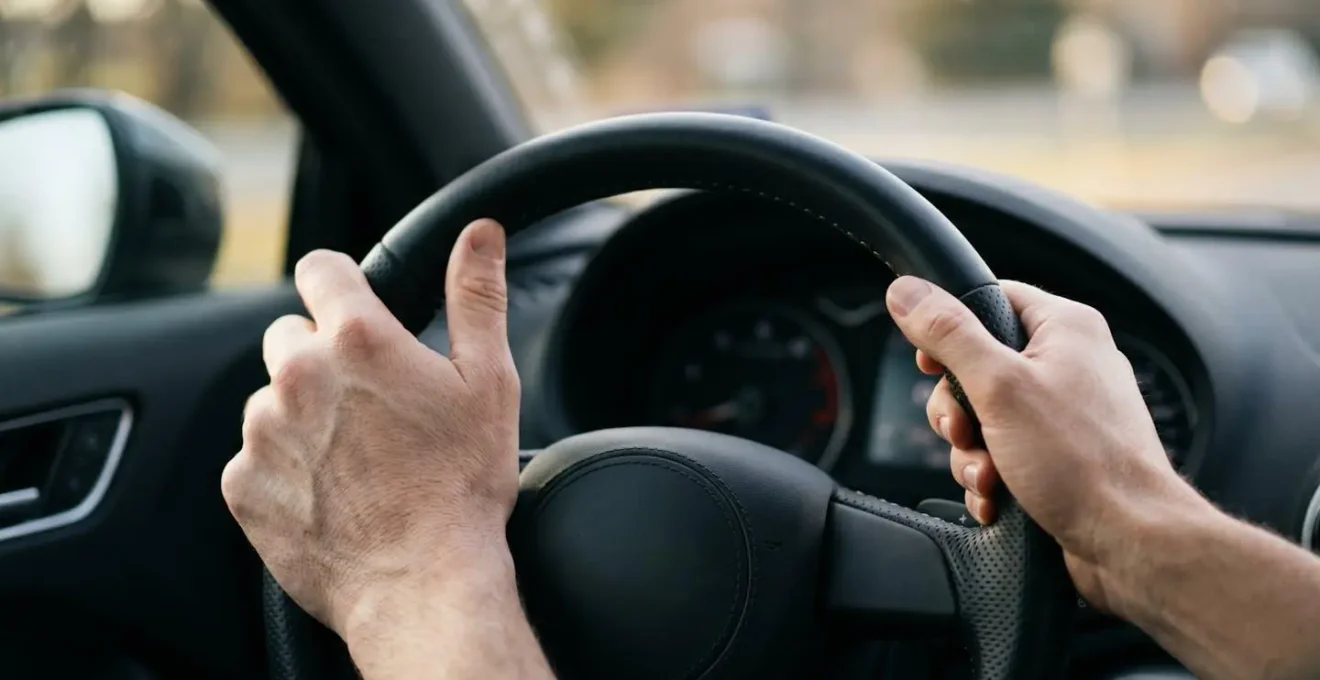
To break the cycle of oscillation and create a smoother ride, you must adjust your steering philosophy. Adopt these techniques to work with the system, not against it:
- Lead with Calm Pressure: Instead of quick, sharp movements, apply deliberate, sustained steering pressure to guide the car where you want it to go.
- Maintain a Gentle Grip: Avoid a « white-knuckle » grip. A relaxed hold allows you to feel the system’s inputs without an immediate, oppositional reaction.
- Don’t Fight Mid-Correction: When the system starts to provide steering input, let it complete its small action. Fighting it halfway through only confuses the logic and leads to the ping-pong effect.
- Think « Small Rudder, Big Boat »: Imagine you’re steering a large ship. Small, early inputs are far more effective and stable than large, late corrections.
- Allow a System Reset: If oscillation begins, sometimes the best course is to take your hands off the wheel for a brief moment (on a safe, straight road) and let the system complete one full correction cycle. This can help it reset its baseline.
When to Turn It Off: Situations Where Lane Assist Increases Risk?
A core tenet of usability testing is understanding that no technology is infallible. A good safety system must not only work well when conditions are ideal but must also be designed to fail gracefully or be easily overridden when it becomes a liability. For Lane Keep Assist, there are several common, real-world driving situations where the system’s rigid adherence to its « stay-in-the-lines » programming actually increases risk. In these moments, the safest and smartest action is to temporarily or completely disable the feature.
The most common dangerous scenario is the « courtesy dodge. » This is when a driver intentionally moves to the edge of their lane to give more space to a cyclist, a pedestrian on the shoulder, or a vehicle pulled over. The LKA system, seeing only the lane line, interprets this as an unintended departure and will actively try to « correct » your steering, pushing you back toward the very hazard you are trying to avoid. This creates a dangerous conflict where you are fighting the car for control at a critical moment. Similar issues arise on narrow country roads with no shoulder or a sharp drop-off, where the system’s desire to be perfectly centered can place your tires uncomfortably close to the edge.
This user frustration was perfectly captured in a report to Consumer Reports, where a driver highlighted the system’s lack of real-world intelligence.
A 2020 Mazda CX-5 owner reported frustration with the system’s inability to distinguish intentional lane position adjustments: ‘I wish the system could sense potholes, objects on the road, pedestrians and bicyclists that are not in your travel lane, but require you to shift over. The lane departure warning and lane keep assist are the only safety features I don’t like.’
– , Consumer Reports
Recognizing these high-risk scenarios is a critical driving skill. You should be prepared to disable Lane Keep Assist when you encounter:
- The need to perform a « courtesy dodge » for cyclists, pedestrians, or parked cars.
- Driving on roads with sharp drop-offs and no shoulder.
- Navigating construction zones with temporary or conflicting lane markings.
- Driving in narrow lanes where perfect centering places you too close to adjacent traffic or oncoming vehicles.
- Experiencing heavy rain, snow, or fog where the camera’s vision is compromised and its behavior becomes unpredictable.
When to Calibrate ADAS: Is It Necessary After a Wheel Alignment?
Yes, absolutely. Thinking you can get a wheel alignment without recalibrating your ADAS is a critical and common mistake. The forward-facing camera used by your Lane Keep Assist is not just looking at the road; it’s calibrated to a precise understanding of your car’s « sense of straight. » When a technician performs a wheel alignment, they change the angle of the wheels relative to the vehicle’s chassis. Even a tiny, one-degree adjustment, while perfect for your tires, has now made the camera’s stored « straight-ahead » direction incorrect. The camera thinks it’s looking straight, but it’s actually looking slightly to the side. This calibration drift is why a car can suddenly start pulling to one side after a routine service.
This calibration is not optional; it’s a mandatory final step for many common services. A reputable shop will know this and include it in the service, but you must be an informed consumer. Calibration is required after any procedure that affects the vehicle’s geometry or the camera’s position. This isn’t limited to just wheel alignments. You should insist on or verify ADAS calibration after:
- Wheel alignment: The most common and most overlooked trigger.
- Suspension changes: Anything that alters ride height (e.g., new shocks, lift kits) changes the camera’s viewing angle.
- Tire size changes: Different diameter tires alter the car’s geometry and require recalibration.
- Any collision: Even a minor fender bender can knock a sensor out of alignment, even if there’s no visible damage.
- Windshield replacement: The camera is almost always mounted to the windshield, and it must be precisely recalibrated when moved to new glass.
If you notice your system behaving erratically after a service, don’t assume the feature is broken. It’s likely a symptom of a miscalibration. Watch for a consistent pull to one side on a flat road, the system deactivating more frequently for no reason, or a noticeable change in how aggressively or late it reacts. These are all signs that the system needs to be professionally recalibrated to the car’s new geometry.
How Smart Signs Detect Black Ice Before You Can See It?
The limitations of today’s Lane Keep Assist systems—their blindness to rain, confusion in construction zones—all stem from the same core problem: they are purely reactive. The camera sees a line, and the car reacts. It has no foresight and no understanding of the road conditions ahead. The future of this technology, however, lies in shifting from a reactive model to a predictive one, using a technology called Vehicle-to-Infrastructure (V2I) communication.
Imagine approaching a bridge on a cold morning. Your car’s camera can’t see black ice, and by the time your tires feel the slip, it may be too late. In a V2I-enabled future, the bridge itself would be « smart. » Embedded road sensors would detect the temperature and moisture conditions that create black ice. This « smart sign » or sensor node would then broadcast a digital warning signal to all approaching vehicles. Your car wouldn’t need to *see* the ice; it would *know* it’s there hundreds of meters in advance. This allows the vehicle’s ADAS to become an intelligent co-pilot with environmental foresight, moving beyond simple line-following.
Case Study: Vehicle-to-Infrastructure (V2I) for Predictive ADAS
Current lane-keeping systems are fundamentally limited by what their cameras can physically see. V2I technology breaks this limitation by allowing the car to receive data from the roadway itself. For example, a smart sign’s sensors could detect black ice and transmit a data packet to approaching vehicles with a specific recommendation: ‘Black ice detected 500m ahead. Disable Lane Keep Assist, pre-charge braking system, alert driver.’ This transforms the ADAS from a dumb, reactive tool into an intelligent system that can proactively adjust its behavior based on invisible, upcoming hazards, a concept detailed in discussions of advanced autonomous lane assistance systems.
This predictive capability is the next frontier. It addresses the fundamental flaw of current systems: their lack of context. By receiving data about traffic flow, accidents ahead, or dangerous road conditions like black ice, the car can make smarter, safer decisions. It could automatically disable Lane Keep Assist before entering a known hazardous area or adjust its sensitivity based on real-time information, finally moving beyond the simple, often flawed, task of just following painted lines.
Key takeaways
- Lane Keep Assist (LKA) is an active steering system, not just a warning; this is the source of the « fight ».
- System performance degrades significantly in rain, with poor markings, and without proper calibration.
- You must learn to proactively manage the system—and know when to turn it off—to remain safe.
Why Your Lane Keep Assist Pulls to the Right After Windshield Replacement?
Your car has just had its windshield replaced, and now, inexplicably, the Lane Keep Assist constantly pulls to the right. This isn’t your imagination; it’s a direct and dangerous consequence of an incomplete repair job. The forward-facing camera that controls your LKA is mounted to the windshield glass. When the technician replaces the glass, the camera must be detached and then re-bonded to the new shield. If this mounting is off by even a single millimeter, or if the camera is not electronically recalibrated to the vehicle’s centerline, the entire ADAS suite will be working with flawed information. The car will have a permanent, built-in directional bias.
The problem can also stem from the quality of the glass itself. Cheaper aftermarket windshields may have subtle optical distortions that are invisible to the naked eye but can warp the camera’s view of the road, causing permanent performance issues that no amount of recalibration can fix. As the experts at Glass Doctor note, ADAS technology is sensitive and requires precise service. You, the vehicle owner, must hold the repair shop accountable for performing this critical step. Don’t let them tell you it’s « not necessary. » It is mandatory.
If you find yourself in this situation, you need to approach the repair shop with specific, informed language. Do not just say « it feels weird. » You need to demonstrate that you understand the technical failure and will not accept an incomplete job. Be firm and use a clear, escalating script to demand the service you paid for.
Action plan: Windshield Installer Accountability
- State the problem clearly: « The vehicle exhibits a consistent directional bias post-windshield replacement, which indicates a failure in the ADAS calibration. »
- Question their process: « Can you confirm you used a dynamic or static OEM-spec calibration target for the recalibration process? »
- Request the proof: « Please provide the calibration report that shows the final camera alignment parameters and confirms a successful calibration. »
- Verify the materials: « Was OEM (Original Equipment Manufacturer) or OEM-equivalent (OEE) glass installed? Optical distortions in low-quality aftermarket glass can cause these issues. »
- Demand a resolution: « The system’s performance is not to specification. I require a complete re-evaluation of the camera mounting and a full recalibration with the proper OEM targets at no additional charge. »
By understanding that your lane-keeping system is a simple tool, not a brilliant co-pilot, you can shift from being a frustrated victim of its flaws to an empowered operator who knows how to manage its behavior. Take these steps to diagnose issues, demand proper service, and ensure the technology in your car is serving you, not fighting you. Your safety depends on it.