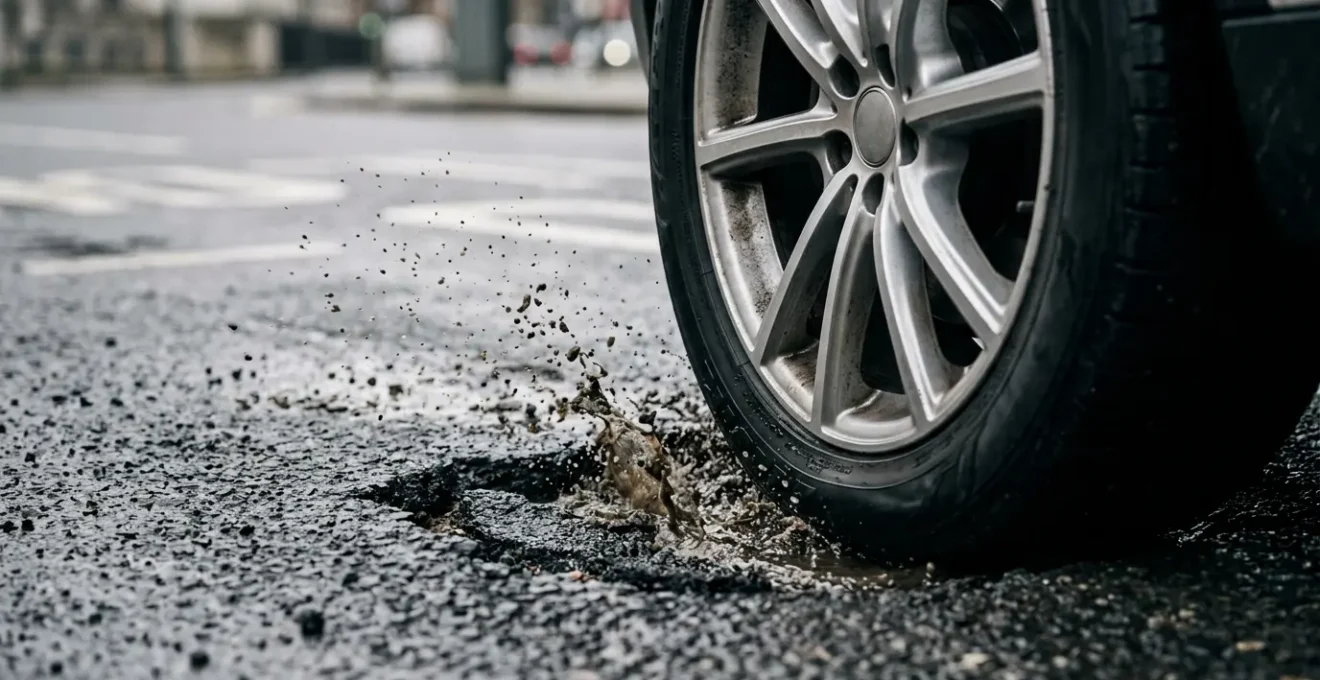
Choosing the right wheels for bad roads isn’t about sacrificing style for strength; it’s about understanding the physics of impact management as a complete system.
- Flow-formed wheels offer a smart balance of durability and cost, bending on impact where cheaper cast wheels crack.
- A taller tire sidewall is your best defense, acting as a crucial cushion for the wheel against sharp impacts.
Recommendation: Combine moderately sized, flow-formed wheels with Extra Load (XL) tires that have a sufficient sidewall height to create a resilient and stylish setup for city driving.
There’s no feeling quite like the sickening thud of a deep pothole, followed by the gut-wrenching worry about your new, expensive alloy wheels. For drivers who crave a stylish upgrade but navigate the harsh reality of poorly maintained city streets, the choice often feels like a compromise: do you pick wheels that look great or wheels that might actually survive the commute? The common advice is to simply downsize or stick with boring, heavy-duty options, effectively sacrificing the very aesthetic you were trying to achieve.
But what if this is the wrong way to think about the problem? The conventional wisdom often misses the bigger picture. It treats the wheel as an isolated component, when in reality, its survival depends on a complete ecosystem. The secret to having both style and durability isn’t just about picking a « strong » wheel; it’s about mastering the interplay between wheel construction, tire choice, and suspension geometry. It’s about building a complete impact management system.
This guide moves beyond the generic advice. We’ll dissect the science behind unsprung weight, decode the critical differences in wheel manufacturing, and reveal how your tire’s sidewall is the unsung hero in the fight against potholes. By understanding these principles, you can make an informed, strategic choice that protects your investment, preserves your ride quality, and still turns heads at the traffic lights.
To navigate this complex but crucial topic, we have structured this guide to walk you through each critical decision point. From the science of weight to the practicalities of maintenance, here is the complete roadmap to choosing your next set of wheels with confidence.
Summary: The Complete Guide to Choosing Pothole-Resistant Alloy Wheels
- Why Saving 5 lbs Per Wheel Feels Like Adding 20 Horsepower?
- How to Calculate Wheel Offset to Ensure Perfect Fitment Without Fender Rolling?
- Flow Formed vs. Cast Wheels: Is the Extra $400 Worth It for a Daily Driver?
- The Tire Sidewall Mistake That Leads to Cracked Rims on Highway Impacts
- When to Seal Your Wheels: The Schedule That Prevents Brake Dust Pitting
- The Alignment Mistake That Eats Tires in 2,000 Miles on Lowered Cars
- Stamped Steel vs. Aluminum Control Arms: Which Withstands Potholes Better?
- Why Your TPMS Light Is On Despite Your Tires Looking Full?
Why Saving 5 lbs Per Wheel Feels Like Adding 20 Horsepower?
When upgrading wheels, aesthetics are often the primary driver. However, the weight of your new wheels has a profound and often underestimated impact on your car’s performance and feel. This is due to the concept of unsprung weight—the mass of all components not supported by the suspension (wheels, tires, brakes). Reducing this weight is far more effective than simply removing weight from the car’s body (sprung weight).
The key is rotational inertia. A lighter wheel requires less energy to spin up and slow down. This translates to sharper acceleration, more responsive braking, and more nimble handling. The suspension can react more quickly to bumps and imperfections in the road, improving both grip and ride comfort. The effect is so significant that saving 5 pounds per wheel feels like a static weight reduction of 32 pounds for the vehicle. This is why a car with lightweight wheels feels more athletic and eager.
Beyond the visceral feeling of improved performance, there’s a tangible benefit to your wallet. Lighter wheels reduce the overall mass that your engine must move, leading to better fuel efficiency. While not a dramatic change, research shows that reducing unsprung mass by 8-12kg (17-26 lbs) across four wheels can yield a 1-2% improvement in fuel economy during mixed driving. It’s a small but meaningful bonus that complements the significant gains in driving dynamics.
Therefore, choosing a lighter wheel isn’t just a luxury for track day enthusiasts; it’s a practical way to improve every aspect of your daily drive, from handling feel to fuel consumption.
How to Calculate Wheel Offset to Ensure Perfect Fitment Without Fender Rolling?
Perfect fitment is more than just making sure the wheel bolts on; it’s a crucial aspect of suspension geometry that affects handling, steering feel, and tire wear. The most critical measurement here is wheel offset, which dictates how far the wheel’s mounting surface is from its centerline. The wrong offset can lead to tires rubbing on fenders or suspension components, but it also has a more subtle and damaging effect on the car’s steering geometry, specifically the scrub radius.
Scrub radius is the distance at ground level between the center of the tire’s contact patch and the point where the steering axis intersects the ground. A positive scrub radius (common in most cars) provides steering feedback, but changing it dramatically by using wheels with the wrong offset can cause issues. Too much scrub radius can lead to steering kickback over bumps, tramlining (where the car follows grooves in the road), and increased steering effort.
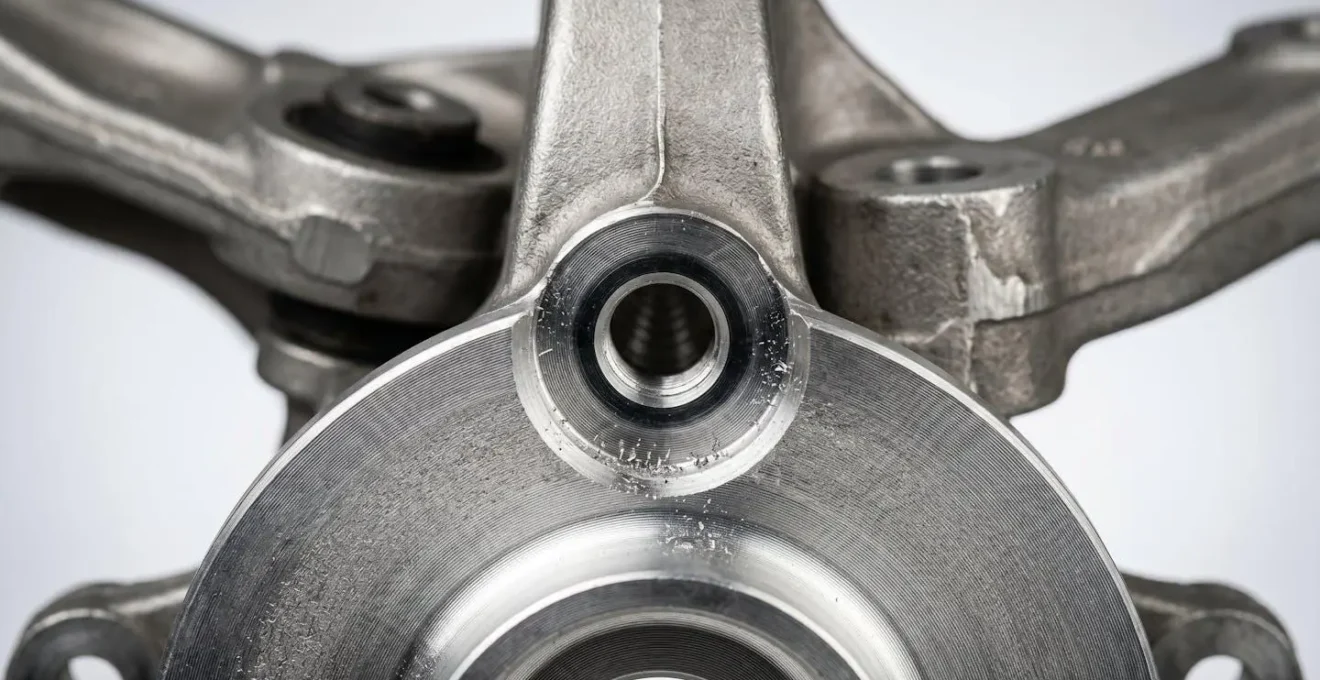
As this diagram illustrates, even a small change in the wheel’s position relative to the hub affects this critical angle. While calculating the exact scrub radius requires complex measurements, the rule of thumb is to stick as close to the Original Equipment (OE) offset as possible. A deviation of +/- 5-7mm is generally considered safe, but larger changes can introduce unpredictable handling characteristics. As noted in technical analyses of vehicle dynamics, even a small change can have a big effect on driver perception. According to Wikipedia’s automotive engineering guide, this relationship is direct and noticeable: « The greater the scrub radius (positive or negative), the greater the steering effort is. »
Before purchasing wheels, use an online offset calculator to compare the proposed setup to your stock specifications. This simple step can save you from the expensive and labor-intensive process of rolling fenders or, worse, compromising your car’s safety and handling.
Flow Formed vs. Cast Wheels: Is the Extra $400 Worth It for a Daily Driver?
When it comes to alloy wheels, not all are created equal. The manufacturing process plays the single biggest role in a wheel’s strength, weight, and, crucially, its reaction to a pothole strike. For most daily drivers, the choice comes down to two main types: traditional low-pressure cast wheels and more modern flow-formed wheels. Forged wheels, while the strongest, are typically priced out of reach for a daily driver upgrade.
Cast wheels are the most common and affordable. Molten aluminum is poured into a mold, and once it cools, you have a wheel. This process is cost-effective but can leave the aluminum with a porous, less dense grain structure, making it heavier and more brittle. Flow-formed wheels (also known as rotary forged) start as a cast wheel, but then the barrel is heated and stretched over a mandrel using high-pressure rollers. This process fundamentally realigns and compresses the grain structure of the aluminum, making it significantly stronger, denser, and lighter, much like a forged wheel but at a fraction of the cost.
For a driver in a pothole-prone area, the most important difference is the failure mode. A brittle cast wheel is more likely to crack under a sharp impact—a catastrophic failure that causes an immediate loss of air and can be dangerous at speed. A flow-formed wheel, due to its denser and more aligned grain structure, is more likely to bend. A bent wheel is often repairable and typically results in a slow leak or vibration, giving you a warning instead of a sudden failure. The durability benefits and cost trade-offs are clearly outlined in comparative analyses. For instance, a detailed technical comparison from experts provides a clear breakdown for buyers.
| Characteristic | Cast Wheels | Flow-Formed Wheels |
|---|---|---|
| Weight Reduction | Baseline (heavier) | 10-15% lighter than cast |
| Failure Mode | Crack under severe impact (catastrophic) | Bend before breaking (often repairable) |
| Durability | More prone to cracking from potholes | Resist impacts better, denser barrel |
| Price Range | Most affordable | ~$400+ more than comparable cast |
| Best Use Case | Budget-conscious daily drivers, low-stress | Performance driving, pothole-prone areas |
So, is the extra ~$400 for a set of flow-formed wheels worth it? For a driver who values peace of mind and lives in an area with imperfect roads, the answer is a resounding yes. That extra investment is not just for a lighter, better-performing wheel; it’s insurance against a catastrophic failure and the potentially much higher cost of a replacement wheel and tire.
The Tire Sidewall Mistake That Leads to Cracked Rims on Highway Impacts
You can have the strongest, most expensive forged wheels on the market, but if you make the wrong tire choice, you are still dangerously vulnerable to pothole damage. The tire is the first line of defense for your wheel, and its sidewall is the single most important cushion against impact. The most common mistake drivers make when upgrading to larger, more stylish wheels is pairing them with ultra-low-profile tires, leaving virtually no « air cushion » to absorb the energy of a pothole strike.
The height of a tire’s sidewall is expressed as a percentage of its width (the aspect ratio). A tire sized 225/40R18 has a sidewall that is 40% of 225mm high. A 225/45R18 tire has a taller sidewall, offering more protection. When this tire hits the sharp edge of a pothole, the flexible sidewall compresses to absorb the blow. If the sidewall is too short, it compresses completely, and the wheel’s metal rim slams directly into the concrete edge, resulting in a crack or a severe bend. This is why many drivers who « upgrade » to larger wheels find themselves with more frequent tire and wheel damage.
Real-world experience consistently proves this principle. For example, real-world user data shows that many Tesla Model 3 drivers switch from the factory 20-inch wheels to 18-inch wheels. This change, which increases the tire sidewall height, is explicitly done to improve ride comfort and drastically reduce the number of pothole-related flats and cracked rims. A further step is to choose tires with an « Extra Load » (XL) rating. These tires feature reinforced, thicker sidewalls that are more robust and better equipped to handle the sharp, sudden impacts of city driving.
The lesson is clear: when choosing wheels, you must think about the complete package. If you opt for a larger diameter wheel, you must ensure it can still be fitted with a tire that has a sufficient aspect ratio to provide a protective cushion. Sacrificing that cushion for a « rubber band » look is the fastest way to a cracked rim and an empty wallet.
When to Seal Your Wheels: The Schedule That Prevents Brake Dust Pitting
Protecting your wheels from potholes is only half the battle. The other enemy is a slow, insidious one: corrosive brake dust. Modern performance brake pads, especially those on European cars, generate a fine, highly adhesive dust that is full of tiny metal particles. When this dust sits on your wheel’s finish and gets wet, it begins to oxidize (rust). This process can permanently etch and pit the surface of your wheels, particularly on delicate machined or polished aluminum finishes, leaving them looking dull and damaged.
Regular washing helps, but it’s not enough to stop the chemical process. The most effective defense is a proactive one: applying a protective sealant or ceramic coating to the wheels. These products create a slick, hydrophobic barrier on the wheel’s surface. This barrier does two things: it prevents the corrosive dust from bonding directly to the finish, and it makes the wheels significantly easier to clean. Instead of needing harsh chemicals and aggressive scrubbing, a simple rinse with a pressure washer is often enough to remove the accumulated grime.
The key is to apply this protection and re-apply it on a schedule that matches the aggressivity of your brake pads. Not all brake dust is created equal. A dedicated maintenance schedule is the only way to stay ahead of the damage. For a clear, step-by-step process, you can follow a professional guide to ensure long-lasting protection.
Your Action Plan: Wheel Sealing to Prevent Brake Dust Damage
- Identify Pad Type: Determine your brake pad material. German performance pads (e.g., on BMW, Audi) produce highly corrosive dust, while ceramic pads produce a lighter, less aggressive dust.
- Thorough Cleaning: Before any application, clean the wheels meticulously. Use an iron remover and clay bar to remove all embedded contaminants from the surface. The surface must be perfectly clean for the sealant to bond.
- Apply Protection: Apply a high-quality ceramic coating or a dedicated wheel sealant to all surfaces of the wheel, including the barrel and between the spokes. Follow the product’s curing instructions carefully.
- Set a Resealing Schedule: For cars with aggressive performance pads, clean and reseal the wheels every 3-4 months. For cars with standard or low-dust ceramic pads, a schedule of every 6-8 months is sufficient.
- Prioritize Sensitive Finishes: Pay special attention to machined, polished, or chrome finishes. These surfaces have no protective clear coat and are extremely susceptible to pitting. They may require more frequent cleaning and sealing than a standard powder-coated wheel.
This simple maintenance routine can be the difference between wheels that look pristine for years and a set that is permanently scarred after a single winter of road salt and brake dust.
The Alignment Mistake That Eats Tires in 2,000 Miles on Lowered Cars
For many enthusiasts, upgrading wheels goes hand-in-hand with lowering the car’s ride height for a more aggressive stance. However, this common modification, if done improperly, can introduce a costly and dangerous alignment issue that rapidly destroys tires. When you lower a car, the suspension arms pivot upwards, which naturally changes the wheel’s alignment angles—specifically camber and, most critically, toe.
Many alignment shops will simply adjust the camber (the tilt of the top of the wheel) to be within factory specs, but they often neglect the toe angle. Toe refers to the direction the front of the tires are pointing in relation to each other, as viewed from above. Lowering a car often causes the wheels to « toe out. » Even a small amount of incorrect toe means the tires are not rolling straight; they are being constantly dragged sideways across the pavement as you drive. This is what’s known as « scrubbing. »
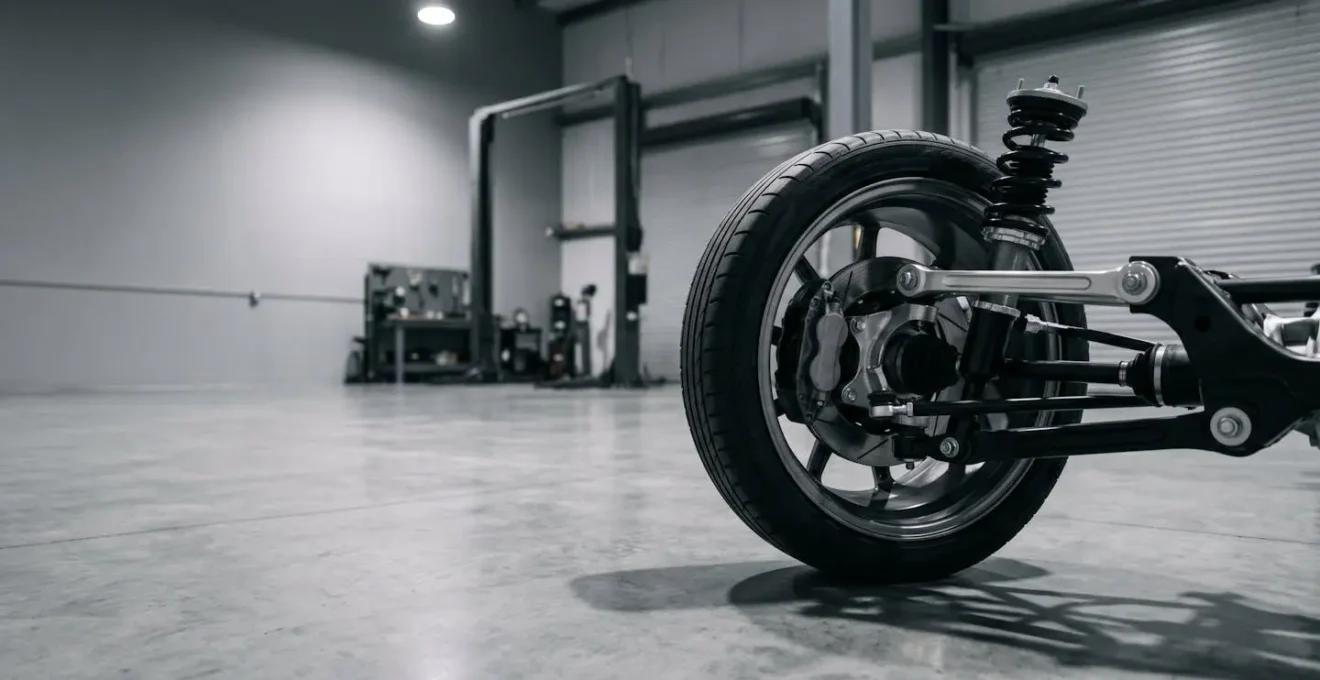
This constant scrubbing action is like taking sandpaper to your tire tread. It can wear out a brand new set of tires in as little as 2,000 miles, typically destroying the inner edge first. As experts from Lifted Trucks’ technical team explain, this is a common misdiagnosis: « Incorrect toe causes the tires to constantly scrub sideways, leading to rapid wear that is often mistaken for just a ‘lowered car problem.' » It’s not an unavoidable consequence of lowering; it’s a symptom of an incomplete alignment. When you lower your car, you must insist that the alignment technician performs a full four-wheel alignment and specifically sets the toe to zero or to the vehicle’s performance specification.
Ignoring the toe angle after changing ride height is a guaranteed way to waste money on tires. A proper alignment from a qualified shop that understands modified suspensions is not an optional expense; it’s a mandatory part of the modification process.
Key Takeaways
- Your tire is the most important part of the impact system; a taller sidewall is the best defense against pothole damage.
- Flow-formed wheels offer a smart compromise, providing much of the strength and light weight of forged wheels at a more accessible price.
- Proper wheel offset is non-negotiable for maintaining correct suspension geometry, steering feel, and preventing premature tire wear.
Stamped Steel vs. Aluminum Control Arms: Which Withstands Potholes Better?
When you hit a pothole, the force doesn’t just impact your wheel and tire. It sends a shockwave through your entire suspension system, and the components that take the next hit are the control arms. These arms connect your wheel hub to the car’s frame, allowing for vertical movement while maintaining alignment. Manufacturers use two primary materials for these critical components: stamped steel and cast aluminum, each with a distinct philosophy on how to manage severe impacts.
Stamped steel control arms are the traditional, cost-effective choice. They are strong but also possess a degree of ductility. In a severe pothole strike, a steel arm is designed to bend and deform. While this will ruin the component and require replacement, this bending action absorbs a tremendous amount of impact energy, potentially saving other, more expensive parts of the subframe or chassis from damage. It acts as a mechanical fuse.
Cast aluminum control arms are increasingly common on modern and performance-oriented vehicles. They are lighter and much stiffer than steel, which contributes to more precise handling and a reduction in unsprung weight. However, this stiffness comes with a trade-off: aluminum is more brittle. As a technical analysis by Extreme Wheels points out, the failure modes are completely different: « Steel is designed to bend and deform in a severe impact, absorbing energy. Cast aluminum is stiffer but more brittle and can crack or snap, leading to a more sudden and dangerous loss of control. » A snapped control arm means a total loss of control over that wheel, a far more dangerous scenario than a bent one.
Case Study: Cumulative Stress and Suspension Longevity
The choice of wheel and tire has a long-term effect on all suspension components. In online forums, Tesla Model 3 owners documented that switching from heavy 20-inch factory wheels to lighter 18-inch wheels with more sidewall not only improved ride quality but also led to fewer reported incidents of premature wheel bearing and suspension component failures over 50,000-mile ownership periods. This demonstrates that the constant, high-frequency vibrations and impacts from a stiff, heavy wheel package create cumulative stress that accelerates wear on parts like control arms and bearings.
So, which is « better »? For pure impact survival, the ductile nature of steel is arguably safer, as it fails more predictably. However, for daily driving performance and handling, the lightweight stiffness of aluminum is superior. This highlights the importance of the entire impact management system: a good tire and a bend-not-break flow-formed wheel can absorb enough energy to protect either type of control arm from reaching its failure point.
Why Your TPMS Light Is On Despite Your Tires Looking Full?
One of the most confusing aftermaths of a pothole encounter is a stubborn Tire Pressure Monitoring System (TPMS) light that stays on, even when the tire looks perfectly fine. You check it, kick it, and it seems solid, yet the warning light on your dash persists. This is not a system malfunction; it’s a critical early warning that you should not ignore. Your TPMS is far more sensitive than your eyes and is often detecting a problem that is in its very early stages.
A severe jolt from a pothole can cause several issues that lead to a very slow leak. The most common is that the impact can momentarily unseat the tire’s bead from the rim. Even if it reseats itself instantly, a tiny bit of debris or a slight deformation can compromise the perfect airtight seal, leading to a leak of just 1-2 PSI per week. Another possibility is a hairline crack in a cast aluminum wheel. This crack might be invisible to the naked eye but will be just large enough to let air seep out slowly over time.
Your TPMS is designed to trigger an alert when a tire’s pressure drops roughly 25% below the recommended value. For a tire that should be at 35 PSI, the light will come on around 26 PSI. A slow leak might take weeks to reach this threshold, but the system is doing its job by alerting you before the pressure becomes dangerously low and affects the car’s handling or leads to a catastrophic tire failure. Ignoring the light because the tire « looks full » is a dangerous gamble.
If your TPMS light comes on, especially after a known pothole impact, the correct procedure is to immediately check all four tire pressures with a reliable gauge. Inflate them to the correct pressure and monitor them closely over the next few days. If one tire consistently loses pressure, however slowly, you have a leak that must be found and fixed by a professional tire shop. It’s the only safe way to address the warning.
Frequently Asked Questions About Potholes and TPMS
Can a pothole impact trigger my TPMS light even if the tire looks fine?
Yes. A severe pothole jolt can slightly unseat the tire’s bead or cause a hairline crack in the rim, leading to a very slow leak (1-2 PSI per week) that the TPMS will detect long before visual inspection shows any problem.
What’s the difference between Direct TPMS and Indirect TPMS for detecting leaks?
Direct TPMS uses sensors physically mounted in each wheel to measure actual tire pressure. Indirect TPMS uses ABS wheel speed sensors to detect diameter changes. Indirect systems can be fooled if all four tires lose pressure slowly and equally, making a manual pressure gauge essential.
How do I know if my TPMS alert is from temperature change or a real leak?
Use the 1 PSI per 10°F (or 5.6°C) rule. If your TPMS triggered after a 20°F temperature drop overnight, expect a 2 PSI decrease that’s normal. If the light stays on after temperatures stabilize or pressure continues dropping over days, you likely have a leak requiring inspection.