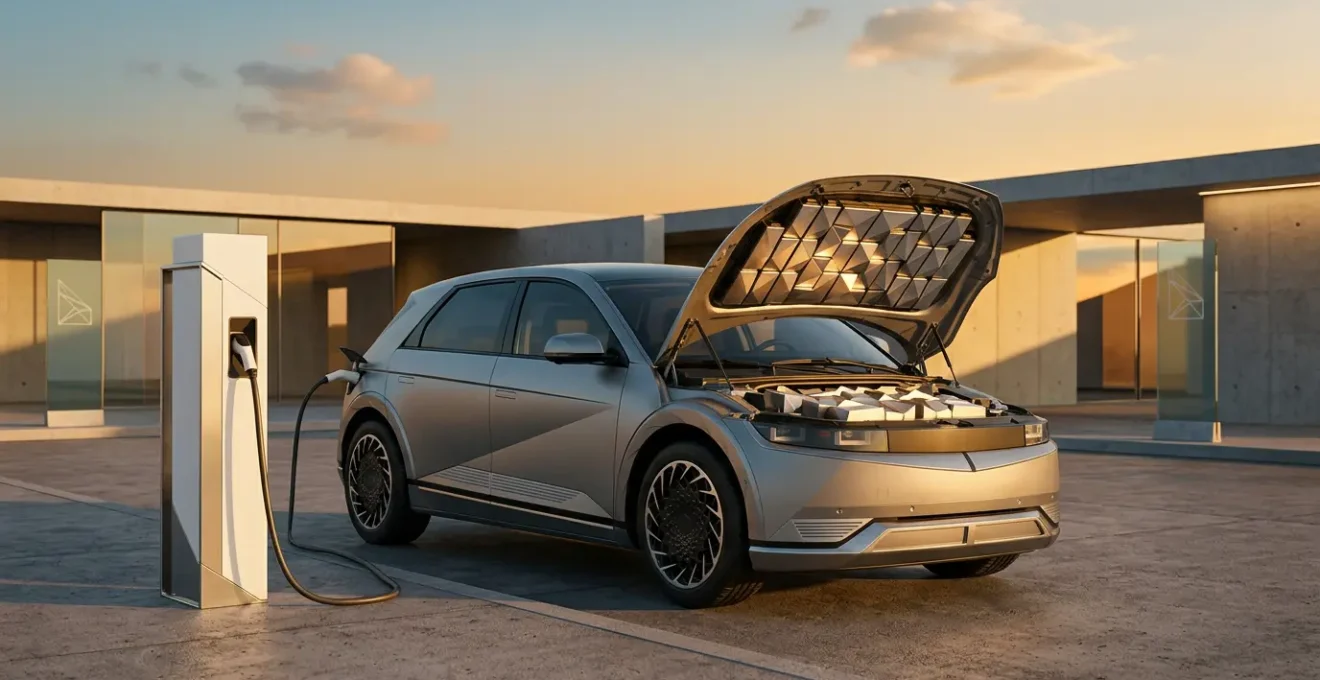
Waiting for a solid-state EV means delaying years of gas-free driving for a technology that won’t be mainstream and affordable until the 2030s.
- Solid-state batteries promise revolutionary gains in range and safety, but face immense manufacturing hurdles that will keep them a premium feature for years.
- Today’s best-in-class lithium-ion EVs will not become worthless overnight; a slow, phased rollout and strong used market will buffer their depreciation.
Recommendation: For most drivers whose current vehicle meets their needs, buying a quality EV now is a financially and practically sound choice. Waiting is only logical if you are a technology early adopter willing to pay a significant premium or your current vehicle can easily last another 5-7 years.
The decision to buy a new electric vehicle is fraught with a particularly modern form of anxiety: the fear of purchasing a tech dinosaur on wheels. Every headline heralding the arrival of solid-state batteries—with their promises of 700-mile ranges and 10-minute charging—makes potential buyers pause. Why invest in today’s technology when a revolutionary leap seems just around the corner? This hesitation is understandable, as no one wants to see their significant investment become obsolete in a few short years.
Many analyses simply state that current EVs are « good enough » or that solid-state is « still far away. » While true, this advice misses the crucial context that empowers a smart decision. The real question isn’t just about timing; it’s about understanding the fundamental physics, the manufacturing realities, and the economic S-curve of this technological shift. It’s about distinguishing marketing hype from the engineering roadmap. The truth is that the transition will be more of a gradual dawn than a sudden sunrise.
This article moves beyond the simple « buy or wait » debate. As market analysts, we will dissect the core advantages of solid-state technology, from its superior energy density to its inherent safety. We’ll then ground this potential in the stark reality of manufacturing scalability and cost, explaining why your current lithium-ion EV won’t suddenly become worthless. Finally, we’ll explore the real-world impact on total cost of ownership and battery degradation, giving you the tools to assess your own situation and make a decision based on data, not fear.
Summary: Should You Buy an EV Now or Wait for Solid-State Batteries?
- Why Solid-State Batteries Will Double Range Without Increasing Weight?
- How Solid Electrolytes Eliminate the Risk of Thermal Runaway?
- Li-Ion vs. Solid-State: Which Charges from 10% to 80% Faster?
- The Manufacturing Challenge Keeping Solid-State EVs Expensive Until 2030
- When Solid-State Arrives: Will Your Lithium-Ion EV Become Worthless?
- Gas vs. Electric Fleets: Which Option Offers Better TCO Over 5 Years?
- Hybrid vs. Gas Maintenance: What Costs More After 100,000 Miles?
- Does DC Fast Charging Degrade Your Battery Life More Than AC Charging?
Why Solid-State Batteries Will Double Range Without Increasing Weight?
The single greatest promise of solid-state technology is a monumental increase in energy density. This metric, measured in watt-hours per kilogram (Wh/kg), dictates how much energy a battery can store for a given weight. A higher energy density means a longer range without needing a larger, heavier battery pack—the holy grail for EV engineers. Current lithium-ion batteries are pushing the theoretical limits of their chemistry, typically hovering around 270 Wh/kg. Solid-state technology represents a fundamental chemistry shift.
By replacing the liquid or gel electrolyte in current batteries with a solid, stable material, manufacturers can use a pure metallic lithium anode. This is far more energy-dense than the graphite or silicon-graphite anodes used today. The result is a dramatic leap in potential, with early projections showing a clear path to overcoming the range anxiety that still plagues many potential EV buyers. As Keiji Kaita, a top Toyota R&D executive, articulated the goal, « For both our liquid and our solid-state batteries, we are aiming to drastically change the situation where current batteries are too big, heavy and expensive. In terms of potential, we will aim to halve all of these factors. »
This leap is not incremental; it’s transformative. For instance, Samsung SDI’s oxide solid-state battery technology is already targeting energy densities near 500 Wh/kg. For the consumer, this translates directly into either a much longer range for the same size vehicle or a lighter, more agile, and more affordable vehicle with the same range as today’s models. It’s this ability to break the compromise between weight, cost, and range that makes solid-state the definitive next generation.
How Solid Electrolytes Eliminate the Risk of Thermal Runaway?
Beyond range, the most significant safety advancement of solid-state batteries is the virtual elimination of thermal runaway. This is the technical term for the chain reaction that can lead to battery fires. In conventional lithium-ion batteries, the electrolyte is a flammable liquid. If the battery is damaged, overcharged, or suffers from a manufacturing defect, it can short-circuit. This generates intense heat, which can cause the liquid electrolyte to vaporize and combust, leading to a fire that is notoriously difficult to extinguish.
While frightening, it’s important to contextualize the risk. EV battery fires are relatively rare, occurring at a rate of roughly 25 per 100,000 EVs sold—far less frequent than gasoline car fires. The root cause of many of these failures is the growth of « dendrites. » These are tiny, needle-like metallic lithium structures that can form inside the battery over time, eventually piercing the separator between the anode and cathode and causing a short circuit.

Solid-state batteries solve this problem at a fundamental level. They replace the flammable liquid electrolyte with a solid, non-flammable ceramic or polymer material. This solid electrolyte acts as an impenetrable barrier, physically blocking the growth of dendrites. Without a flammable liquid and with a robust barrier against internal short circuits, the primary mechanism for thermal runaway is removed. This makes solid-state batteries inherently safer, more durable, and capable of withstanding more stress than their liquid-based counterparts.
Li-Ion vs. Solid-State: Which Charges from 10% to 80% Faster?
For many EV owners, the daily experience is defined not by maximum range, but by charging speed. The industry-standard benchmark is the time it takes to charge from a low state (around 10%) to a usable high state (80%), as the final 20% often charges much more slowly to protect battery health. On this metric, solid-state technology promises to deliver a user experience that is nearly indistinguishable from a visit to the gas station. Today, even the fastest-charging lithium-ion EVs require 30 to 45 minutes to reach an 80% charge at a DC fast-charging station.
This limitation is rooted in the chemistry of Li-ion batteries. Pushing electricity into them too quickly, especially when they are cold or nearly full, can cause the same lithium plating (dendrite formation) that leads to degradation and safety risks. The battery management system (BMS) carefully throttles the charging speed to prevent this damage. Solid-state batteries, with their stable solid electrolyte and resistance to dendrite formation, can accept a much higher rate of charge without risk.
The difference is staggering. Cutting-edge research from the University of California, Riverside shows that some solid-state architectures can achieve an 80% charge in as little as 12 minutes. Toyota has publicly stated its goal is a 10-minute charge time. This isn’t just a minor improvement; it’s a paradigm shift. It transforms the EV ownership model from one that requires overnight planning and long stops on road trips to one that offers true on-demand « refueling. » For potential buyers for whom time is the ultimate luxury, this feature alone could be the deciding factor.
The Manufacturing Challenge Keeping Solid-State EVs Expensive Until 2030
If solid-state batteries are superior in every metric, why aren’t they in every car today? The answer lies in one word: manufacturing. Moving a revolutionary technology from a controlled laboratory environment to mass production at automotive scale is a monumental challenge. While scientists have proven the chemistry works, engineers are now grappling with the immense difficulty of building millions of perfect, reliable, and affordable cells. The core issue is the solid-to-solid interface between the electrolyte, anode, and cathode.
Unlike in a liquid-based battery where the electrolyte flows to fill every microscopic gap, a solid-state battery requires perfect, uniform contact under immense pressure. Any tiny void or imperfection creates resistance, hindering performance and becoming a potential failure point. This requires entirely new factory machinery and quality control processes that are still being developed. As former CATL CTO Bob Galyen notes, « Manufacturing validation requires 5-7 years for full production validation. Despite promising laboratory results, solid-state batteries face significant technical and commercial hurdles that have delayed widespread adoption. »

This challenge is directly reflected in the cost. Current estimates from industry experts show that by 2026, solid-state cells could cost between $400-800 per kWh. For comparison, lithium-ion cells cost around $115/kWh in 2024. This means the first solid-state EVs will be extremely expensive, limited-run models targeting the luxury market. It will likely take until 2030 or beyond for manufacturing efficiencies to bring the cost down to a level where solid-state can compete in the mainstream market.
When Solid-State Arrives: Will Your Lithium-Ion EV Become Worthless?
The biggest fear for a prospective EV buyer is that the moment solid-state vehicles hit the showroom, the resale value of their new lithium-ion car will plummet. This concern about technological obsolescence is valid, but the reality will be far more nuanced than a sudden market collapse. The rollout of solid-state technology will be a gradual, multi-year process, primarily dictated by the manufacturing challenges and high initial costs we’ve discussed.
Analysis from industry watchers projects a clear timeline. According to analysis of production timelines from various manufacturers, the first pilot production runs are slated for 2027-2028, with a slow ramp-up to broader mass production toward 2030. This means for the next 5-7 years, lithium-ion will remain the dominant, and in most cases only, technology available. Even when solid-state models do arrive, they will initially be high-end, low-volume halo cars. It will take several more years for the technology to « trickle down » to affordable, mainstream segments.
Therefore, a high-quality EV purchased today will not become worthless overnight. Its depreciation will be influenced more by its own battery health, brand reputation, and software features than by the mere existence of a few ultra-expensive solid-state competitors. Furthermore, a robust used EV market is already established and will continue to value reliable, proven lithium-ion vehicles. As Samsung SDI’s Vice President Koh Joo-young recently confirmed, progress is steady: « We have delivered samples to customers…and have received positive feedback. » This signals progress, but also highlights we are still in the « sample » phase, far from mass-market availability.
Action Plan: Assessing Your Personal « Buy or Wait » Timeline
- Assess Your Current Vehicle: Realistically, how many more years can your current car reliably serve you? If less than 3 years, buying a new EV now is a stronger consideration.
- Analyze Your Driving Needs: Do you frequently take long road trips where 30-minute charging is a major inconvenience? If 95% of your driving is local and you can charge at home, the benefits of today’s EVs are immediately accessible.
- Evaluate Your Budget: Can you comfortably afford a premium EV today? When solid-state arrives, it will command a significant price premium. Waiting might mean paying more, not less, in the initial years.
- Check Local Incentives: Are there federal or local tax credits for buying an EV now? These incentives may change or disappear by the time solid-state vehicles are widely available, altering the total cost equation.
- Define Your Tech Tolerance: Are you comfortable with today’s proven tech, or do you have a strong desire to own the absolute latest innovation, even if it means waiting and paying more?
Gas vs. Electric Fleets: Which Option Offers Better TCO Over 5 Years?
When considering a vehicle purchase, savvy buyers look beyond the sticker price to the Total Cost of Ownership (TCO). This framework is crucial for comparing gas, hybrid, and electric options. TCO accounts for the purchase price, fuel (gas or electricity), maintenance, insurance, and projected resale value over a set period, typically 3-5 years. For individual buyers, thinking like a fleet manager—who lives and dies by TCO—is the smartest way to make a financial decision.
For a typical 5-year ownership period, a new EV purchased today often presents a compelling TCO case against a comparable gasoline car. While the initial purchase price might be higher, the savings are significant. Electricity is consistently cheaper per mile than gasoline, and maintenance costs are drastically lower due to the absence of oil changes, spark plugs, exhaust systems, and complex transmissions. These savings can often offset the higher initial price within a few years.
The « wait for solid-state » argument complicates this calculation. Waiting means continuing to pay for gasoline and higher maintenance on an existing internal combustion engine (ICE) vehicle for several more years. The key question becomes: will the money saved by waiting for a potentially more efficient solid-state EV outweigh the money spent on an inefficient gas car in the interim? For most people, the answer is no. The immediate TCO benefits of switching to a current EV today will likely surpass any marginal gains from waiting 5+ years for the next generation of battery tech to become affordable.
Hybrid vs. Gas Maintenance: What Costs More After 100,000 Miles?
As vehicles age and cross the 100,000-mile mark, maintenance costs become a primary component of ownership expenses. This is where the differences between powertrains become stark. A traditional gasoline car has a long list of components that wear out: timing belts, water pumps, alternators, and complex exhaust systems. A hybrid vehicle, while benefiting from regenerative braking that saves its brake pads, still has a gasoline engine with all of its associated maintenance needs, plus the added complexity of a hybrid system and a small battery pack.
A pure battery electric vehicle (BEV) fundamentally changes this equation. It eliminates the vast majority of these maintenance items. There is no oil to change, no exhaust to fail, and no transmission fluid to flush. Maintenance is largely limited to tires, brakes (which last longer due to regenerative braking), suspension components, and cabin air filters. This results in significantly lower long-term maintenance costs compared to both gasoline and hybrid vehicles. After 100,000 miles, an EV owner will almost certainly have spent far less on upkeep.
Solid-state technology is poised to push this advantage even further. Because solid-state batteries are more thermally stable, they may require less complex and less powerful cooling systems, removing another potential point of failure and maintenance. Their inherent durability and resistance to degradation also promise a much longer service life, reducing the primary long-term concern for any EV owner: battery replacement. In essence, the low-maintenance benefit of EVs is already a strong selling point, and solid-state will only serve to amplify it.
Key Takeaways
- Solid-state batteries offer double the energy density, enabling longer range or lighter vehicles.
- The solid electrolyte design virtually eliminates the risk of thermal runaway and allows for 10-15 minute charging times.
- High manufacturing costs and scalability challenges mean solid-state EVs won’t be mainstream or affordable until around 2030.
Does DC Fast Charging Degrade Your Battery Life More Than AC Charging?
One of the most persistent concerns for current and potential EV owners is battery degradation, the gradual loss of capacity over time. A common belief is that frequent use of DC fast chargers (the high-power stations found on highways) accelerates this degradation more than slower Level 2 AC charging (the kind you use at home). This belief is, for the most part, true. The high heat and high electrical current associated with fast charging do put more stress on a lithium-ion battery’s internal components.
The QuantumScape engineering team provides a clear explanation for this phenomenon: « When charging speeds exceed the diffusion rate of lithium into graphite, lithium begins plating on top of the graphite particle… This plating process reduces the available lithium and lowers the battery’s capacity. » This physical process is the primary driver of fast-charging-related degradation in today’s batteries. However, modern EVs have sophisticated battery management systems that mitigate this by managing temperature and slowing the charging rate as the battery fills up.
This entire conversation about degradation is set to be redefined by solid-state technology. The very properties that make them safer and faster to charge also make them incredibly durable. Research shows that while conventional lithium-ion batteries typically begin to show noticeable degradation after approximately 5-8 years or 1,000 charge cycles, solid-state batteries are projected to last for 15-20 years. They are far more resistant to the stresses of high-speed charging and extreme temperatures. This means the future choice between AC and DC charging won’t be a compromise between time and battery health; it will simply be a choice of convenience, with minimal long-term impact.
Ultimately, the decision to buy an EV now or wait is not a technical question but a personal financial one. For the vast majority of people, the proven benefits, lower TCO, and immediate availability of today’s excellent lithium-ion EVs make buying now a logical and rewarding choice. Waiting for the « perfect » technology is a fool’s errand; by the time solid-state is mainstream, the next big thing will be on the horizon. Assess your needs, run the numbers, and you will likely find the future of driving is already here.