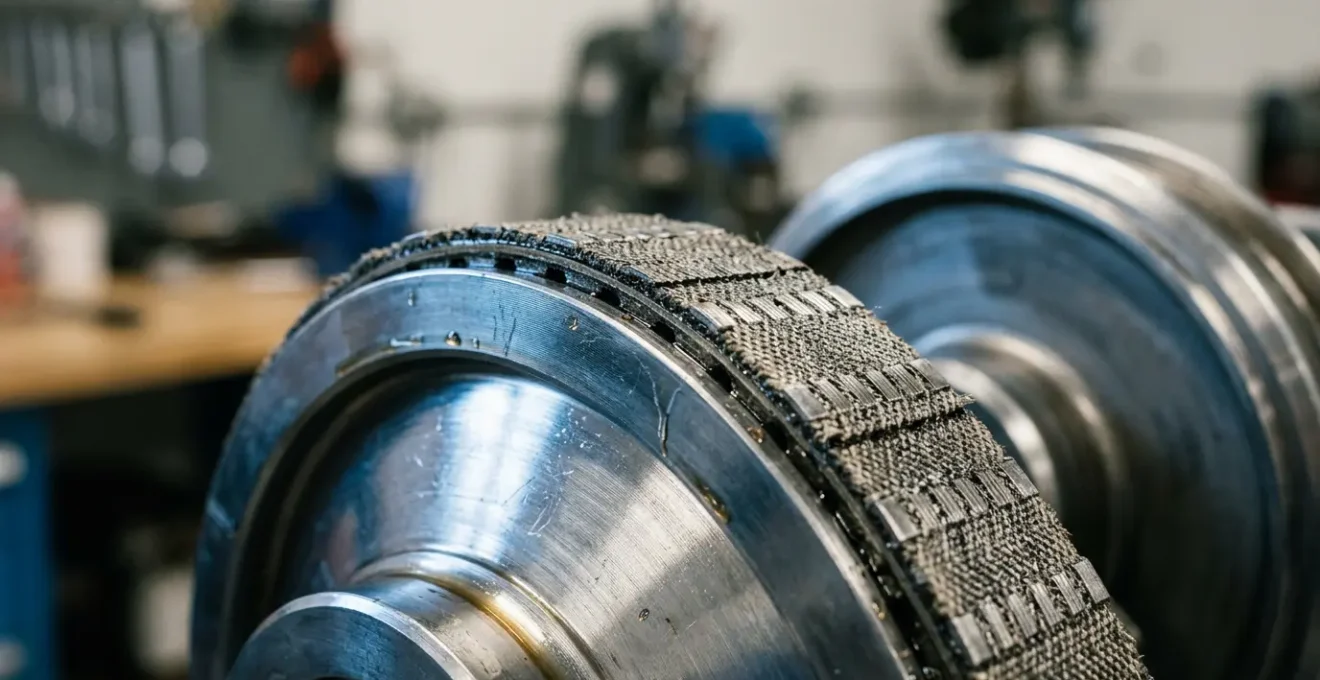
The widespread fear of CVT failure is justified, but not inevitable; longevity hinges on rejecting the « lifetime » fluid myth and adopting a proactive, expert-level maintenance mindset.
- Fluid is not forever. Aggressive 30,000-mile fluid changes are the single most important factor in preventing belt slip and overheating.
- Heat is the enemy. Your driving style, especially on hills, and your vehicle’s load directly impact fluid temperature and lifespan.
- Your car’s electrical system, particularly the battery, can trigger false transmission error codes, leading to costly misdiagnosis.
Recommendation: Immediately abandon the manufacturer’s « normal » service schedule and adopt a « severe » schedule, focusing on fluid, cooling, and electrical system integrity to give your transmission a fighting chance.
As a transmission rebuilder, I see the aftermath. The tow truck drops off another Nissan or Subaru, the owner’s face a mask of anxiety and frustration. They’ve heard the horror stories about Continuously Variable Transmissions (CVTs), and now they’re living one. They followed the dealer’s advice, trusted the « lifetime » fluid, and drove their car « gently. » Yet here they are, facing a repair bill that could buy a decent used car. The common belief is that these CVTs are ticking time bombs, destined to fail right after the warranty expires.
The truth is more complex and, thankfully, more hopeful. A CVT is not an inherently flawed design; it’s a high-precision piece of engineering that is incredibly sensitive. The common advice— »drive gently, » « follow the schedule »—is dangerously inadequate because it ignores the three core pillars of CVT health: fluid integrity, thermal management, and electrical stability. The manufacturer’s service schedule is often designed to get you through the warranty period, not to 150,000 miles and beyond.
But what if the key to longevity wasn’t in the owner’s manual, but in the hard-won knowledge of those who take these units apart every day? This guide is that knowledge. We’re going to bypass the platitudes and dive into the specific, often counter-intuitive actions you must take. We’ll explore why that « lifetime » fluid is the transmission’s biggest threat, how to drive on hills to prevent catastrophic overheating, and how a weak battery can masquerade as a complete transmission failure. By the end, you won’t just be a driver; you’ll be an informed custodian of your vehicle’s most misunderstood component.
This article provides a structured roadmap to CVT longevity. Each section tackles a critical aspect of care, providing the expert-level insights needed to proactively manage your transmission’s health and value. Explore the topics below to take control of your CVT’s destiny.
Summary: A Rebuilder’s Guide to Making Your CVT Last
- Why You Must Change « Lifetime » CVT Fluid Every 30,000 Miles?
- How to Drive a CVT on Hills to Prevent Overheating and Belt Slip?
- Whine vs. Grind: Which CVT Sound Means You Need an Immediate Tow?
- The Rebuild Mistake That Makes Buying a New CVT Cheaper in the Long Run
- When to Install an Auxiliary Cooler on Your CVT Equipped SUV?
- Severe vs. Normal Service: Which Schedule Should City Drivers Actually Follow?
- The Low Battery Voltage Mistake That Triggers False Transmission Codes
- How to Build a « Full Service History » That Increases Resale Value by 20%?
Why You Must Change « Lifetime » CVT Fluid Every 30,000 Miles?
The single most destructive myth in modern automotive maintenance is the concept of « lifetime » CVT fluid. From a rebuilder’s perspective, this marketing term is the direct cause of the majority of premature failures we see. A CVT doesn’t have fixed gears; it uses a steel belt or chain running between two variable-width pulleys. The fluid must perform a seemingly impossible task: create enough friction for the belt to grip the pulleys and transfer torque without slipping, while also acting as a lubricant for the pulley surfaces as they slide. This delicate balance is managed by a complex package of friction-modifying additives.
Over time, heat—the mortal enemy of any transmission—breaks down these critical additives. The fluid loses its specific friction coefficient, its viscosity thins, and its ability to maintain hydraulic pressure integrity is compromised. Once this happens, the belt starts to slip. Even microscopic slips, imperceptible to the driver, sandblast the pulley faces and contaminate the fluid with metallic debris. This creates a feedback loop of death: worn fluid causes slipping, which creates more heat and debris, which further degrades the fluid. While most manufacturers recommend CVT fluid replacement every 30,000 to 60,000 miles, waiting until the upper end of that range is a gamble.
Based on analysis of hundreds of failed units, a consensus has emerged among independent transmission specialists: the fluid must be changed every 25,000 to 30,000 miles. This isn’t a suggestion; it’s a requirement for longevity. Performing a simple drain-and-fill at this interval replaces the degraded fluid before it can cause permanent damage, providing a massive margin of safety. It is, without question, the cheapest and most effective insurance policy you can buy for your CVT.
How to Drive a CVT on Hills to Prevent Overheating and Belt Slip?
A CVT’s design is optimized for flat-road efficiency, which makes hills its personal crucible. Climbing a steep grade places the transmission under maximum load, demanding high hydraulic pressure to prevent the belt from slipping. This generates an immense amount of heat. Your driving technique in these moments can either preserve your transmission or actively destroy it. The worst thing you can do is « feather » the throttle on an incline, or try to hold the car in place using the gas instead of the brake. This creates a state of constant, low-level belt slip that rapidly overheats the fluid and scores the pulleys.

The key to mastering hills is to drive deliberately and use the tools your car provides. Here are the essential techniques to protect your transmission:
- Maintain Steady Speed: When going uphill, avoid sudden acceleration. Apply smooth, light pressure on the gas pedal to build and hold speed gradually. This allows the CVT to find an efficient ratio and lock it in.
- Use Engine Braking Downhill: When descending a hill, shift to a lower gear range (often marked ‘L’ or ‘S’, or by using paddle shifters). This uses engine braking to control your speed, which keeps the CVT’s hydraulic pump engaged and fluid circulating under pressure with minimal load, actively cooling the transmission.
- Never Hold with the Gas: On a steep incline at a stop, always use the brake pedal or the handbrake to hold the vehicle. Holding the car with the accelerator is the quickest way to overheat and destroy a CVT.
- Use the Handbrake Technique: For a smooth start on a very steep hill, hold the car with the foot brake, engage the handbrake, then as you transition your foot to the accelerator, slowly release the handbrake. This prevents rollback and reduces the initial strain on the CVT.
Whine vs. Grind: Which CVT Sound Means You Need an Immediate Tow?
CVTs are inherently noisier than traditional automatic transmissions. A certain level of light, sewing-machine-like whining is normal, especially when the vehicle is cold. However, as a rebuilder, I can tell you that a change in the sound’s character or volume is the transmission’s way of screaming for help. Learning to differentiate a harmless operational noise from a death rattle is a critical skill for any CVT owner. Ignoring the wrong sound can turn a potential bearing replacement into a catastrophic, multi-thousand-dollar failure.
The most important distinction to make is between a whine and a grind. As the experts at Advanced Transmission Center note in their guide on transmission noises:
Whining is an indication that either the pulleys are getting excessive wear or the belt itself is getting close to failure.
– Advanced Transmission Center, Transmission Noises Guide – CVT Systems
A whine that changes pitch with engine RPM (in Park) but not vehicle speed often points to a failing bearing or pump. A grind, on the other hand, is almost always a sign of metal-on-metal contact. The following table breaks down the most common sounds, their likely causes, and the urgency of the required action.
| Sound Type | When It Occurs | Likely Cause | Severity Level | Required Action |
|---|---|---|---|---|
| High-pitched whine | Changes with engine RPM in Park/Neutral, NOT with vehicle speed | Failing input/output shaft bearing or CVT pump | Warning | Schedule shop visit – not immediate tow |
| Metallic grinding/rattle | ONLY during acceleration from stop or under heavy load | Metal belt slipping on pulleys – loss of power transfer ability | Critical | IMMEDIATE tow required to prevent catastrophic internal damage |
| Loud clunk/delay | Shifting from P or N into D or R when warm | Failing valve body or solenoids struggling with hydraulic pressure | Serious | Address immediately – avoid driving |
| Normal CVT whine | Constant operational sound, more noticeable when cold | Belt and pulley friction – characteristic of CVT design | Normal | No action if sound doesn’t worsen |
The Rebuild Mistake That Makes Buying a New CVT Cheaper in the Long Run
When a CVT fails, owners are faced with a daunting choice: rebuild the existing unit, or replace it with a new or remanufactured one. With the average cost of CVT repairs ranging from $3,000 to $5,000 and replacements soaring to $8,000 or more, the temptation to opt for a cheaper rebuild is strong. However, this is where a critical, and often costly, mistake is made. The viability of a CVT rebuild depends entirely on one factor: the condition of the pulleys.
The fundamental mistake is attempting a « soft parts » rebuild on a unit with scored or damaged pulleys. Unlike traditional automatics, where you can often just replace clutches and seals, a CVT’s core components are the belt and the two pulleys it runs on. If the belt has been slipping, it has inevitably damaged the hardened surfaces of the pulleys. A shop that offers a low-cost rebuild is likely planning to just replace the belt, seals, and maybe a bad bearing, while reusing the compromised pulleys. This is a recipe for disaster. A new belt running on damaged pulleys will be shredded in a matter of months, if not weeks. The initial savings are quickly erased when the transmission fails a second time, and this time it’s often so damaged that a replacement is the only option.
A proper, high-quality rebuild that includes sourcing and replacing the expensive pulley set and belt can often approach the cost of a brand-new unit from the manufacturer. From a rebuilder’s standpoint, a new or factory-remanufactured unit often presents better value. It comes with a warranty and the peace of mind that all core components are pristine. The single biggest « rebuild mistake » is choosing a cheap option that doesn’t address the root cause of the failure—the pulley surfaces. In the long run, paying for a proper fix once is always cheaper than paying for a bad fix twice.
When to Install an Auxiliary Cooler on Your CVT Equipped SUV?
While meticulous fluid changes are defensive, installing an auxiliary transmission cooler is a powerful offensive move against a CVT’s number one enemy: heat. The factory cooling system, often a simple heat exchanger that uses the engine’s radiator, is designed for « normal » use. But as we’ll see, most real-world driving, especially in an SUV, qualifies as « severe. » If you tow a trailer, navigate hilly terrain, sit in stop-and-go city traffic, or have fitted larger-than-stock tires, you are generating far more heat than the stock system can effectively dissipate. Every degree over the optimal operating temperature exponentially shortens the life of your CVT fluid and its internal components.

Installing an auxiliary cooler is not just for off-road enthusiasts; it’s a wise investment for anyone who subjects their CVT to high-load or low-airflow conditions. But how do you know if you need one? You don’t guess; you test and evaluate your specific use case. Monitoring the transmission’s temperature with a diagnostic tool provides definitive data, but several common usage patterns are clear indicators that an upgrade is necessary to ensure the transmission’s survival.
Action Plan: Assessing Your Need for an Auxiliary CVT Cooler
- Monitor Live Data: Use an OBD2 scanner and a smartphone app (like Torque or CVTz50) to monitor your live CVT fluid temperature. If you consistently see temperatures exceeding 210°F (99°C) during your typical driving, a cooler is not optional; it’s mandatory.
- Analyze Your Commute: Evaluate your daily drive. Is it dense, stop-and-go city traffic with limited airflow? This is often harder on a CVT than smooth highway driving and is a strong reason to consider a cooler.
- Account for Modifications: Have you installed larger tires or a roof rack? Anything that increases rotational mass or aerodynamic drag forces the CVT to work harder, generating more heat. Factor these upgrades into your decision.
- Assess Your Load: Do you tow a small trailer, haul heavy cargo, or load up the family for mountain vacations? Any form of high-load operation is a primary justification for adding an auxiliary cooler.
- Check for Warning Signs: Have you ever smelled a « burnt » odor after a hard drive, noticed the transmission seeming to slip, or seen a temperature warning light? These are signs that you are already pushing past the thermal threshold. Install a cooler before permanent damage occurs.
Severe vs. Normal Service: Which Schedule Should City Drivers Actually Follow?
Vehicle manufacturers provide two maintenance schedules: « Normal » and « Severe. » Most owners assume they fall into the « Normal » category. This is a dangerous assumption, especially for CVT-equipped vehicles. The manufacturer’s definition of « severe service » isn’t about reckless driving; it’s about specific, high-stress conditions that accelerate wear and tear on fluids and components. For a CVT, this is almost any condition that generates excess heat.
The reality is that the vast majority of drivers, particularly those in urban or suburban environments, are operating under severe conditions without realizing it. A « normal » schedule, with its long fluid change intervals, is a fantasy designed for a driver who lives in a temperate climate and commutes 40 miles each way on a flat, uncongested highway. For everyone else, following the « Normal » schedule is a slow-motion path to premature transmission failure. Adopting the severe service schedule is not a sign of paranoia; it’s a realistic acknowledgement of how modern vehicles are actually used.
If your driving habits include any of the following, you are a « severe » user and must follow the more aggressive maintenance schedule (including the 30,000-mile fluid changes) to protect your investment:
- Heavy City Traffic: The constant stop-and-go of urban driving involves frequent acceleration and deceleration cycles. This is one of the most heat-intensive activities for a CVT.
- Extreme Temperatures: Operating the vehicle in environments with ambient temperatures consistently above 90°F (32°C) or below freezing significantly accelerates fluid degradation.
- Towing or Hauling: Pulling a trailer or carrying heavy loads in your SUV dramatically increases the torque demand and heat generated by the transmission.
- Mountainous or Hilly Terrain: As discussed, driving on constant grades places extreme stress on the CVT’s belt and pulleys.
- Frequent Short Trips: Regularly driving for less than 10 minutes at a time is surprisingly harsh. The CVT fluid never reaches its optimal temperature to burn off accumulated condensation, leading to moisture contamination and accelerated internal corrosion.
The Low Battery Voltage Mistake That Triggers False Transmission Codes
Imagine this scenario: you’re driving, and suddenly your dashboard lights up like a Christmas tree. The « Check Engine » light is on, the transmission warning appears, and the car feels sluggish, seemingly stuck in a low gear. Your heart sinks. This is it—the dreaded CVT failure. You get the car to a shop, they pull the codes—P17F0 (CVT Judder) or P17F1 (CVT Chain Slip)—and quote you thousands for a new transmission. But in a surprising number of cases, the transmission isn’t the problem at all. The real culprit is the 12-volt battery.
Modern CVTs are controlled by a sophisticated computer called the Transmission Control Module (TCM). This module relies on a steady, clean supply of electricity to operate the solenoids and step motors that control the pulleys and hydraulic pressure. Like any computer, the TCM is sensitive to voltage fluctuations. An aging, weak battery can cause a momentary voltage drop, or « brownout, » across the car’s entire electrical system, especially when the starter motor draws a massive current during engine cranking.
Case Study: The Nissan « Phantom » Failure
Technicians at independent shops have documented numerous cases, particularly with Nissan vehicles, where owners report classic CVT failure symptoms. Diagnostic scans reveal trouble codes like P17F0 or P17F1, pointing to internal mechanical issues. However, upon testing, the vehicle’s battery is found to be weak or failing. When the starter motor causes a significant voltage drop, the sensitive TCM can glitch, reset, or throw these false error codes. The owner thinks they have a catastrophic transmission failure, but the solution is not a $6,000 transmission. It’s a $200 battery. Replacing the battery and clearing the codes often resolves all symptoms completely.
Before authorizing any major transmission work, especially if it’s preceded by slow engine cranking or other electrical gremlins, always have your battery and charging system professionally tested. A simple load test can reveal a weak battery that might still have enough power to start the car but not enough to keep all its sensitive computer modules happy. This single diagnostic step can be the difference between a minor inconvenience and a major, unnecessary expense.
Key Takeaways
- « Lifetime » fluid is a myth; change your CVT fluid every 30,000 miles without fail.
- Heat is the primary killer of CVTs. Manage it through smart driving on hills and consider an auxiliary cooler for severe use.
- Learn to distinguish between a normal CVT whine and a metallic grinding sound, which requires an immediate tow.
How to Build a « Full Service History » That Increases Resale Value by 20%?
In the used car market, vehicles with CVT transmissions are often viewed with suspicion. A 2020 NHTSA report indicated that complaints regarding CVT issues increased by over 30% compared to the previous year, and this reputation precedes them. For a prospective buyer, an unknown service history on a CVT is a massive red flag. This is where your diligent, proactive maintenance pays off a second time. A meticulously documented « Full Service History » can overcome this buyer anxiety, differentiate your vehicle from every other neglected example, and significantly increase its resale value.
This isn’t about just keeping a folder of receipts. It’s about building a narrative of care that proves to a potential buyer that your vehicle is the exception. It’s the one that has been owned by an informed, proactive custodian. A well-presented binder can easily add 15-20% to the private party value of your car, turning thousands of dollars in maintenance into a direct return on investment. Here is the rebuilder’s guide to creating documentation that sells:
- Go Analog with a Binder: Purchase a professional-looking three-ring binder with clear sheet protectors. For each service, include the invoice, a photo you took of the exact, genuine manufacturer fluid bottle used, and any fluid analysis reports.
- Document Your Rationale: Don’t just show what was done; explain why. Write short, clear notes for each service: « Performed 30k mile CVT fluid change ahead of manufacturer’s 60k schedule to ensure longevity, as recommended by transmission specialists. »
- Create a « Longevity & Reliability » Section: If you’ve made upgrades, showcase them. Document the installation of an auxiliary CVT cooler or a premium AGM battery with technical explanations of why these upgrades enhance reliability. This shows you weren’t just maintaining; you were improving.
- Maintain a Digital Backup: Scan the entire binder to a cloud service like Google Drive or Dropbox. Create a shareable, read-only link that you can include in your online sales listing. This transparency is a powerful trust signal for remote buyers.
- Emphasize OEM Fluids: Make it a point to document and highlight that only the exact OEM-specified CVT fluid (e.g., Nissan NS-3) was used. Knowledgeable buyers know that even premium aftermarket fluids lack the precise friction modifiers required.
You now possess the expert-level knowledge to defy the statistics. By treating your CVT not as a fragile liability but as a high-performance system requiring specific care, you can take control of its destiny. Begin today by assessing your service history against the 30,000-mile fluid change rule and evaluating your driving habits to see if you are a « severe » user.