
Contrary to a widespread myth, remapping your ECU does not automatically void your entire vehicle warranty.
- Your warranty rights are often protected by consumer laws that require a manufacturer to prove your modification directly caused a specific component failure.
- The key to safe tuning is understanding the technical differences between removable piggyback units and detectable ECU remaps, and ensuring your tune respects critical engine safety parameters like the air-fuel ratio.
Recommendation: Prioritize professional, custom-calibrated remaps that retain factory fail-safes and understand how to leverage your legal rights if a warranty dispute arises.
The promise of ECU remapping is alluring: unlock hidden horsepower, improve throttle response, and, most importantly for many, squeeze more miles out of every gallon of fuel. Yet, for most car owners, this promise is overshadowed by a paralyzing fear—the dread of a dealership service manager pointing to a modification and summarily voiding the vehicle’s precious warranty. This fear often pushes enthusiasts towards simplistic solutions or, more commonly, away from any modification at all, leaving their vehicle’s true potential untapped.
The common advice revolves around finding a « good tuner » or using « undetectable » methods, but these platitudes offer little real-world assurance. They fail to address the core of the issue: the technical and legal realities of modifying a modern vehicle’s electronic brain. What if the key to safe and effective tuning wasn’t a secret handshake or a magic box, but a clear understanding of the ECU’s operational logic and the consumer protection laws that govern your warranty?
This article will demystify the process from an engineering perspective. We will move beyond the fear and into the facts. We will explore the fundamental differences between tuning methods, the critical safety parameters you cannot ignore, and the legal framework that empowers you as a vehicle owner. By understanding not just the ‘what’ but the ‘why’ and ‘how,’ you can make an informed decision that balances performance, economy, and peace of mind.
This guide provides a structured path through the complexities of ECU tuning. The following sections break down each critical aspect, from the hardware choices and software risks to the legal protections that are often misunderstood.
Summary: How to Safely Remap Your ECU for Better Fuel Economy Without Voiding Warranty?
- Piggyback Box vs. Full Remap: Which Tuning Method Is Safer for Your Engine?
- How to Recover a « Bricked » ECU After a Failed Update Attempt?
- Why Your Electronic Throttle Lags and How an ECU Update Fixes It?
- The Air-Fuel Ratio Mistake That Melts Pistons in Tuned Cars
- When to Reset Your ECU: Situations That Require Re-learning Driving Parameters?
- Pending vs. Stored Codes: Which Ones Turn on the Check Engine Light?
- When to Remap Your ECU: Identifying the Sweet Spot Between Power and Ecology
- How to Mod Your Car for Street Performance Without Getting Pulled Over?
Piggyback Box vs. Full Remap: Which Tuning Method Is Safer for Your Engine?
The first critical decision in your tuning journey is choosing the method. The two dominant approaches, piggyback tuners and full ECU remaps, operate on fundamentally different principles, each with distinct implications for safety, performance, and warranty preservation. A piggyback unit is an external hardware module that intercepts signals from engine sensors (like boost or manifold pressure), modifies them, and sends this altered data to the stock ECU. In essence, it tricks the ECU into operating outside its standard parameters without ever touching the ECU’s own software. Its main appeal is reversibility; you can physically remove the box before a dealer visit, leaving no digital footprint on the ECU itself.
A full ECU remap, or « flash tune, » is a direct software modification. The tuner connects to the vehicle’s On-Board Diagnostics (OBD-II) port and overwrites the factory engine management software with a new calibration file. This method is far more comprehensive, allowing for precise adjustments to hundreds of parameters, including fuel delivery, ignition timing, and throttle mapping. While this offers superior control and potentially greater gains, it leaves a tell-tale sign: the flash counter. Most modern ECUs log the number of times their software has been rewritten. A dealer can easily read this counter, and a number greater than their own service history indicates an aftermarket tune.
From a safety perspective, a professional remap is often superior. Because it modifies the base software, the ECU operates with a coherent set of instructions and retains all its factory fail-safes. In contrast, many piggyback units can « blind » the ECU to real-world conditions, potentially overriding safety mechanisms designed to prevent engine damage. The ECU may fight against what it perceives as incorrect sensor readings, leading to inconsistent performance and long-term adaptation issues.
The table below breaks down the key differences to help you understand the trade-offs between a physically removable but potentially « dumber » solution and a digitally integrated but detectable one.
| Aspect | Piggyback Tuner | Full ECU Remap |
|---|---|---|
| Modification Method | Intercepts sensor signals between sensors and ECU | Directly modifies ECU software parameters |
| ECU Awareness | ECU receives manipulated data, unaware of actual conditions | ECU operates with new calibration natively |
| Safety Mechanisms | Majority blind to safety parameters; some override fail-safes | Retains stock fail-safes when properly tuned |
| Warranty Detection | Can be removed without digital trace | Detectable; increments flash counter |
| Physical Evidence | May leave marks on wiring harnesses | No physical installation required |
| Adaptive Learning Impact | ECU fights against perceived incorrect readings | ECU learns from coherent new baseline |
How to Recover a « Bricked » ECU After a Failed Update Attempt?
The most catastrophic failure during a remap is « bricking » the ECU, rendering it unresponsive and the car immobile. This happens when the flashing process is interrupted, leaving the ECU’s software corrupted. The term originates from the idea that your expensive electronic module is now as useful as a brick. Fortunately, not all bricks are equal, and recovery is often possible if you understand the failure and take meticulous precautions. The primary causes of failure are unstable power, faulty communication, or software conflicts. A voltage drop from the car battery or a laptop going to sleep mid-flash can sever communication, corrupting the file write.
It’s crucial to distinguish between a « soft brick » and a « hard brick. » A soft brick typically occurs when the main calibration map is corrupted, but the ECU’s bootloader—the foundational code that initiates communication—remains intact. In this scenario, recovery is often possible through the OBD-II port using the same flashing tool, which may have a specific « recovery mode » designed to re-initiate a failed flash. A hard brick is far more severe, involving a corrupted bootloader. The ECU will not communicate via the OBD port, requiring its physical removal from the vehicle for « bench flashing. » This advanced procedure uses direct connections to the ECU’s circuit board, such as BDM (Background Debug Mode) or JTAG ports, to force-write a valid firmware file. This is a job for a specialist with dedicated hardware.
Prevention is, without question, the best cure. Following a strict pre-flash protocol is not optional; it’s a mandatory discipline to protect your vehicle’s most critical computer. Before ever initiating a write to your ECU, you must create a controlled, stable environment. This involves ensuring consistent power to both the vehicle and your laptop, eliminating software interruptions, and using only high-quality, certified hardware.
Your Pre-Flash Safety Protocol: A Checklist to Prevent ECU Bricking
- Power Stability: Connect a high-amperage battery stabilizer or charger maintaining 12-14V to the vehicle. A simple trickle charger is not sufficient.
- Hardware Quality: Use a certified, high-quality OBD cable from a reputable manufacturer. Avoid cheap clones which are prone to communication dropouts.
- System Isolation: On your laptop, disable all automatic updates, antivirus software, screen savers, and sleep-mode functions. Close all other programs.
- Voltage Verification: Use a multimeter to verify the vehicle’s battery voltage is stable between 12-14V before clicking « flash. »
- Laptop Power: Ensure your laptop is plugged into a reliable power source or has a fully charged battery with a backup power supply available.
Why Your Electronic Throttle Lags and How an ECU Update Fixes It?
Many modern car owners complain of a frustrating delay or « lag » between pressing the accelerator and feeling the engine respond. This isn’t a mechanical fault but a deliberate feature of the electronic throttle control (ETC) system, also known as drive-by-wire. Unlike older cars with a physical cable connecting the pedal to the throttle body, an ETC system uses a sensor on the pedal to send an electronic signal to the ECU. The ECU then processes this signal and commands a motor on the throttle body to open the butterfly valve. This digital intermediary is where the lag is introduced.
Manufacturers program this delay for several reasons: to smooth out jerky driver inputs for a more comfortable ride, to manage emissions more effectively during throttle transitions, and to improve fuel economy by preventing sudden, inefficient bursts of acceleration. The ECU’s throttle map dictates the relationship between the percentage of pedal travel and the percentage of throttle plate opening. A stock map might be non-linear, requiring a 50% pedal press to achieve only a 20% throttle opening at low speeds, creating that feeling of sluggishness.
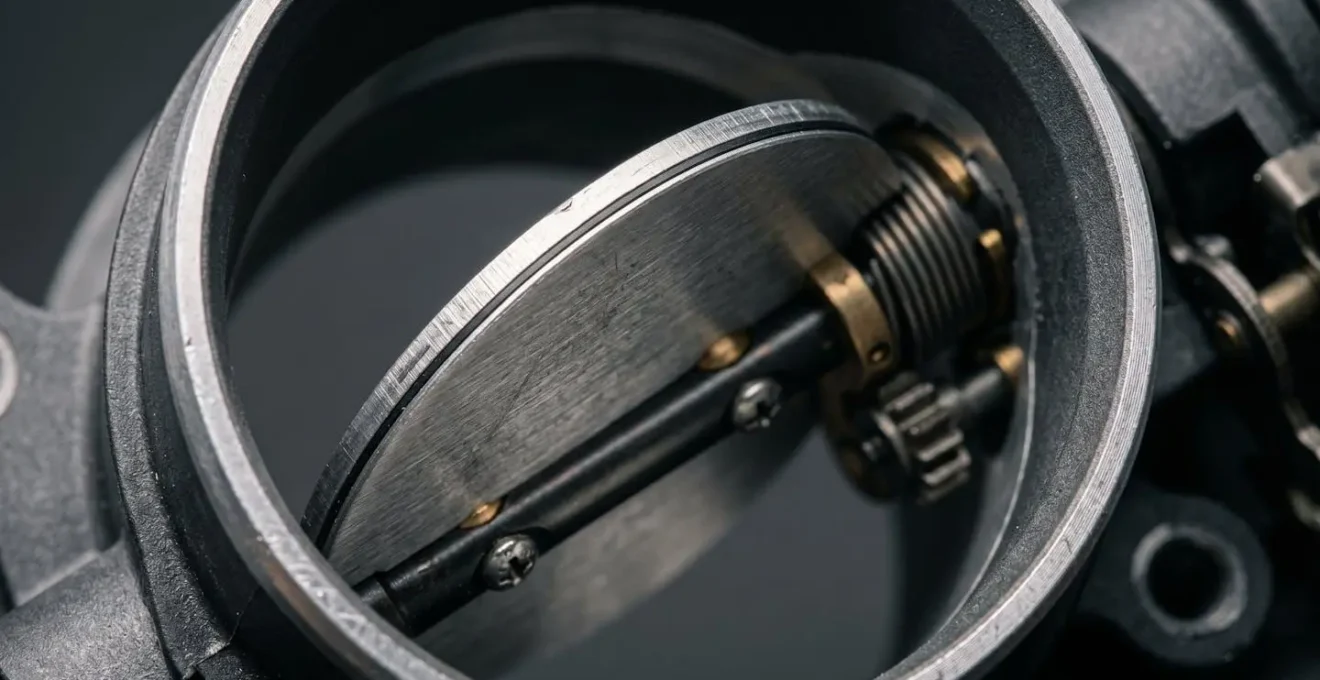
An ECU remap directly addresses this by rewriting the throttle map. A tuner can create a more aggressive, linear 1:1 relationship where 20% pedal input results in a 20% throttle opening. This doesn’t increase the engine’s maximum power, but it dramatically changes the perceived responsiveness of the car, making it feel more alert and connected to the driver’s inputs. It’s one of the most immediately noticeable benefits of a quality tune. By recalibrating this software layer, the remap removes the artificial « numbness » programmed in by the factory, restoring a direct and satisfying connection between your right foot and the engine.
The Air-Fuel Ratio Mistake That Melts Pistons in Tuned Cars
While throttle lag is an annoyance, an incorrect air-fuel ratio (AFR) is a catastrophic engine failure waiting to happen. The AFR is the mass ratio of air to fuel present in the combustion chamber. For gasoline engines, the chemically ideal or stoichiometric ratio is approximately 14.7 parts air to 1 part fuel (14.7:1). This ratio provides a near-perfect burn of the fuel. However, tuners manipulate this ratio to achieve different goals. A « rich » mixture (e.g., 12.5:1) has excess fuel, which has a cooling effect on the combustion chamber and helps prevent engine knock (detonation) under high load, making it ideal for maximum power. A « lean » mixture (e.g., 15.5:1 or higher) has excess air, which uses less fuel and is the key to improving MPG in economy tunes.
The danger lies in running too lean. As a technical guide on the topic explains, the consequences can be severe. This insight is critical for anyone considering a tune focused on fuel economy:
A lean mixture typically burns hotter and uses less fuel per mile driven, which improves fuel economy. But hotter combustion temperatures also increase oxides of nitrogen emissions and the risk of engine-damaging detonation. A fuel mixture that is much too lean may even burn a hole right through the top of a piston.
– Technical analysis, Engine Air/Fuel Ratios Technical Guide
This is the tuner’s balancing act. Pushing for maximum fuel economy by leaning out the AFR significantly elevates exhaust gas temperatures (EGTs) and the risk of detonation. In a worst-case scenario, this extreme heat can literally melt the top of a piston, leading to a complete engine rebuild. According to combustion engineering standards, while the ideal stoichiometric AFR for gasoline is 14.7:1, some aggressive eco-tunes can push this to as high as 22:1. A professional tuner understands where the safe limit is for a specific engine, using data from wideband oxygen sensors and knock sensors to create a custom map that improves economy without crossing into the danger zone. A generic, off-the-shelf « eco tune » that doesn’t account for your specific vehicle and conditions is a high-stakes gamble.
When to Reset Your ECU: Situations That Require Re-learning Driving Parameters?
Your car’s ECU is a learning computer. It constantly makes micro-adjustments to its baseline programming based on data from its sensors, your driving style, fuel quality, and environmental conditions. These adjustments, known as adaptive values or « fuel trims, » are stored in the ECU’s Random Access Memory (RAM). The goal is to keep the engine running as efficiently as possible around the factory’s target parameters. However, there are specific situations, particularly after modifications, when these learned values can become counterproductive and a reset is required.
The most common scenario is after a significant change to the engine’s hardware or software. If you install a new high-flow air intake, for example, or perform an ECU remap, the old adaptive values are no longer relevant to the new operating conditions. The ECU might try to « correct » for the new parameters, effectively fighting against the modification. Resetting the ECU clears these learned adaptations from its short-term memory, forcing it to start a new re-learning process from the new baseline provided by the remap. This allows the ECU to build a fresh set of adaptive values that are optimized for the modified setup.
Another reason for a reset is to troubleshoot a persistent but intermittent issue. If the car is behaving erratically but not throwing a consistent error code, clearing the adaptations can sometimes resolve the problem if it was caused by a « bad » learned value from a tank of poor-quality fuel or an unusual driving event. The reset procedure can be as simple as disconnecting the battery’s negative terminal for about 15-30 seconds to clear the RAM. For a more thorough « hard reset, » a diagnostic tool can be used to command-clear all adaptations, including those for the transmission and electronic throttle. After a reset, the car needs to undergo a complete drive cycle—a mix of idling, city, and highway driving—for the ECU to re-learn and stabilize its parameters.
- Disconnect Power: Disconnect the negative battery terminal for at least 15 seconds to clear RAM.
- Reconnect Securely: Reconnect the terminal, ensuring a tight fit and proper voltage.
- Perform Drive Cycle: Drive a mix of speeds, including idle, city driving (25-45 mph), and sustained highway cruising (55-70 mph).
- Allow Readiness: Let the ECU complete its internal self-tests, which can take 50-100 miles of varied driving.
- Monitor Behavior: Watch for any check engine lights or unusual performance during the relearning period.
Pending vs. Stored Codes: Which Ones Turn on the Check Engine Light?
For any tuned car owner, the OBD-II port is a window into the engine’s health, and understanding the diagnostic trouble codes (DTCs) it reports is crucial. However, not all codes are created equal. The system distinguishes between « pending » codes and « stored » (or « confirmed ») codes, a difference that is vital for both diagnostics and for staying under the radar. A pending code is an early warning. It’s logged when the ECU detects a potential fault during a single drive cycle. For example, if an oxygen sensor’s reading briefly goes out of its expected range, the ECU will log a pending code but will *not* illuminate the Check Engine Light (CEL) on your dashboard.
The ECU is programmed to avoid false alarms. It will continue to monitor the suspect system over subsequent drive cycles. If the same fault is detected again on the next consecutive drive cycle (or sometimes, two), the ECU « confirms » the issue. At this point, the code’s status changes from pending to stored. A stored code signifies a confirmed, persistent problem, and it is this action that finally triggers the illumination of the Check Engine Light. This two-stage system ensures that transient glitches don’t needlessly worry the driver.
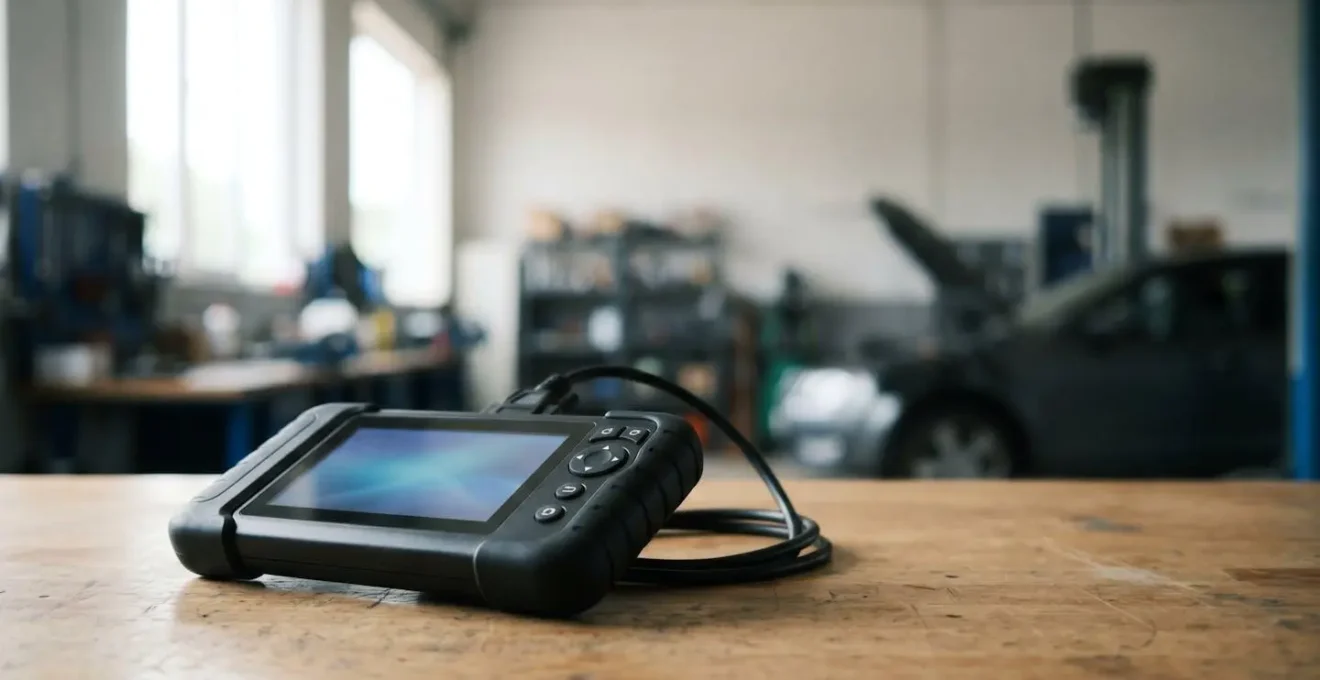
For a car owner with an ECU tune, this distinction is invaluable. Regularly scanning for pending codes with a simple OBD-II reader can provide an early indication that the tune might be pushing a certain parameter to its limit, even before the CEL alerts you. It allows you to be proactive, catch potential issues before they become serious, and discuss them with your tuner. For instance, a recurring pending code for a lean condition might indicate the eco-tune is too aggressive, allowing you to have it adjusted before it leads to a stored code, a CEL, and potential engine damage. It turns the diagnostic system from a reactive warning light into a proactive health monitoring tool.
When to Remap Your ECU: Identifying the Sweet Spot Between Power and Ecology
The decision to remap your ECU is ultimately a cost-benefit analysis. You are weighing the financial cost and potential risk against the gains in performance and fuel economy. The « sweet spot » is different for everyone and depends heavily on your vehicle’s age, your driving habits, and your tolerance for risk. A key benefit, particularly for diesel engines and high-mileage drivers, is the potential for significant fuel savings. Data shows that a professionally calibrated economy remap can yield substantial results; customer data from thousands of vehicles shows that it’s possible to achieve a 10-15% improvement in miles per gallon. Over tens of thousands of miles, this can translate into savings that more than cover the cost of the remap itself.
However, this gain is not without risk, especially concerning your vehicle’s warranty. The decision becomes a triangle of competing factors: cost, risk, and gain. A cheap, generic remap found online might offer a low upfront cost, but it carries a high risk of being poorly calibrated and is just as detectable by a dealer as a professional tune. A professional, custom remap from a reputable shop costs more but delivers safer, more reliable results. The safest option, of course, is to do nothing until the manufacturer’s warranty expires, but this means foregoing years of potential fuel savings and enhanced driving pleasure.
For a new vehicle under full warranty, the risk of a detectable remap may be too high. For a high-mileage vehicle that is out of warranty, the equation shifts dramatically; a remap becomes a low-risk, high-reward proposition. The table below outlines this decision framework to help you identify where you stand.
| Factor | Budget Remap | Professional Remap | Warranty-Safe Option |
|---|---|---|---|
| Cost Range | £200-£400 | £400-£1,200 | Delayed until warranty expires |
| Warranty Risk | High (generic tune) | Medium (detectable but professional) | Zero (no modification) |
| MPG Gain Potential | 5-10% (inconsistent) | 10-15% (verified) | 0% (stock configuration) |
| Safety/Reliability | Lower (one-size-fits-all) | Higher (custom calibration) | Highest (manufacturer settings) |
| Reversibility | Detectable via flash counter | Detectable via flash counter | N/A |
| Best For | Out-of-warranty vehicles | High-mileage drivers, fleet operators | New vehicles under full warranty |
Key Takeaways
- Understand Your Rights: An ECU remap does not automatically void your entire warranty. Manufacturers must often prove the modification caused the specific failure.
- Respect the Air-Fuel Ratio: The pursuit of fuel economy through lean-burn tuning carries a significant risk of engine damage if not performed by an expert.
- Choose Your Method Wisely: A piggyback tuner is physically removable but may compromise safety systems, while a full remap is digitally detectable via the flash counter but offers superior integration.
How to Mod Your Car for Street Performance Without Getting Pulled Over?
The ultimate goal for many owners is to enjoy the benefits of a tuned vehicle without attracting unwanted attention—from law enforcement or, more critically, from a dealership’s service department. This goes beyond just the ECU remap and extends to the entire modification ecosystem. The key is subtlety and an understanding of the legal landscape. While an ECU tune is electronically « invisible » to the naked eye, it carries hidden liabilities. For instance, most insurance policies require all modifications to be declared. Failing to inform your insurer about a remap could give them grounds to void your policy in the event of a claim, a financial risk far greater than a denied warranty repair.
The most powerful tool in your arsenal against a warranty denial is knowledge of your rights. In the United States, for example, the Magnuson-Moss Warranty Act is a federal law that provides significant protection. It establishes the « burden of proof » principle.
Case Study: Magnuson-Moss Warranty Act Protection
Under this crucial federal law, a manufacturer or dealer cannot void a warranty simply because an aftermarket part or tune is present. They must prove that the specific modification directly caused the specific failure for which warranty coverage is being denied. For example, if your power windows fail after an ECU tune, the dealer must honor the warranty, as the window electronics are unrelated to the engine software. However, if a piston melts, the dealer can almost certainly deny coverage for the engine repair, as they can reasonably link the failure to the aftermarket tune. As an analysis of the law confirms, vehicle owners maintain warranty rights for all unrelated components. This means a remap puts your engine and drivetrain warranty at risk, but not the warranty on your infotainment system, suspension, or bodywork.
This legal principle is your shield. It means a dealership cannot issue a blanket « warranty void » on your entire car. They must deny claims on a case-by-case basis and be able to justify that denial. The strategy for the risk-averse owner becomes clear: understand that your powertrain warranty is at risk and accept that. For any other issue, be prepared to calmly and knowledgeably assert your rights, citing the principle that they must prove the tune caused the unrelated failure. This transforms the conversation from one of fear to one of fact-based negotiation.
Armed with this technical and legal knowledge, the next step is to research reputable tuners who provide custom, dyno-verified calibrations and can discuss warranty implications transparently. Seek out specialists who understand your specific engine platform and are willing to work with you to achieve your goals safely.