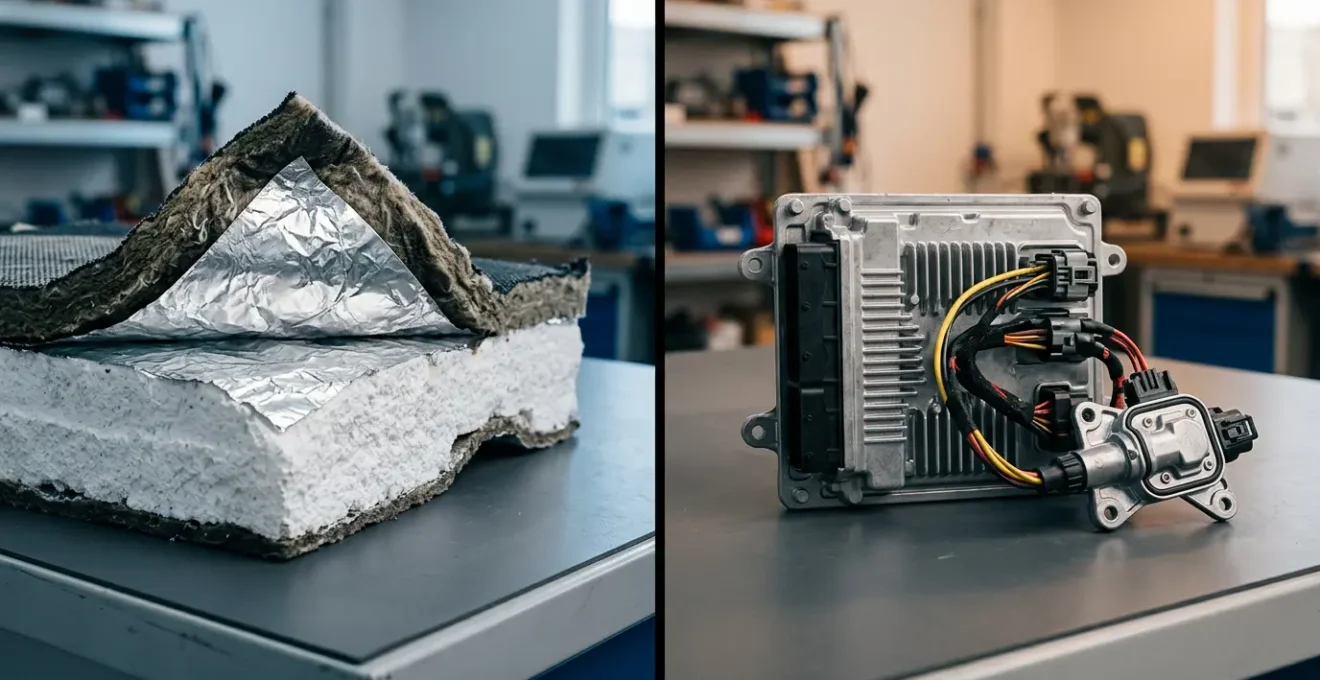
The most expensive cold chain mistake isn’t buying the wrong box—it’s making simple, unseen process errors that defeat your packaging’s thermal performance before it even leaves your facility.
- Tightly shrink-wrapping a pallet creates an insulated « hot zone » in the center that can cause a 24-hour validated shipper to fail in under 8 hours.
- Placing a warm product (e.g., from a factory floor) into a pre-cooled box negates the insulation’s benefits due to a principle called « thermal mass defeat. »
Recommendation: Shift your focus from simply comparing material R-values to mastering thermal process discipline. Understanding and controlling factors like airflow, pre-conditioning, and moisture are far more cost-effective than investing in active refrigeration for short-haul shipments.
For any catering business or pharmaceutical courier, the cost of a refrigerated van is a significant operational burden. The immediate assumption is that maintaining a strict temperature chain for shipments under 24 hours requires this level of active cooling. This leads to a search for alternatives, often beginning and ending with a simple question: « Which insulated box is best? » Businesses spend time comparing liner materials, gel pack sizes, and single-use packaging costs, believing the solution lies in the product they purchase.
While material science is important, this focus often overlooks a more critical and costly truth. The most catastrophic thermal failures—the ones that result in spoiled food, ruined pharmaceuticals, and lost revenue—rarely happen because of a 10% difference in an insulator’s R-value. They happen because of fundamental, often counter-intuitive, mistakes in the packaging and shipping process itself. These are errors in physics and logistics, not just material selection.
But what if the key to cost-effective thermal control wasn’t just in the box, but in how you prepare, pack, and stack that box? What if understanding a few core engineering principles could provide better temperature assurance than the most expensive passive shipper? This guide moves beyond the superficial comparison of materials. Instead, it adopts the mindset of a thermal packaging engineer to expose the hidden failure points in your cold chain. We will dissect the common-sense mistakes that secretly sabotage your shipments and provide a scientific, cost-conscious framework for success.
This article provides a structured path to understanding these critical factors. By examining each stage of the process, from material choice to customs clearance, you will learn to identify and eliminate the true sources of thermal risk, enabling you to reduce costs without compromising the integrity of your products.
Summary: A Cost-Conscious Guide to Passive vs. Active Cooling for Shipments
- Bubble Foil vs. Polystyrene: Which Liner Keeps Heat Out Longer?
- How Much Dry Ice Do You Really Need for a 2-Day Shipment?
- Single-Use Box vs. Returnable Bin: The Break-Even Point for Pharma Logistics?
- The Moisture Mistake That Ruins Labels Inside Isothermal Bags
- When to Pre-Cool Your Box: The Step Most Shippers Skip?
- The Packaging Mistake That Destroys 15% of Sensitive ECUs During Shipping
- The Pallet Stacking Mistake That Blocks Airflow and Spoils Food
- How to Clear Automotive Customs 3 Days Faster Without Paying Expedited Fees?
Bubble Foil vs. Polystyrene: Which Liner Keeps Heat Out Longer?
The first decision in passive cooling often involves choosing a liner. Bubble foil, with its reflective surface, seems intuitively effective. However, this intuition is misleading for most shipping applications. Bubble foil primarily works as a radiant barrier, meaning it reflects thermal radiation (like sunlight). To be effective, it requires a dedicated air gap, something that is difficult to maintain in a tightly packed box. The primary threat to a cold shipment is not radiation, but conduction (heat transfer through contact) and convection (heat transfer through air movement).
This is where polystyrene, particularly extruded polystyrene (XPS), demonstrates its engineering superiority. Its closed-cell structure is specifically designed to trap air and resist conductive heat transfer. This is measured by its R-value, a metric of thermal resistance. While bubble foil struggles to offer a consistent R-value, polystyrene provides a reliable and significantly higher thermal barrier against the type of heat your package will actually encounter in the back of a truck.
The following table breaks down the critical performance differences. It highlights why, from a cost-per-R-value and performance reliability standpoint, polystyrene is the scientifically sound choice for conductive insulation. Bubble foil is lighter and more compact for shipping, but its performance is too variable for critical applications.
| Performance Factor | Bubble Foil (Radiant Barrier) | Polystyrene (Conductive Insulation) |
|---|---|---|
| Heat Transfer Type Blocked | Radiant heat (requires air gap) | Conductive heat (high R-value) |
| R-value per inch | ~1.0-1.3 | 3.85 (EPS) to 5.0 (XPS) |
| Installation Sensitivity | High (performance depends on maintaining air gap) | Low (forgiving to packing errors) |
| Shipping Volume | Compact (rolls) | Bulky (rigid panels) |
| Cost per R-value | Higher | Lower |
| Environmental Disposal | Easier (lightweight) | Problematic (ESG concerns) |
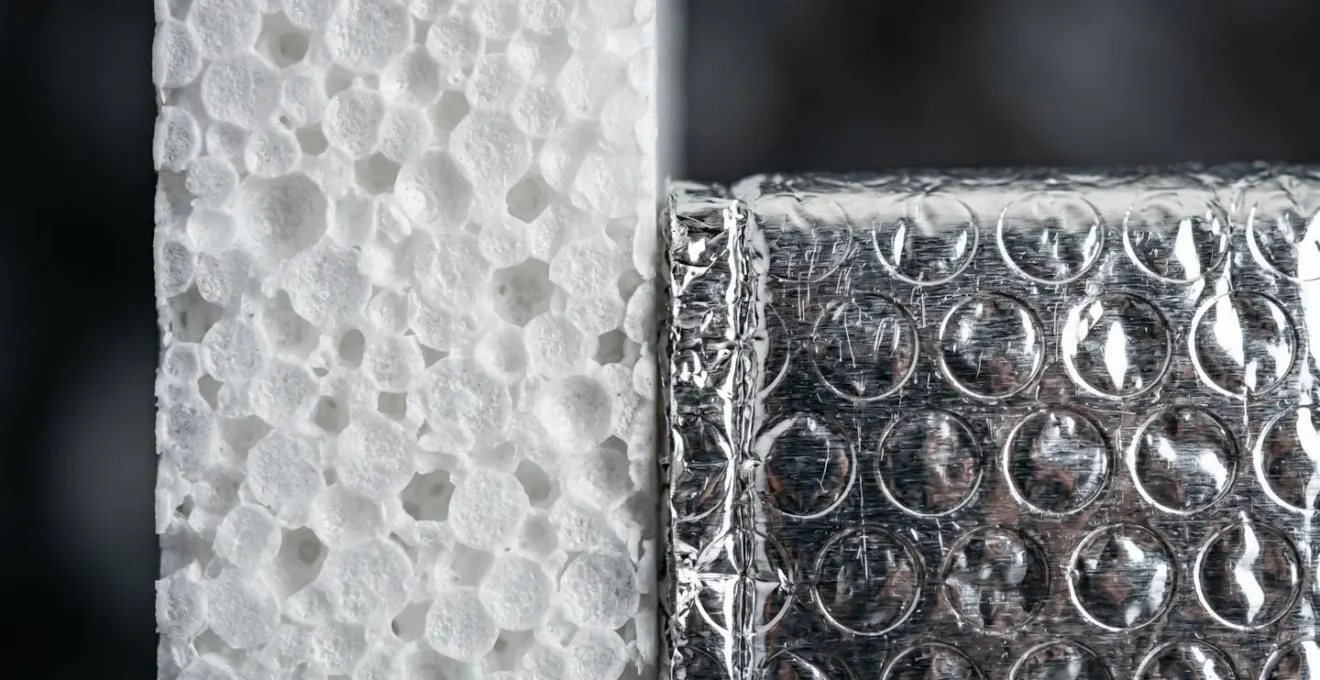
As the visual and data show, the rigid, cellular structure of polystyrene is inherently better at trapping air and stopping heat flow than the thin layers of bubble foil. For a business where product integrity is non-negotiable, relying on the consistent, measurable performance of polystyrene is the more cost-effective decision in the long run.
How Much Dry Ice Do You Really Need for a 2-Day Shipment?
Calculating the correct amount of dry ice is a frequent source of costly error. Underestimate, and the product spoils. Overestimate, and you’re paying for unnecessary weight and materials. A common rule of thumb suggests a requirement of 5-10 lbs of dry ice per 24 hours for a standard insulated cooler. Therefore, a 2-day shipment would logically require a minimum of 20 lbs. However, relying on this generalization is a gamble.
A true thermal engineer knows that the actual amount needed is a function of the total « thermal load, » not just time. This calculation is more complex and accounts for the specific conditions of your shipment. The sublimation rate—the process where solid dry ice turns into carbon dioxide gas—is not linear. It is heavily influenced by factors beyond just the duration of the transit.
To move from guesswork to a calculated strategy, you must consider the following variables. Each factor influences the rate of heat ingress and, consequently, the amount of dry ice needed to counteract it. A precise calculation prevents both product loss and wasteful overspending on coolant.
- Container Performance: The R-value and total surface area of your insulated box determine the baseline rate of heat entering the container.
- Product Thermal Mass: The nature of your payload matters. A dense, metal automotive ECU has a different heat capacity and will interact with the cold environment differently than a liquid-based pharmaceutical.
- Ambient Temperature Profile: You must map the entire journey’s expected temperature, including potential highs on a sun-soaked tarmac, not just the average daily temperature.
- Sublimation Rate Variables: The mass of the dry ice itself affects its lifespan. Packages under 45kg can see sublimation rates of ~2% per hour, while heavier shipments over 45kg are closer to ~1% per hour.
- Insulation Quality: High-performance insulation like Vacuum Insulated Panel (VIP) systems can reduce dry ice requirements by 30-40% compared to standard EPS for the same duration.
By analyzing these factors, you can create a more accurate model for your coolant needs, ensuring product safety while optimizing for weight and cost. This analytical approach is the hallmark of professional cold chain management.
Single-Use Box vs. Returnable Bin: The Break-Even Point for Pharma Logistics?
The debate between disposable (single-use) and reusable packaging often centers on a simple cost comparison. The single-use box is cheap upfront, while the durable, returnable bin represents a significant capital investment. For businesses focused on minimizing immediate costs, the choice seems obvious. However, this short-term thinking ignores the total cost of ownership and the powerful return on investment (ROI) that a well-managed reusable system can offer.
The key to understanding the financial break-even point lies in a variable that is often overlooked: circulation time. It’s not just about the cost of the bin, but how many times you can use it within a given period. An analysis of the automotive industry found that the number of containers needed is a direct function of this circulation time and daily requirements. The longer the lifespan of the container, the more profitable the investment becomes, even after accounting for the added costs of return transportation and cleaning.
Case Study: Automotive Parts Manufacturing
Research on automotive parts manufacturing found that assembly companies could save an estimated $125 per vehicle by implementing reusable containers compared to single-use packaging. The study emphasized that container lifespan is critical for Net Present Value (NPV) calculations, with longer lifespans significantly improving investment profitability despite increased transportation and cleaning expenses.
The financial impact can be staggering. When systems are optimized, the ROI is not a matter of years, but weeks. A comparative analysis of automotive logistics systems showed that the initial investment in a returnable system was recouped in just 10 weeks. The financial data speaks for itself: Year 1 savings of 80.77%, equating to £105,840, were achieved, leading to a total three-year saving of 93.5%.
For a pharmaceutical courier or a catering company with regular, predictable routes, this model is directly applicable. The initial outlay for durable, thermally superior bins is offset rapidly by eliminating the recurring cost of disposable boxes, reducing packaging waste, and often providing better product protection.
The Moisture Mistake That Ruins Labels Inside Isothermal Bags
While temperature is the primary concern in cold chain logistics, a secondary—and equally destructive—threat is moisture. Condensation can compromise product integrity, damage packaging, and, critically, render barcodes and shipping labels unreadable, leading to logistical nightmares. This problem is especially acute for sensitive electronics, which require strict humidity control between 40-80% during shipping to prevent both static and moisture damage.
Condensation occurs in two main ways. Internal condensation can come from the product itself or the coolant (like melting water ice). More common and insidious, however, is external condensation. This happens when a cold-soaked box is moved from a refrigerated truck or warehouse into a warmer, more humid environment, like a loading dock. The humid ambient air hits the cold surface of the box, and the moisture instantly condenses into water, soaking labels and cardboard.
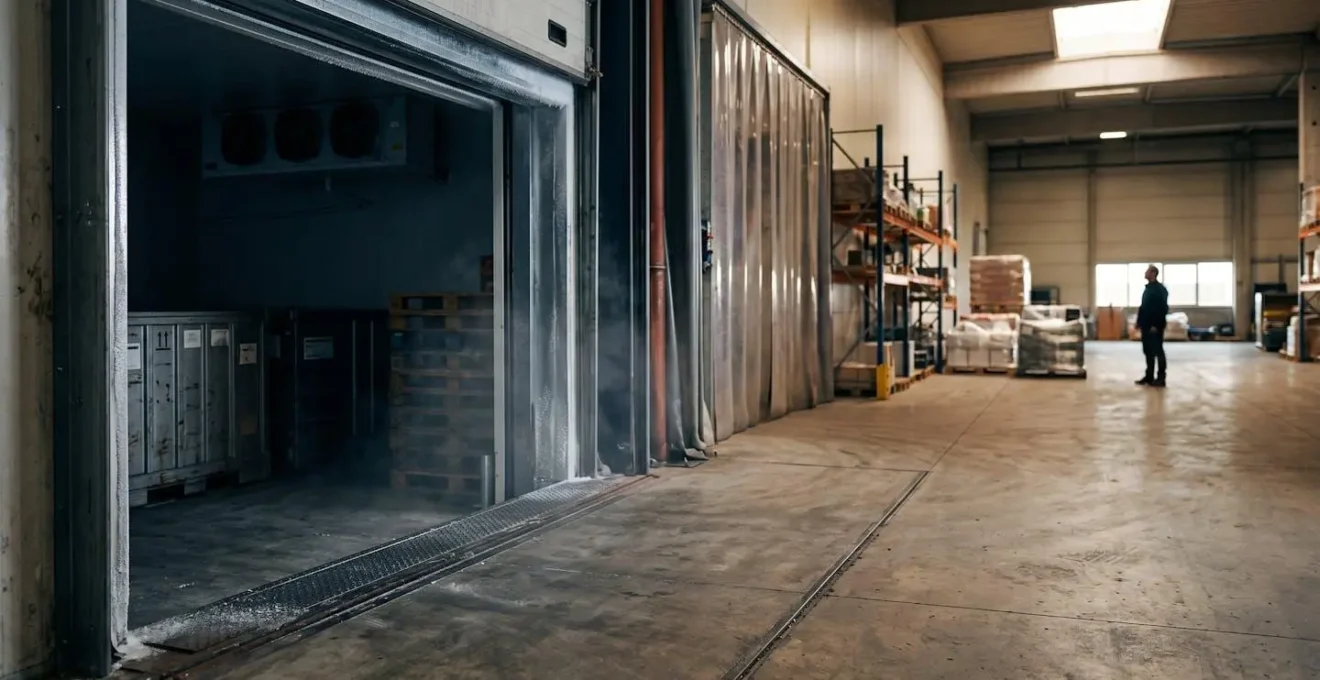
The solution is a proactive, dual-barrier approach to moisture management. This isn’t just about keeping the product dry; it’s about controlling the atmosphere within the entire package and protecting it from external shocks. For metal automotive parts, this can be further enhanced with Vapor Corrosion Inhibitor (VCI) bags to prevent flash rust.
A disciplined moisture protection protocol involves several layers of defense:
- Internal Absorption: Place desiccant packs (like silica gel) inside the payload area. Their job is to actively absorb any airborne moisture originating from within the package.
- Component Sealing: The sensitive component itself should be sealed inside a dedicated moisture barrier bag. This acts as the final line of defense against both internal and external humidity.
- Environmental Control: Where possible, use climate-controlled loading docks to minimize the time the cold package is exposed to fluctuating ambient conditions during loading and unloading.
By anticipating where and how moisture will form, you can implement these simple, low-cost measures to prevent a problem that could otherwise derail an entire shipment.
When to Pre-Cool Your Box: The Step Most Shippers Skip?
One of the most common and damaging misconceptions in passive thermal shipping is the idea of packing a warm product into a pre-cooled box. Intuitively, it seems like the cold box will simply cool down the warm item. In reality, this action initiates a process called thermal mass defeat, where the heat from your product actively works against and overwhelms your insulation and coolants.
Imagine placing a batch of freshly cooked food, still warm from the kitchen, into a polystyrene box that has been sitting in a freezer. The box is cold, but the food contains a large amount of thermal energy (heat). When sealed, the heat from the food must go somewhere. It will radiate outwards, warming the air inside the box and, crucially, being absorbed by the frozen gel packs or dry ice. The coolant’s energy is spent neutralizing the product’s heat rather than maintaining a stable cold environment against external heat.
The result is a rapid depletion of your coolant’s capacity. The gel packs thaw faster, the dry ice sublimates quicker, and the internal temperature rises, long before the package is exposed to significant external heat. You have effectively used up your « cold budget » before the journey has even begun. This is a primary reason why shipments, which should have stayed cold for 24 hours, fail in half that time.
The correct, professional procedure is to manage the thermal equilibrium of the system *before* packing. This involves two distinct steps:
- Pre-cool the product: The payload itself must be brought down to the target temperature range *before* it enters the shipping container. A warm ECU from a factory floor or a warm tray of food must be placed in a refrigerator or cold room until it is thermally stable.
- Pre-cool the shipper: Separately, the insulated box and its coolants should also be conditioned to the target temperature.
Only when both the product and the shipper are at the same target temperature should they be combined and sealed. This ensures the coolant’s energy is dedicated to its sole purpose: combating heat that enters from the outside world, not from the product it’s supposed to be protecting.
The Packaging Mistake That Destroys 15% of Sensitive ECUs During Shipping
For sensitive electronics like automotive Electronic Control Units (ECUs), thermal management is not just about staying cool. Extreme temperatures, both hot and cold, can fundamentally alter the physical properties of the packaging materials themselves, leading to a catastrophic failure known as thermal shock. This is a failure of physics, not just temperature control.
Protective foams, cushions, and even plastic casings are engineered to perform within a specific temperature range. When exposed to extremes, their protective qualities are compromised. This is a critical insight for any company shipping valuable components through variable climates.
High temperatures can make protective foams less resilient and plastics more brittle, increasing the likelihood of damage from a drop that would be harmless at room temperature.
– Electronics packaging logistics research, Protective packaging analysis for temperature-sensitive components
A package that provides perfect shock absorption at 20°C might offer dangerously little protection at 50°C on a hot tarmac, or become brittle and crack if dropped at -20°C. The mistake is assuming the packaging’s physical performance is constant. To prevent these failures, a disciplined pre-conditioning and data analysis protocol is not a luxury; it is a necessity for proving the ROI of proper thermal management.
Action Plan: Preventing Thermal Mass Defeat and Shock
- Allow a heat-soaked ECU from a hot factory environment to reach thermal equilibrium (room temperature) before packing.
- Pre-cool both the product and the insulated shipper to the target temperature range. Never place a hot product directly into a pre-cooled box.
- Use low-cost, multi-use data loggers that record temperature, humidity, and shock throughout the entire journey.
- Analyze the logger data to identify the exact failure points (e.g., tarmac wait times, customs holds, warehouse staging) instead of blaming carriers.
- Prove the ROI of better insulation and processes by documenting the direct correlation between thermal excursions and component failure rates.
By implementing this protocol, you transform packaging from a cost center into a data-driven risk management tool. You are no longer guessing why failures occur; you are using empirical data to identify and eliminate them, thereby reducing the staggering 15% loss rate and improving your bottom line.
Key Takeaways
- The biggest thermal risks are often process-based (e.g., pallet stacking, pre-conditioning) rather than material-based.
- A single-use vs. returnable decision must factor in ‘circulation time’; a well-managed returnable system can see ROI in as little as 10 weeks.
- Mastering the physics of heat transfer (conduction, thermal mass, airflow) is more cost-effective than simply buying more expensive insulation.
The Pallet Stacking Mistake That Blocks Airflow and Spoils Food
Even the most perfectly designed and validated insulated shipper can fail spectacularly due to a simple mistake made at the last stage of packing: how it’s stacked on a pallet. When individual boxes are tightly unitized and shrink-wrapped together, they cease to function as independent thermal units. Instead, they create a single, large thermal mass where the laws of airflow and heat dissipation are completely altered.
The boxes on the outside of the pallet are exposed to ambient air and can dissipate some heat. However, the boxes trapped in the middle are effectively sitting inside an oven. They are insulated from the outside world not only by their own packaging but by all the surrounding boxes, which trap heat. This creates a « thermal hot zone » in the center of the pallet. Research has shown that boxes in this center position can experience an effective ambient temperature 10-15°C higher than standalone boxes under the same conditions.
This phenomenon explains a common and baffling cold chain failure. As one thermal failure analysis revealed, insulated shippers that were validated to maintain temperature for 24 hours were found to have failed in under 8 hours when positioned in the middle of a shrink-wrapped pallet. The tightly packed configuration eliminated convective airflow, causing the center boxes to sit in a micro-climate created by the retained heat of the entire pallet.

The solution is both simple and critical: ensure airflow. When stacking pallets, you must deliberately create air gaps, or « chimneys, » between boxes. This allows for convective airflow to move through the pallet, carrying heat away from the center boxes and allowing each individual shipper to perform as it was designed. This may involve using less shrink wrap, using specialized pallet spacers, or adopting a stacking pattern that prioritizes ventilation over maximum density.
How to Clear Automotive Customs 3 Days Faster Without Paying Expedited Fees?
For any business shipping temperature-sensitive goods internationally, customs is a black hole of uncertainty. A delay of hours can stretch into days, leaving your carefully packed shipment sitting on a tarmac or in a warehouse, its thermal budget ticking away. While you can’t control the inspection process, you can strategically influence its speed and outcome through proactive thermal documentation.
The typical customs delay for sensitive goods stems from an inspector’s legitimate question: « Is this product still good? » Without clear data, they may choose to hold the shipment for physical inspection or testing, adding days to the transit time. The key to accelerating this process is to answer that question before it’s even asked. You must provide undeniable proof that the shipment has remained within its specified temperature range throughout its journey.
This strategy transforms your packaging and documentation from a passive container into an active tool for risk mitigation. Instead of hoping for the best, you are providing a complete dossier that builds confidence and reduces the perceived risk for the inspector, making a lengthy inspection unnecessary. This involves a synthesis of the best practices discussed earlier.
Implement a proactive documentation strategy to preempt customs questions:
- Include Validation Reports: Proactively include the validation report for the specific insulated shipper model you are using in the customs paperwork.
- Provide Accessible Data: Make temperature data logger information easily accessible. A QR code on the box’s exterior linking to the journey’s temperature log is a powerful tool for inspectors.
- Prove Compliance: By providing proof that the shipment has remained within specification, you preemptively address any concerns about product integrity.
- Show Regulatory Adherence: Clear documentation showing compliance with all relevant thermal regulations (e.g., for pharmaceuticals) reduces the likelihood of an inspection being triggered.
- Build a « Customs Insurance » Buffer: For critical shipments, use a 72 or 96-hour validated shipper for a 24-hour transit. This builds in a buffer to withstand potential holds without a thermal excursion.
By arming customs officials with data, you are not just shipping a product; you are shipping a guarantee of quality. This proactive approach is the fastest way to clear customs because it removes the single biggest cause for delay: uncertainty.
By shifting your perspective from a simple purchaser of boxes to a manager of thermal processes, you can achieve superior temperature control at a fraction of the cost of active refrigeration. Start today by analyzing your own procedures for these hidden failure points and implementing a data-driven approach to your cold chain.