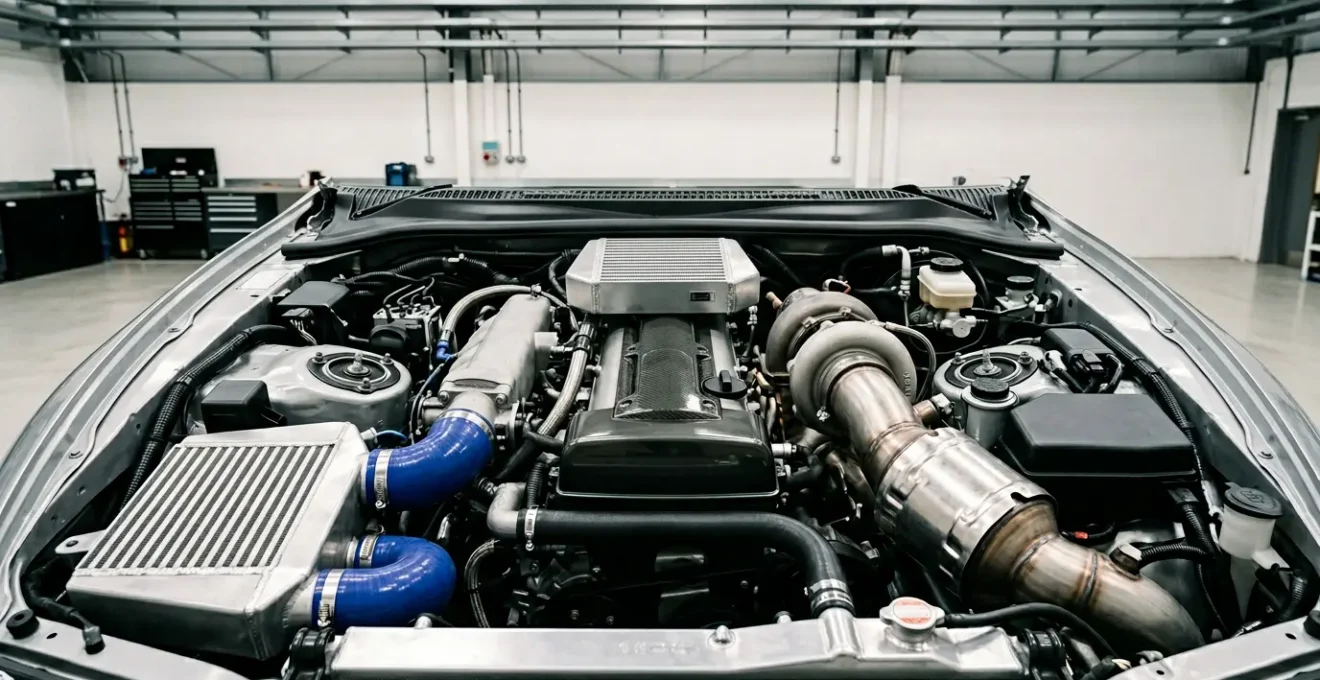
Contrary to popular belief, achieving Euro 6 compliance doesn’t require sacrificing horsepower; it demands a deeper understanding of emission system physics to unlock performance legally.
- Removing components like catalytic converters often reduces low-RPM torque due to the loss of the exhaust scavenging effect.
- A professional ‘Stage 1’ ECU remap can increase power by 15-25% while remaining fully compliant with emissions hardware intact.
Recommendation: Focus on optimizing existing systems (EGR, SCR, DPF) rather than deleting them. This is the key to balancing power and ecology.
For performance car owners and fleet operators, the rollout of stringent Euro 6 emissions standards presents a fundamental conflict: how do you maintain the horsepower, torque, and driving satisfaction you expect while remaining compliant with environmental regulations? The common narrative suggests that emissions control systems are purely restrictive, and that power can only be reclaimed by their removal. This leads many down a path of deleting Diesel Particulate Filters (DPFs), catalytic converters, and blocking Exhaust Gas Recirculation (EGR) valves.
However, this approach is based on an outdated understanding of modern engine management. These systems are not simple chokes on the engine; they are deeply integrated components that influence everything from thermal management to exhaust gas dynamics. The conventional wisdom of « less restriction equals more power » is a dangerous oversimplification that often leads to performance loss, engine damage, and significant legal penalties. The true key to unlocking performance within Euro 6 constraints isn’t brute-force removal, but a sophisticated understanding of the system’s chemistry and physics.
This guide moves beyond the myths. We will explore the engineering principles behind these systems, demonstrating how to optimize their function for both power and compliance. By mastering the operational parameters of your vehicle’s emissions hardware, you can achieve significant performance gains legally and sustainably, transforming compliance from a burden into a performance-tuning opportunity.
This article provides direct, engineering-level answers to the most critical questions performance enthusiasts face in the Euro 6 era. The following summary outlines the key areas we will dissect to help you make informed, powerful, and compliant tuning decisions.
Summary: The Technical Guide to Euro 6 Performance Tuning
- Why Removing Your Catalytic Converter Actually Hurts Low-End Torque?
- How to Prevent AdBlue Crystallization in Vehicles Driven Less Than 50 Miles a Week?
- 0W-20 vs. 5W-30:Why Your Lane Keep Assist Pulls to the Right After Windshield Replacement?
- The Tuning Modification That Can Result in a $2,500 Fine During Inspection
- When to Remap Your ECU: Identifying the Sweet Spot Between Power and Ecology
- Why Blocking Your EGR Valve Increases Engine Temperature and NOx Output?
- Resonated vs. Straight Pipe: How to Get Sound Without Breaking Decibel Limits?
- How to Reduce NOx Emissions in Older Diesels to Avoid City Bans?
Why Removing Your Catalytic Converter Actually Hurts Low-End Torque?
The belief that removing a catalytic converter is a simple path to more power is one of the most persistent myths in performance tuning. While it’s true that a catalytic converter presents a restriction in the exhaust path, its removal often results in a noticeable loss of low-end torque, making the car feel less responsive in everyday driving. This counter-intuitive outcome is not about « backpressure » itself, but a more nuanced principle: exhaust gas velocity and the scavenging effect.
At low RPM, a properly designed exhaust system, including the narrower passages of a catalytic converter, maintains high exhaust gas velocity. This fast-moving column of gas creates a vacuum pulse behind it as it exits the cylinder. This vacuum, known as the « scavenging effect, » actively helps pull the remaining exhaust out of the combustion chamber and can even help draw in the fresh air-fuel mixture for the next cycle. This dramatically improves volumetric efficiency at lower engine speeds, which directly translates to higher torque.
Case Study: The Gas Velocity vs. Backpressure Trade-off
A technical analysis of exhaust system design demonstrates this principle clearly. When a catalytic converter is replaced with a wider-diameter straight pipe, the total cross-sectional area of the exhaust system increases. While this reduces overall restriction (backpressure), it causes the exhaust gas velocity to drop significantly at low RPM. According to a detailed analysis on performance exhaust dynamics, this loss of velocity completely destroys the scavenging effect. The engine must work harder to push exhaust gases out, resulting in a measurable drop in torque below approximately 3,000 RPM, even though peak horsepower at the very top of the rev range might see a marginal increase.
Therefore, for a road car that spends most of its time at low-to-mid RPM, a high-flow sports catalytic converter (e.g., a 200-cell unit) is a far superior solution. It offers a compromise by reducing restriction compared to the OEM unit while still maintaining enough gas velocity to preserve the crucial low-end torque from the scavenging effect.
How to Prevent AdBlue Crystallization in Vehicles Driven Less Than 50 Miles a Week?
AdBlue, or Diesel Exhaust Fluid (DEF), is essential for modern diesel engines to meet Euro 6 NOx emission standards. It’s injected into the exhaust stream, where it undergoes a chemical reaction in the Selective Catalytic Reduction (SCR) converter to neutralize harmful NOx into nitrogen and water. However, this process has a critical weakness: temperature. The chemical hydrolysis of urea into ammonia requires a sustained high temperature, which is often not reached during short trips.
When a vehicle is driven for less than 50 miles, or on frequent short city cycles, the exhaust system rarely reaches its optimal operating temperature. According to SCR system specifications, the catalyst requires a minimum temperature of around 200°C to start the efficient conversion process. Below this temperature, the AdBlue liquid doesn’t fully convert. Instead, it evaporates, leaving behind solid urea crystals. These white, chalky deposits build up inside the SCR system, clogging the injector nozzle, exhaust piping, and catalyst itself.

This crystallization leads to a cascade of problems: fault codes on the dashboard, « no start » warnings when the AdBlue tank level sensor is blocked, and ultimately, expensive repairs to the SCR system. For owners whose driving habits involve predominantly short journeys, preventative action is crucial to avoid these issues.
Action Plan: Preventing AdBlue System Crystallization
- Temperature Management: Intentionally schedule a longer drive (at least 30-45 minutes at highway speeds) once or twice a month. This allows the exhaust system to reach and maintain the 200°C+ temperature needed to burn off any nascent crystal deposits.
- Fluid Quality Audit: Exclusively use high-purity, ISO 22241-compliant AdBlue from a reputable source. Before purchasing, verify the container’s seal is intact and check the expiration date to avoid degraded fluid that can accelerate crystallization.
- Injector Inspection: During routine service, ask your technician to visually inspect the AdBlue injector nozzle. Catching early signs of white crystal formation allows for simple cleaning before a major blockage occurs.
- Preventative Additive Use: Consider using a dedicated anti-crystallization AdBlue additive, especially if your driving style consists primarily of short trips. These additives lower the temperature at which crystals form and help dissolve existing deposits.
- Fault Code Monitoring: Use a basic OBD2 scanner to periodically check for pending or stored fault codes related to the SCR system (e.g., P20EE, P20E8). These codes are often the first digital warning of a developing flow problem.
0W-20 vs. 5W-30:Why Your Lane Keep Assist Pulls to the Right After Windshield Replacement?
This question combines two separate but critical areas of modern vehicle maintenance, often leading to confusion. Let’s address them individually: the engine oil viscosity has absolutely no connection to the Advanced Driver-Assistance Systems (ADAS) like Lane Keep Assist. However, the issue of an ADAS malfunction after a windshield replacement is a very real and increasingly common problem.
First, regarding oil: The choice between 0W-20 and 5W-30 is dictated solely by the engine manufacturer’s specifications. These numbers represent the oil’s viscosity (its resistance to flow) at cold and operating temperatures. Using the wrong viscosity can lead to inadequate lubrication, increased engine wear, and can affect the performance of systems like variable valve timing, but it will not impact your electronic safety systems.
The real issue lies with the windshield replacement. Modern vehicles have a forward-facing camera, which is a critical sensor for ADAS functions like Lane Keep Assist, Automatic Emergency Braking, and Adaptive Cruise Control. This camera is typically mounted to the inside of the windshield. When the windshield is replaced, the camera must be detached and then re-mounted to the new glass. This process can introduce tiny, almost imperceptible changes in the camera’s angle and position. For an ADAS system, this is a major problem, as even a minor misalignment can significantly impact the system’s effectiveness. A camera that is off by even a single degree can misinterpret lane markings that are hundreds of feet away, causing the vehicle to « pull » to one side or fail to detect a lane departure correctly.
Therefore, after any windshield replacement on a modern vehicle, a mandatory ADAS recalibration is required. This procedure uses specialized targets and diagnostic software to tell the camera’s control module its precise new position relative to the car’s centerline. Skipping this calibration is dangerous and is the direct cause of ADAS malfunctions post-repair, not the type of engine oil used.
The Tuning Modification That Can Result in a $2,500 Fine During Inspection
The most financially risky tuning modification on a modern diesel vehicle is the installation of an AdBlue emulator or the implementation of a « delete » map that electronically disables the SCR system. These modifications are designed to fool the Engine Control Unit (ECU) into thinking the AdBlue system is functioning perfectly, even when it’s empty, disconnected, or removed entirely. While this may seem like a convenient way to avoid AdBlue refills and potential crystallization issues, it is illegal for road use and easily detectable during modern emissions inspections.
Regulators are cracking down heavily on this form of emissions tampering. In the UK, for example, enforcement data shows that fines can reach £1,000 (over $1,250) and lead to an invalid insurance policy, with company directors facing potential criminal records. In the US, the EPA can levy fines well in excess of $2,500 against both the vehicle owner and the shop that performed the modification. The risk is substantial and not just financial.
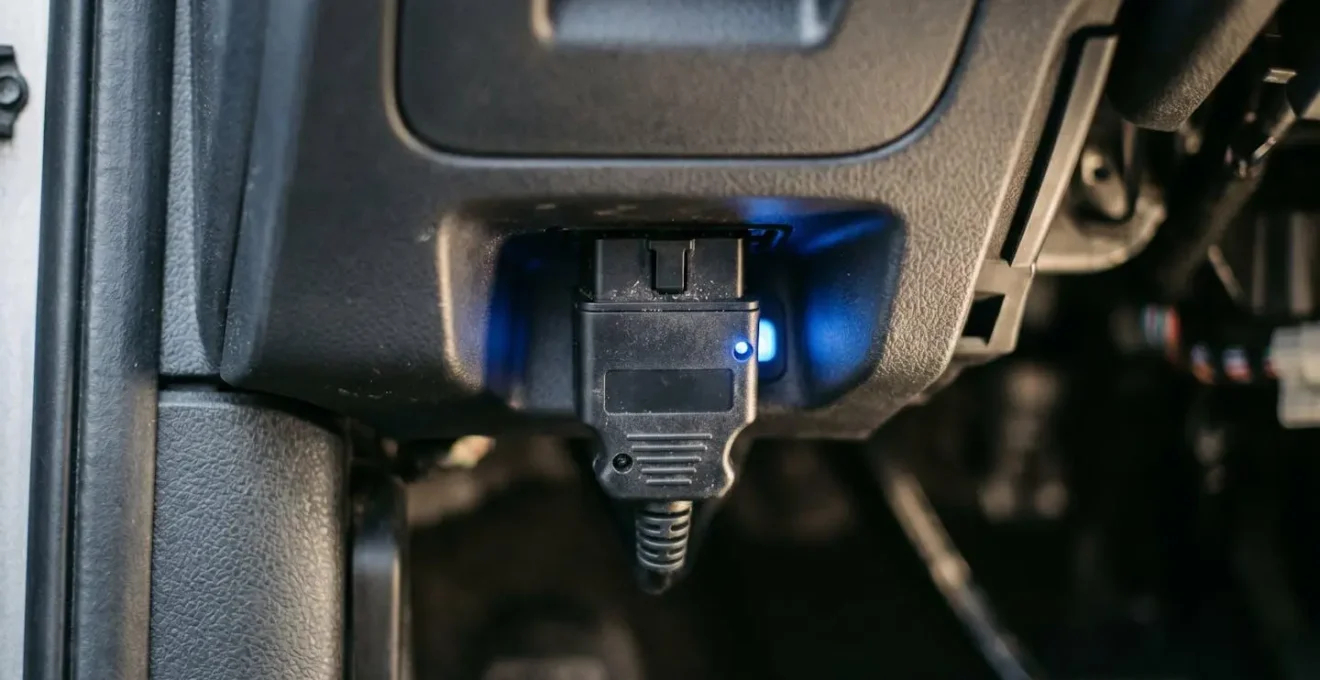
Detection is straightforward for inspectors with modern tools. When a vehicle is functioning correctly, the ECU runs a series of self-tests called « Readiness Monitors » or « IM Flags » for all major emissions systems. A healthy vehicle will show these monitors as « Complete » or « Ready. » As experts in ECU services point out, illegal delete tunes work by changing these flags. As explained in technical documentation from TuningBot ECU Services:
A fraudulent tune will artificially set these monitors to ‘Pass’ or ‘N/A’, which is a detectable digital fingerprint of tampering.
– TuningBot ECU Services, Readiness Calibration – OBD-II Monitors & IM Flags technical documentation
When an inspector plugs an OBD2 scanner into the port, their first check is the status of these readiness monitors. Seeing a « Not Applicable » or forced « Pass » status for the SCR system on a vehicle that should have one is an immediate red flag, leading to further investigation and almost certain failure and fines.
When to Remap Your ECU: Identifying the Sweet Spot Between Power and Ecology
An ECU (Engine Control Unit) remap, or « tuning, » is the process of modifying the software that controls the engine’s parameters. It’s a powerful tool for unlocking performance, but it exists on a spectrum from mild, compliant tunes to aggressive, illegal « delete » maps. For the Euro 6-compliant owner, the goal is to find the sweet spot: a meaningful increase in power and torque without compromising emissions hardware or legality. This sweet spot is almost always found in a « Stage 1 » remap.
A Stage 1 tune is a software-only modification. It optimizes fuel injection timing, boost pressure, and throttle response within the safety limits of the stock engine and emissions hardware (DPF, SCR, EGR). It is designed to work with the car as it left the factory. In contrast, Stage 2 and 3 tunes require hardware changes—like high-flow sports cats, larger intercoolers, or even turbo upgrades—and push the vehicle into a legal grey area or outright non-compliance.
The following table, based on data from automotive standards bodies like the RAC on European emissions standards, breaks down the typical trade-offs:
| Tuning Stage | Modifications Required | Power Gain | Emissions Compliance | Estimated Cost | Risk Level |
|---|---|---|---|---|---|
| Stock | None | Baseline | Euro 6 Compliant | £0 | None |
| Stage 1 | ECU remap only, all hardware stock | +15-25% | Compliant (with proper tune) | £300-£600 | Low |
| Stage 2 | Remap + Intercooler + High-flow sports cat (200-cell) | +25-40% | Borderline (requires careful tuning) | £1,500-£3,000 | Medium |
| Stage 3 | Remap + Turbo upgrade + DPF/Cat delete | +40-60% | Non-compliant (illegal for road use) | £3,500-£7,000+ | High (fines, warranty void) |
Case Study: The Compliant Stage 1 Remap
A documented analysis of a Euro 6 diesel vehicle undergoing a Stage 1 remap perfectly illustrates the sweet spot. The software-only tune resulted in a 20% increase in horsepower and a 30% increase in torque. Critically, all emissions hardware (DPF, SCR, EGR) remained fully functional. The vehicle continued to pass all OBD2 readiness checks during inspection, and its NOx emissions stayed within the legal 80mg/km Euro 6 limit. The modification provided a significant performance boost while maintaining full road legality and, in many cases, warranty validity.
The decision to remap should be made with a clear goal. If the aim is to enhance daily drivability and power without legal headaches, a professional Stage 1 remap is the ideal and most responsible choice.
Why Blocking Your EGR Valve Increases Engine Temperature and NOx Output?
Blocking or deleting the Exhaust Gas Recirculation (EGR) valve is another common modification performed under the mistaken belief that it provides a simple performance boost. The theory is that by feeding the engine only fresh, oxygen-rich air instead of inert exhaust gas, combustion will be more potent. While there’s a kernel of truth to this, the reality is that blocking the EGR system leads to a dangerous increase in combustion temperatures and a massive spike in harmful NOx emissions.
The primary function of the EGR valve is thermal management. At part-throttle cruise conditions, the EGR valve opens to allow a small, precisely metered amount of exhaust gas to enter the intake manifold and mix with the fresh air-fuel charge. This inert gas doesn’t burn; it simply takes up space in the combustion chamber. By displacing some of the oxygen, it slows down the combustion event and, most importantly, absorbs a significant amount of heat. This lowering of the peak combustion temperature is the entire point of the system.
NOx (Nitrogen Oxides) are formed when nitrogen and oxygen are subjected to extremely high temperatures (above 1370°C / 2500°F). As authoritative sources like the European Commission’s documentation state:
The EGR system lowers combustion temperatures by introducing inert exhaust gas, which reduces NOx formation. Blocking it results in a hotter, more oxygen-rich combustion cycle.
– European Commission Emissions Standards Documentation, ULEV – EC Public Wiki on Vehicle Emissions Performance
When you block the EGR valve, you eliminate this cooling mechanism. The combustion becomes hotter and more oxygen-rich, creating the perfect environment for NOx formation. This not only makes the vehicle grossly non-compliant with emissions regulations, where the Euro 6 diesel limit is a strict 80mg/km of NOx, but the higher temperatures also put immense thermal stress on internal engine components like pistons, cylinder heads, and valves, increasing the risk of premature failure.
Resonated vs. Straight Pipe: How to Get Sound Without Breaking Decibel Limits?
For many performance enthusiasts, the sound of the exhaust is as important as the power it produces. The common approach is to replace factory mufflers and resonators with a « straight pipe » for maximum volume. However, this often results in an excessively loud, droning noise that is both illegal and unpleasant for daily driving. The engineering-led solution is to use a resonated exhaust system, which allows for sound tuning through acoustic science rather than just brute-force volume.
A resonator is not simply a smaller, less restrictive muffler. It is a purpose-built acoustic device, often a Helmholtz resonator, designed to cancel out specific, undesirable sound frequencies. The most common target is the low-frequency « drone » that occurs at constant cruising speeds (typically in the 80-120Hz range). This drone is a major source of driver fatigue on long journeys.
The physics are elegant. The resonator acts as an acoustic side-branch to the main exhaust pipe. When a sound wave of a specific frequency (the drone frequency) enters the resonator, it bounces around inside the chamber and reflects back into the main exhaust stream exactly out of phase with the next incoming wave. This « destructive interference » cancels out the targeted drone frequency, effectively silencing it.
Case Study: Targeted Frequency Cancellation
An engineering analysis of resonator design shows how the chamber’s volume and neck dimensions are precisely calculated based on the engine’s firing order and cruising RPM. This allows it to act as a highly selective acoustic filter. The undesirable drone is eliminated, but all other frequencies—particularly the higher-pitched, more aggressive notes associated with performance—are allowed to pass through unrestricted. The result is a system that sounds sporty and aggressive on acceleration but remains quiet and comfortable at a steady cruise, all while staying within legal decibel limits.
By choosing a properly engineered resonated exhaust over a simple straight pipe, you can craft a desirable exhaust note that enhances the driving experience without attracting unwanted attention from law enforcement or suffering from intrusive cabin drone.
Key takeaways
- Emission control devices are integral to performance, not just restrictions; their removal can harm torque and efficiency.
- Legal, compliant performance gains are achievable through professional Stage 1 ECU remapping that respects hardware limits.
- System health is paramount: a clean intake, functional sensors, and proper SCR/DPF operation are the foundation for both power and compliance.
How to Reduce NOx Emissions in Older Diesels to Avoid City Bans?
Owners of older diesel vehicles, particularly those compliant with Euro 5 standards, face an increasing challenge: access restrictions in Low Emission Zones (LEZs) and Ultra Low Emission Zones (ULEZs) designed around the stricter Euro 6 limits. The primary hurdle is NOx emissions, where the Euro 6 standard of 80mg/km represents a massive drop from the Euro 5 limit of 180mg/km. While full retrofitting of Euro 6 hardware is often prohibitively expensive, significant NOx reductions can be achieved by restoring the existing emission systems to peak operational health.
Over time, the components designed to control emissions become less effective due to carbon build-up, sensor failure, and general wear. Restoring their function is the most cost-effective first step to bringing emissions back in line with factory specifications, and in many cases, closer to the Euro 6 target. A systematic restoration process should be followed to ensure all interdependent systems are functioning correctly.
The following steps provide a roadmap for restoring the emissions-control health of an older Euro 5 diesel vehicle:
- Intake Manifold De-Coking: Accumulated carbon from the EGR system can choke the intake manifold, disrupting airflow and combustion. A professional walnut shell blasting service safely removes this build-up without damaging metal surfaces, restoring proper air delivery.
- DPF and SCR Service: Ensure the Diesel Particulate Filter is not clogged by performing a professional deep clean or forced regeneration. Verify the AdBlue injector is spraying a correct mist pattern and is free of crystal deposits.
- Sensor Replacement: NOx sensors have a finite lifespan, often failing between 50,000 and 80,000 miles. A faulty sensor provides incorrect data to the ECU, compromising the entire SCR system. Replacing aging NOx sensors is critical.
- ECU Software Update: Check with a dealership or specialist if any manufacturer software updates are available for your vehicle’s ECU. Later calibrations often include improved strategies for managing emissions control systems.
- Real-World Verification: After service, the vehicle should be tested under Real Driving Emissions (RDE) conditions—a mix of city, rural, and highway driving—to confirm all systems are working in harmony outside of a workshop environment.
While these steps may not grant a Euro 5 vehicle a Euro 6 certificate, they can significantly lower its real-world NOx output, ensuring it passes periodic inspections and runs as cleanly and efficiently as possible, potentially qualifying it for certain LEZ exemptions depending on local regulations.
To ensure your vehicle performs at its peak while adhering to regulations, the next logical step is to consult a qualified technician for a full diagnostic scan of your emissions control systems. This will provide a clear baseline of your vehicle’s health and guide any necessary restoration efforts.