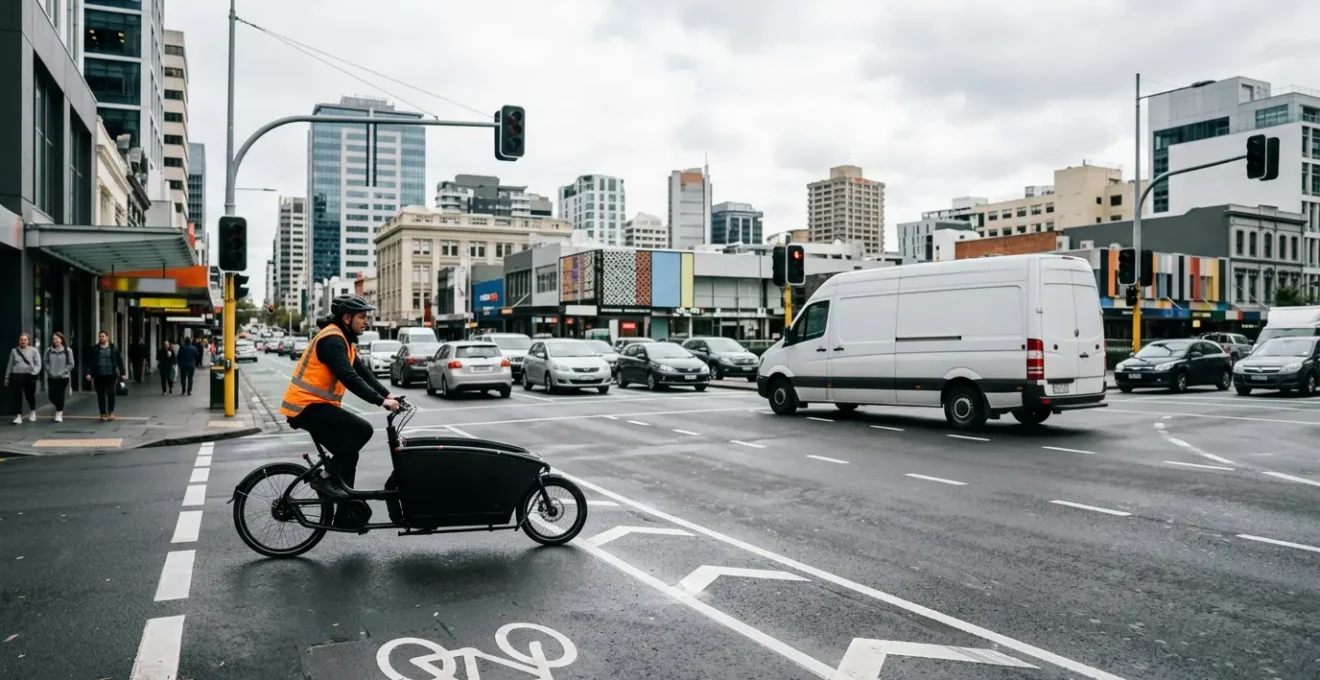
The debate isn’t just whether cargo bikes are cheaper—it’s that delivery vans are fundamentally inefficient for dense city logistics.
- Vans lose the last-mile race due to ‘dead time’: urban delivery trucks can spend up to 80% of their route stationary, erasing any on-road speed advantage.
- E-cargo bikes boost operational density, achieving up to 28% more deliveries per hour by maximizing ‘curb-to-door velocity’ and bypassing congestion entirely.
Recommendation: Analyze your delivery routes not by distance, but by time spent stationary. This hidden inefficiency is where you’ll find the budget to fund a more agile and profitable cargo bike fleet.
As a business owner, you watch your delivery vans crawl through downtown traffic and burn money while drivers hunt for non-existent parking. You’ve heard the buzz about cargo bikes, but the question remains: are they a cute, green-friendly novelty or a serious tool for boosting your bottom line? The common discussion revolves around fuel savings and emissions, but that’s missing the point. The real story isn’t about what you save; it’s about the profound operational advantages you gain.
The core problem with van-based urban logistics is « dead time »—the vast majority of a route spent not moving. This includes circling for parking, sitting in gridlock, and the long walk from a distant parking spot to the customer’s door. This is where vans lose, and where cargo bikes create a powerful competitive edge. This isn’t about simply swapping one vehicle for another. It’s about adopting a new logistics philosophy built for the realities of the modern city, one that transforms dead time into delivery time.
This article provides a data-backed breakdown for business owners, moving beyond surface-level comparisons to reveal the strategic wins. We will dissect the total cost of ownership, navigate the evolving legal landscape, address critical security concerns, and uncover the operational secrets that make a cargo bike fleet not just viable, but significantly more profitable than a traditional van for last-mile delivery.
To help you make an informed decision, this guide breaks down the key operational and financial factors. The following sections provide a clear, data-driven comparison to show where the real advantages lie.
Summary: A Consultant’s Guide to Cargo Bike Logistics vs. Vans
- E-Bike vs. Diesel Van: How Much Do You Save on Maintenance and Fuel?
- Where Can You Park? Legal Pitfalls for Commercial Cargo Bikes
- How to Secure High-Value Goods on an Open Cargo Bike?
- The Charging Mistake That Leaves Riders Stranded Mid-Shift
- When to Provide E-Assist: Preventing Rider Fatigue on Hilly Routes?
- Van vs. Box Truck: Which is Better for Narrow European Streets?
- Why Parking and Insurance Make Owning a Car in the City Cost $800/Month?
- How to Avoid Parking Fines While Maintaining Last-Mile Delivery Speed?
E-Bike vs. Diesel Van: How Much Do You Save on Maintenance and Fuel?
The most immediate and compelling argument for switching to e-cargo bikes is the dramatic reduction in Total Cost of Ownership (TCO). While vans come with a hefty price tag, high insurance premiums, and constant fuel and maintenance bills, cargo bikes operate on an entirely different financial scale. The savings are not incremental; they are transformative. For a business owner, this means freeing up significant capital that can be reinvested into growth.
The numbers speak for themselves. Comprehensive analysis shows a 60-70% lower TCO for electric cargo bikes compared to vans. This isn’t just about swapping diesel for electricity. It encompasses massive savings on maintenance, insurance, parking, and congestion charges. The initial purchase price is a fraction of a commercial van’s, and the day-to-day running costs are minimal. This detailed breakdown illustrates just how stark the difference is over a typical 5-year operational period.
| Cost Category | Vok Cargo Bike (5 years) | Small Van (5 years) |
|---|---|---|
| Total Cost of Ownership | £18,023 | £50,223 (64% more) |
| Annual Maintenance | £250-500 | £5,000-8,000 |
| Fuel/Energy Costs (per 100 km) | €0.50 (electricity) | €12-15 (diesel) |
| Insurance Premium | Much lower risk profile | Exponentially higher for commercial fleets |
| Parking & Congestion Charges | Free (exempt) | High + frequent fines |
This financial advantage directly impacts profitability per delivery. While a van is burdened by high fixed and variable costs, a cargo bike’s lean operational model means each delivery is vastly more profitable. It fundamentally changes the economics of the last mile, turning a high-cost necessity into a low-cost, efficient part of your business.
Where Can You Park? Legal Pitfalls for Commercial Cargo Bikes
A common fear for business owners is navigating the legal grey areas of a new technology. « Where can my riders park? Will they be ticketed? Is this even legal? » Fortunately, cities worldwide are rapidly recognizing the benefits of cargo bikes and creating supportive regulatory frameworks. This move demonstrates a growing understanding of asset agility—the unique ability of a cargo bike to operate where a van cannot.
New York City’s Commercial Cargo Bicycle program is a prime example. Launched as a pilot in 2019 and made permanent after its success, the program established clear rules. It defined maximum dimensions (48 inches wide), allows cargo bikes to use commercial vehicle loading zones, exempts them from parking meter fees, and even created dedicated « Commercial Bicycle Loading Only » zones. The key lesson from NYC was starting with flexible regulations, allowing the city and operators to adapt together, rather than imposing restrictive rules that would stifle innovation. This proactive approach is becoming a global model.
Other cities are following suit with lightweight permit systems. For example, Seattle’s program is designed to be accessible, formalizing the use of cargo bikes in commercial zones. This trend is clear: municipalities are no longer viewing cargo bikes as a problem to be regulated, but as a solution to be enabled. For a business owner, this means the path to legal operation is becoming clearer and more streamlined every year, reducing the risk of fines and ensuring riders can operate efficiently and confidently.
How to Secure High-Value Goods on an Open Cargo Bike?
The thought of putting high-value goods in an open-air vehicle is a major source of anxiety for any business owner. However, modern cargo bike security is a multi-layered system that combines physical deterrents with advanced tracking technology, making them a surprisingly secure option. It’s not about leaving things to chance; it’s about implementing a robust protocol.
The first layer of defense is often invisible. Discreetly installed GPS trackers provide real-time location data and can trigger alarms if a bike leaves a designated area. This technology is a powerful tool for both theft prevention and asset recovery.
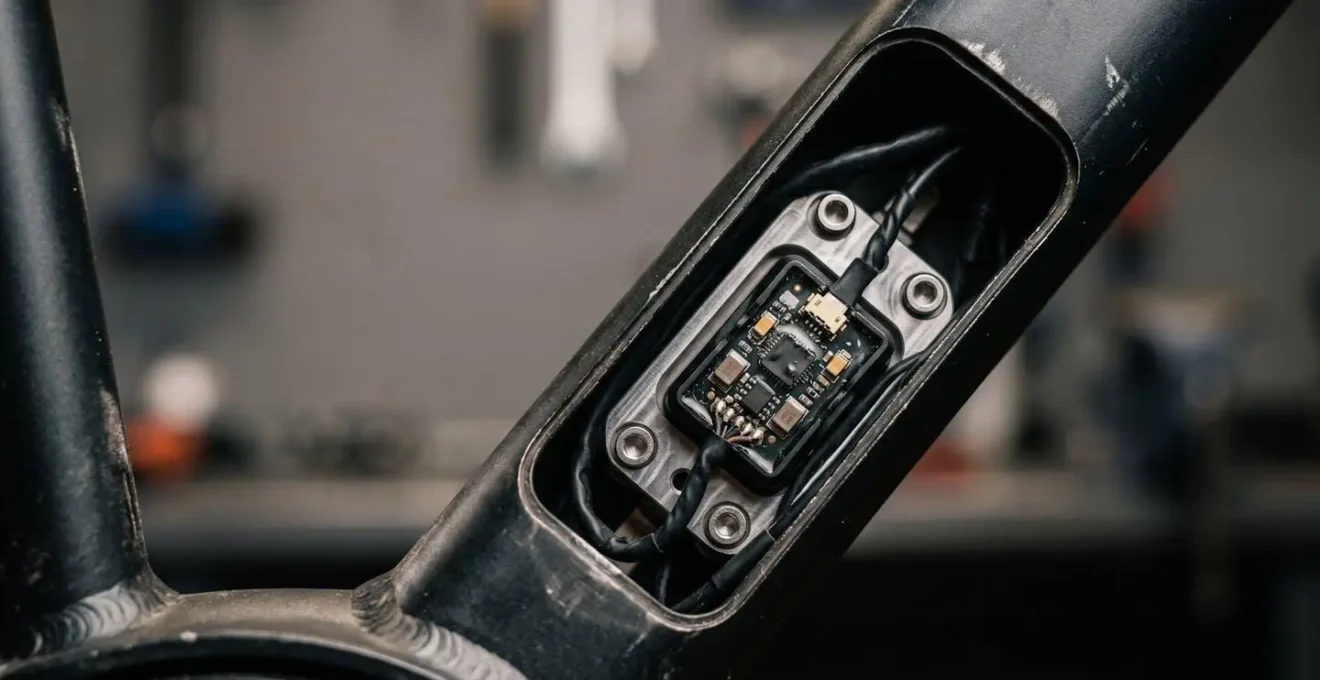
As the image shows, these devices can be concealed within the bike’s frame, making them nearly impossible for a thief to find and remove quickly. But technology is only part of the solution. A comprehensive security strategy combines digital surveillance with physical locks, smart operational procedures, and proper insurance. By following a clear, step-by-step protocol, you can significantly mitigate the risk of theft and protect your valuable assets.
Action Plan: 5-Layer Security Protocol for High-Value Cargo
- Pre-Deployment: Install a concealed GPS tracker with tamper-proof bolts inside the bike’s frame (like the seat tube or bottom bracket) to prevent easy removal.
- Active Monitoring: Enable geofencing alarms that send instant notifications if a bike exits its designated delivery zone, with real-time tracking accurate to a few meters.
- Visible Deterrent: Use a heavy-duty, high-security rated U-lock to immobilize a wheel during every stop, visibly signaling that the bike is well-protected.
- Insurance Verification: Work with your insurer to get goods-in-transit coverage that specifically includes theft from ‘non-enclosed vehicles,’ leveraging your GPS tracking data for a potential premium reduction.
- Final 50 Feet Protocol: Train riders to maintain visual contact with the bike during the final handover, use digital delivery confirmation with a photo, and never leave high-value items unattended.
The Charging Mistake That Leaves Riders Stranded Mid-Shift
An electric cargo bike with a dead battery is useless. The most common charging mistake isn’t forgetting to plug it in; it’s failing to account for external factors that dramatically affect battery performance, chiefly weather. A business owner focused on operational reliability must think beyond simple charge cycles and consider environmental variables in their daily planning.
While a quality battery has a long lifespan, its day-to-day performance can fluctuate. A crucial case study from research at Trinity College Dublin highlighted that cold and wet weather significantly reduces battery range and efficiency. Planning a route based on a battery’s ideal performance on a warm, dry day is a recipe for disaster during a winter cold snap. A rider who starts a shift with what appears to be a full charge could find themselves stranded halfway through their route as the cold saps the battery’s power.
This highlights the need for a smarter approach to energy management. It means:
- Route Planning with Weather Data: Your dispatch or routing software should incorporate temperature and weather forecasts to adjust expected range.
- Battery Swapping Strategy: For high-volume operations, having fully charged, warm batteries ready to swap mid-shift can be a game-changer, eliminating downtime.
- Indoor Charging and Storage: Storing and charging batteries indoors at room temperature ensures they start the day at optimal capacity, especially during colder months.
The mistake isn’t technical; it’s strategic. By failing to model these real-world variables, businesses risk costly disruptions and failed deliveries. A proactive energy management strategy is essential for maintaining the high-tempo operations that make cargo bikes so effective.
When to Provide E-Assist: Preventing Rider Fatigue on Hilly Routes?
A cargo bike’s greatest asset is its rider, and managing rider fatigue is critical to maintaining high productivity. The electric-assist feature isn’t just a convenience; it’s a strategic tool for ensuring consistent performance throughout a demanding shift, especially on routes with challenging terrain. Providing the right level of assistance at the right time is key to unlocking the full efficiency of your fleet.
On a flat route, a rider might use minimal assist to conserve battery. But when faced with a steep urban hill, that changes. The e-assist allows the rider to maintain speed and momentum without excessive physical strain, preventing the burnout that leads to slower delivery times and longer breaks.
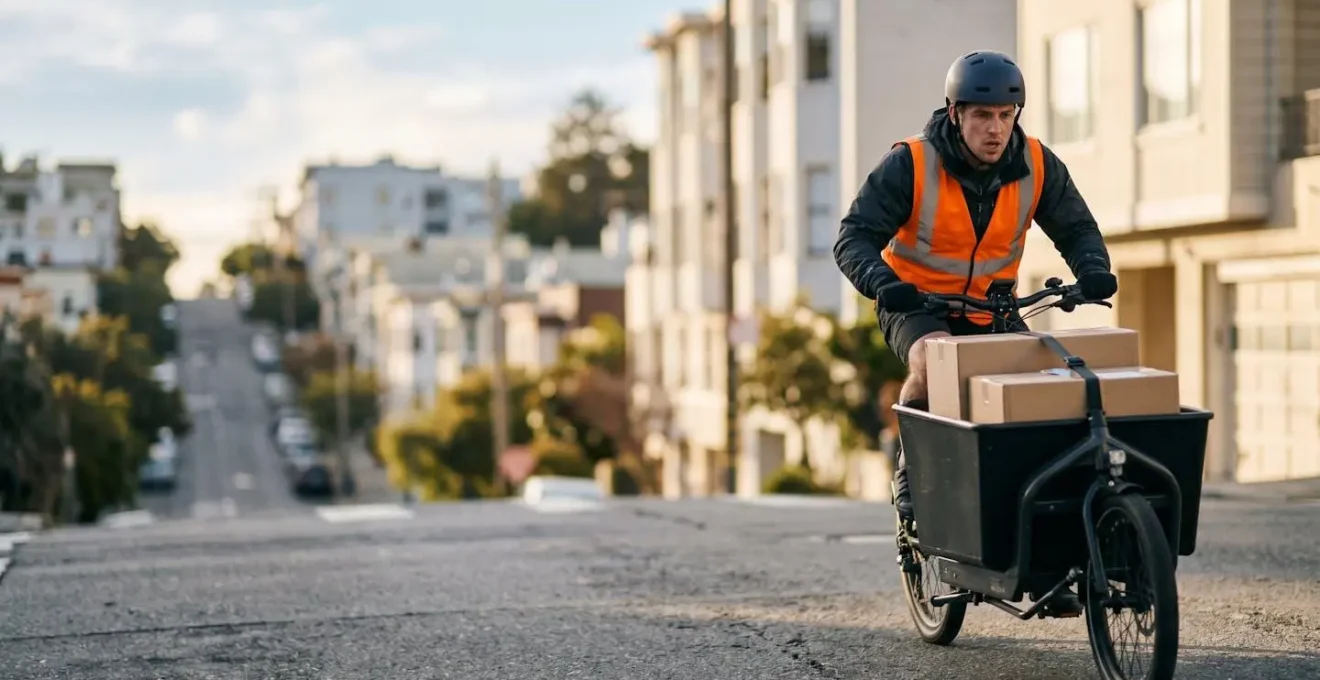
As this rider demonstrates, the goal is controlled exertion, not exhaustion. This is where the data becomes compelling. Because riders can maintain a consistent pace regardless of terrain, their overall output is significantly higher. In fact, operational efficiency studies demonstrate that cargo e-bikes can perform 28% more deliveries per hour than vans. This advantage is directly tied to the bike’s ability to keep the rider in an optimal performance zone, and e-assist is the primary tool for achieving that. It flattens the hills, fights the headwinds, and turns a potentially exhausting route into a highly productive one.
The decision of « when to provide e-assist » is simple: empower riders to use it whenever needed to maintain a steady, sustainable pace. The return on that energy investment is a dramatic increase in delivery throughput and a healthier, more effective workforce.
Van vs. Box Truck: Which is Better for Narrow European Streets?
The question of whether to use a van or a small truck for navigating tight urban corridors is becoming the wrong one to ask. The real answer, as pioneering logistics companies are discovering, is often neither. The most effective solution is an integrated system that uses larger vehicles as mobile warehouses and deploys cargo bikes for the final, difficult leg of the journey. This is the micro-hub synergy model.
The potential is massive. According to recent European urban logistics research, up to 50% of all motorized trips for goods transport in cities could be shifted to cargo bikes. This isn’t about replacing every van, but about using the right tool for the right job.
UPS’s micro-hub strategy in dense European cities provides the perfect case study. Instead of trying to force vans down narrow, congested streets, UPS positions central containers—functioning as mini distribution centers—in strategic locations. Delivery vans arrive at these hubs to drop off bulk shipments. From there, a fleet of cargo bike riders collects the packages for the final-mile delivery. The van acts as a mothership, and the bikes as a nimble, efficient delivery swarm. This « hub-and-spoke » model solves the narrow street problem by removing the van from the most inefficient part of its route. It leverages the van for its strength (long-haul capacity) and the cargo bike for its agility (navigating dense urban cores).
For a business owner, this means rethinking the role of your existing van. It might not be a delivery vehicle anymore, but a mobile base of operations that supports a more efficient, bike-based delivery team.
Why Parking and Insurance Make Owning a Car in the City Cost $800/Month?
The sticker price of a commercial van is only the beginning of its financial burden. The true, crippling costs are hidden in the operational inefficiencies of using it in a city. The single biggest factor is parking, which isn’t just about fines or fees; it’s about the colossal amount of time wasted. This is the « dead time » that silently kills your profitability.
The numbers are staggering. Groundbreaking Urban Freight Lab research revealed that delivery trucks spend about 80% of their route time parked, not moving. Let that sink in. For every hour your driver is on their route, 48 minutes are spent stationary—idling in traffic, circling for a parking spot, or parked (often illegally) while the driver walks a long distance to the drop-off point. You are paying for a vehicle and a driver to simply wait.
This is the dead time that cargo bikes transform into productive delivery time. A bike can pull right up to the building entrance, eliminating the search for parking and the long walk to the door. This dead time transformation is the secret weapon of bike-based logistics. While a van is stuck, a bike is delivering. This is compounded by the astronomical costs of commercial insurance for van fleets and the constant drain of maintenance, which can run into thousands annually per vehicle. In contrast, an e-bike’s maintenance is simple and inexpensive.
When you factor in the cost of wasted driver hours, parking fines, congestion charges, and high insurance premiums, the true cost of operating a van in the city skyrockets. It’s a model that is fundamentally broken for the last mile.
Key Takeaways
- Cargo bikes offer a 60-70% reduction in Total Cost of Ownership (TCO) compared to diesel vans.
- The biggest inefficiency of vans is « dead time, » spending up to 80% of their route parked or in traffic.
- Cities are actively creating supportive legal frameworks, including dedicated parking zones, to enable commercial cargo bike use.
How to Avoid Parking Fines While Maintaining Last-Mile Delivery Speed?
The ultimate measure of delivery efficiency is not top speed on an open road, but curb-to-door velocity—how quickly you can get a package from your vehicle to the customer’s hands. This is where cargo bikes create an insurmountable advantage, rendering vans slow and inefficient by comparison. By eliminating the friction points of parking and walking, they not only avoid fines but also drastically increase the number of deliveries possible per hour.
As expert Giacomo Dalla Chiara of the University of Washington’s Urban Freight Lab notes, the advantage is structural: « cargo bikes can typically be ridden much closer to the package delivery destination, resulting in less walking — the bike can complete more of each delivery trip’s distance than a typical van or truck ». This simple fact has profound consequences for overall speed. A comparative study documented that cargo bike routes were, on average, 30% shorter in distance with a 45% faster average speed in a dense city like Brussels (16 km/h vs. 11 km/h for the van).
This increased speed isn’t from reckless riding; it’s from relentless forward progress. While a van driver is looking for a spot, the bike rider is already at the door. To further enable this, cities like Boston are innovating with policies to create « small vehicle loading zones. » During its pilot program, Boston designated specific curb areas for cargo bikes, giving them a legal and convenient place to operate without fear of tickets. This official recognition completely removes the parking dilemma from the equation.
For a business owner, this translates directly to the bottom line. Faster deliveries mean more deliveries per shift. No parking fines means no unexpected costs. It’s a clear operational win that boosts both efficiency and profitability.
The evidence is clear: for dense urban deliveries, cargo bikes are not just an alternative to vans; they are a superior solution. The shift requires a change in mindset from traditional vehicle-based logistics to a more agile, operationally dense model. By analyzing your own routes for « dead time, » you can uncover the immense opportunity for cost savings and efficiency gains that a cargo bike fleet offers. The next logical step is to pilot a program on a few of your most challenging downtown routes.