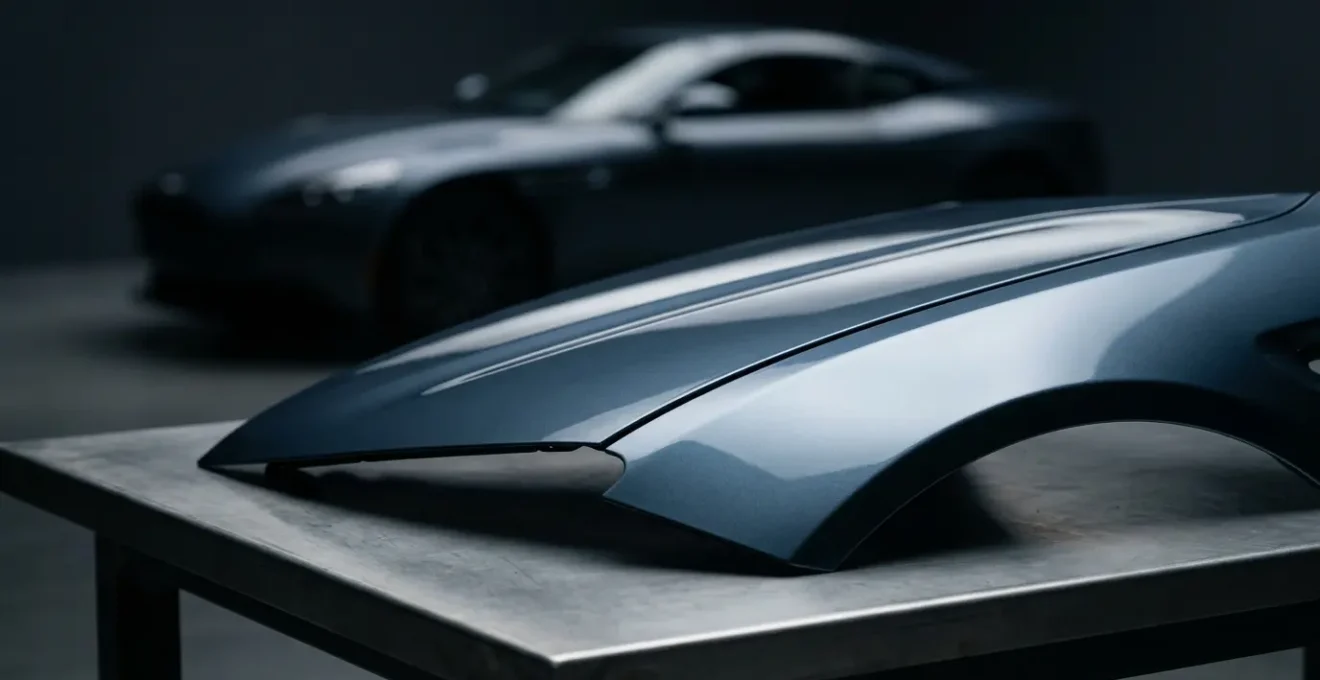
Your insurance company’s push for aftermarket parts is a calculated move to save them money now, at the direct expense of your vehicle’s future value and safety.
- Inferior aftermarket parts actively degrade your car’s structural integrity, weather sealing, and electronic systems, causing hidden long-term costs.
- Original Equipment Manufacturer (OEM) parts are the only way to guarantee the original engineered tolerances for fit, finish, and, most critically, crash performance.
Recommendation: Always demand an itemized repair estimate specifying OEM or OES (Original Equipment Supplier) parts and document everything to protect your investment.
After a collision, the conversation with your insurance adjuster often pivots to one contentious point: parts. They will push for aftermarket components, citing their lower cost. From an appraiser’s perspective, this is a dangerously short-sighted view that prioritizes their quarterly budget over the long-term integrity and value of your vehicle. You, the owner, are left to deal with the consequences—poor fit, premature failure, and a significant hit to your car’s resale value.
The argument for aftermarket parts is built on a foundation of false economy. While they may seem cheaper upfront, they introduce a cascade of problems that lead to what I call « value erosion. » This isn’t just about a panel gap being a few millimeters off; it’s about compromising the entire engineered ecosystem of your car. A headlight that doesn’t seal properly can destroy a $1,000 control module. A bumper that doesn’t absorb impact as designed can lead to more extensive and costly frame damage in the next incident.
This article is not just an argument; it’s a professional briefing. It will provide you with the specific, evidence-based knowledge needed to counter the adjuster’s claims. We will dissect the tangible differences in quality, safety, and long-term cost between OEM and aftermarket parts. The goal is to shift the conversation from a simple price tag comparison to a comprehensive discussion about preserving your vehicle’s intrinsic value and, most importantly, its safety.
By understanding these critical distinctions, you will be equipped to advocate for a proper repair that restores your vehicle to its pre-accident condition, not just in appearance, but in function, safety, and value. This is the standard you must demand.
This guide breaks down the critical arguments and evidence you need. Each section is designed to arm you with a specific piece of knowledge to counter common insurance adjuster tactics and protect your vehicle’s integrity.
Summary: OEM vs Aftermarket: An Appraiser’s Guide to Vehicle Value
- Why « Direct Fit » Aftermarket Lights Often Leave Gaps and Condensation?
- How to Prove Your Oil Filter Didn’t Void Your Engine Warranty?
- OEM vs. OES: How to Buy Genuine Parts for Half the Dealer Price?
- The Crash Test Difference Between Generic Bumpers and OEM Reinforcements
- When to Buy Critical OEM Spares Before They Are Discontinued Forever?
- The « Premium Part » Scam Where Shops Install Budget Brands at OEM Prices
- Local Sourcing vs. Importing: Which Strategy Protects Your Margins During a Crisis?
- How to Spot a Fake « Specialist » Before They Dismantle Your Car?
Why « Direct Fit » Aftermarket Lights Often Leave Gaps and Condensation?
The term « direct fit » is one of the most misleading phrases in the aftermarket industry. When it comes to components like headlights and taillights, the promise of an easy swap often dissolves upon installation. Unlike OEM parts, which are made from the original molds and tooling, aftermarket parts are reverse-engineered. This process inevitably leads to minute imperfections in shape, mounting points, and, most critically, sealing surfaces. The result is uneven panel gaps that cheapen the look of your vehicle and signal a low-quality repair to any future buyer.
More concerning is the failure of these parts to protect against the elements. An OEM headlight assembly is an environmentally sealed unit designed to last for years. Aftermarket versions often use lower-grade gaskets and sealants that break down quickly. This allows moisture to penetrate the housing, leading to the tell-tale condensation you see inside the lens. This isn’t just a cosmetic issue; that moisture can short-circuit expensive LED or Xenon ballast control units, turning a « cheap » headlight into a $1,500 repair.
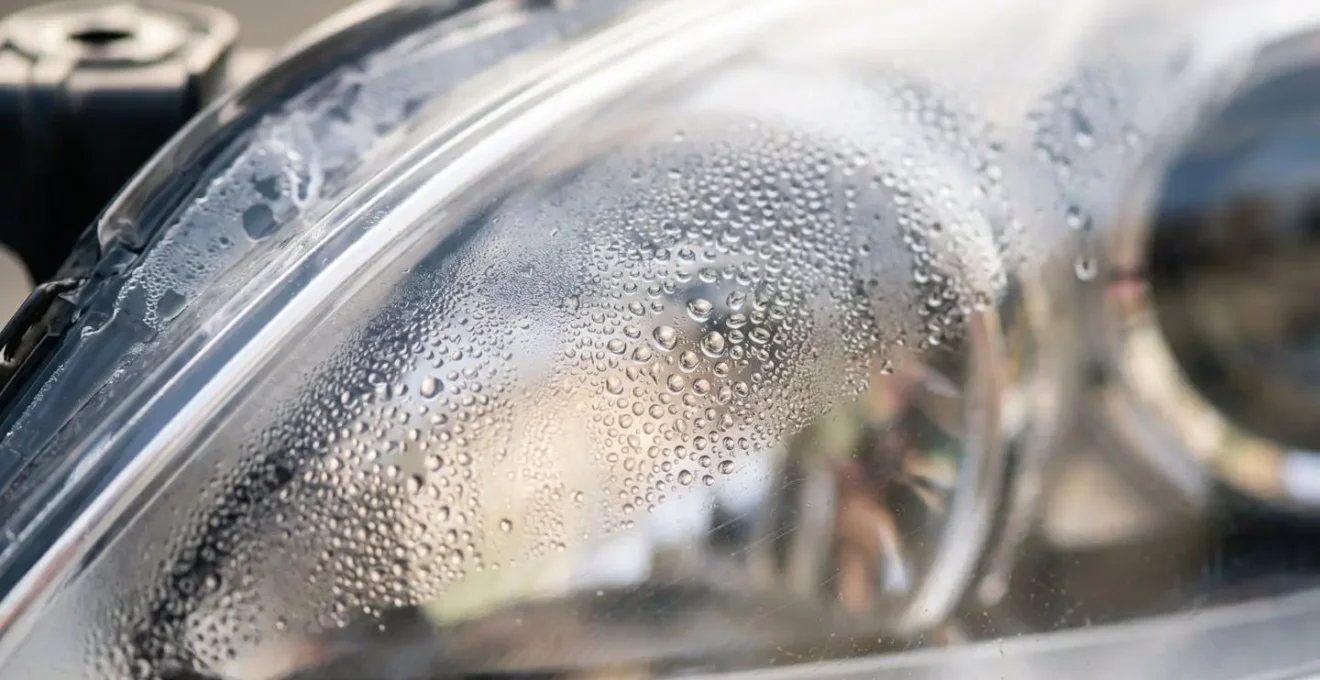
As the BMW F-series headlight condensation case study demonstrates, even a microscopic crack in the housing seal is enough to allow moisture ingress, leading to corrosion and electronic failure. An OEM part is engineered and tested to prevent this; an aftermarket part is simply engineered to look similar at a glance. You are paying for a light, but the hidden cost is the complete lack of quality control and environmental testing, which is a standard part of the OEM development process.
How to Prove Your Oil Filter Didn’t Void Your Engine Warranty?
A common threat used to discourage non-dealer servicing is that using an aftermarket oil filter will void your engine’s warranty. This is fundamentally untrue and is a violation of consumer rights in many countries, most notably protected in the U.S. by the Magnuson-Moss Warranty Act. This federal law explicitly states that a manufacturer cannot require the use of their branded parts to maintain a warranty, unless they provide those parts for free. The burden of proof is not on you to prove the part was good; it’s on the manufacturer to prove the aftermarket part specifically caused the failure.
Simply using an aftermarket or recycled part does not void your warranty.
– Federal Trade Commission (FTC), FTC guidance on Magnuson-Moss Warranty Act
However, knowing your rights is only half the battle. To effectively defend against a denied claim, you must be meticulous with your documentation. An adjuster or dealership service manager will look for any gap in your records to shift blame. If they claim your chosen oil filter led to engine damage, you must be prepared to present a clean, undeniable service history. This documentation is your shield against false accusations and protects the value of your manufacturer’s warranty, which is a significant asset of your vehicle.
Action Plan: Building Your Warranty Defense File
- Save the Part Packaging: Keep the filter box with the brand name and part number clearly visible.
- Retain Purchase Receipts: Keep the dated receipt showing where and when you bought the part. Digital or paper copies are both valid.
- Document the Service: Record all maintenance in a log with dates and mileage. Keep detailed, dated receipts that list all parts and fluids used.
- Take Time-Stamped Photos: A quick photo of the new filter installed in your engine bay can serve as powerful visual evidence.
- Understand the Burden of Proof: Remember, the manufacturer must provide a detailed technical report proving the specific failure of the aftermarket part caused the engine damage.
OEM vs. OES: How to Buy Genuine Parts for Half the Dealer Price?
The debate isn’t always a binary choice between expensive « dealer » parts and cheap aftermarket copies. There is a third category that savvy owners and independent specialists rely on: Original Equipment Supplier (OES) parts. Understanding this distinction is key to getting the highest quality repair without paying the full dealer markup. An OES is the company that originally manufactured the part for the carmaker (e.g., Bosch for fuel injectors, ZF for transmissions, Hella for lighting).
Here’s the critical difference:
- OEM (Original Equipment Manufacturer): This is a genuine part sold in a car-branded box (like a BMW box). It is identical to the part your car was built with. Insurers know that, according to bodies like the Property Casualty Insurers Association of America, OEM parts can cost up to 60% more than aftermarket equivalents, which is their sole motivation for denying them.
- OES (Original Equipment Supplier): This is the exact same part, made on the same assembly line by the same company, but sold in the supplier’s own box (e.g., a Bosch box). The only difference is the absence of the car manufacturer’s logo.
For non-cosmetic parts, insisting on OES components is a powerful compromise in a dispute with an insurer. You are not accepting an inferior, reverse-engineered part. You are accepting the identical, genuine component, often for 30-50% less than the OEM-branded equivalent. As industry analysis confirms, the primary difference is the logo. By specifying OES, you demonstrate a commitment to quality while also showing a willingness to control costs, which can break a deadlock with an adjuster.
The Crash Test Difference Between Generic Bumpers and OEM Reinforcements
The most compelling argument against aftermarket structural parts has nothing to do with aesthetics and everything to do with physics. Your car’s bumper covers are cosmetic, but the steel reinforcement beam behind them and the connecting crush structures are critical safety components. They are part of the vehicle’s engineered crumple zone, designed to deform in a specific, controlled way to absorb crash energy and protect the occupants.
OEM reinforcement bars are made from specific grades of high-strength steel with precise thicknesses and engineered failure points. Aftermarket manufacturers, focused on cost, often use cheaper, lower-grade steel and may not replicate the complex internal structures. This has a dramatic effect on crashworthiness. An inferior bumper beam may not absorb energy correctly, transferring more force to the vehicle’s frame and, ultimately, to the people inside. This can turn a repairable collision into a total loss or, worse, a survivable crash into a fatal one.
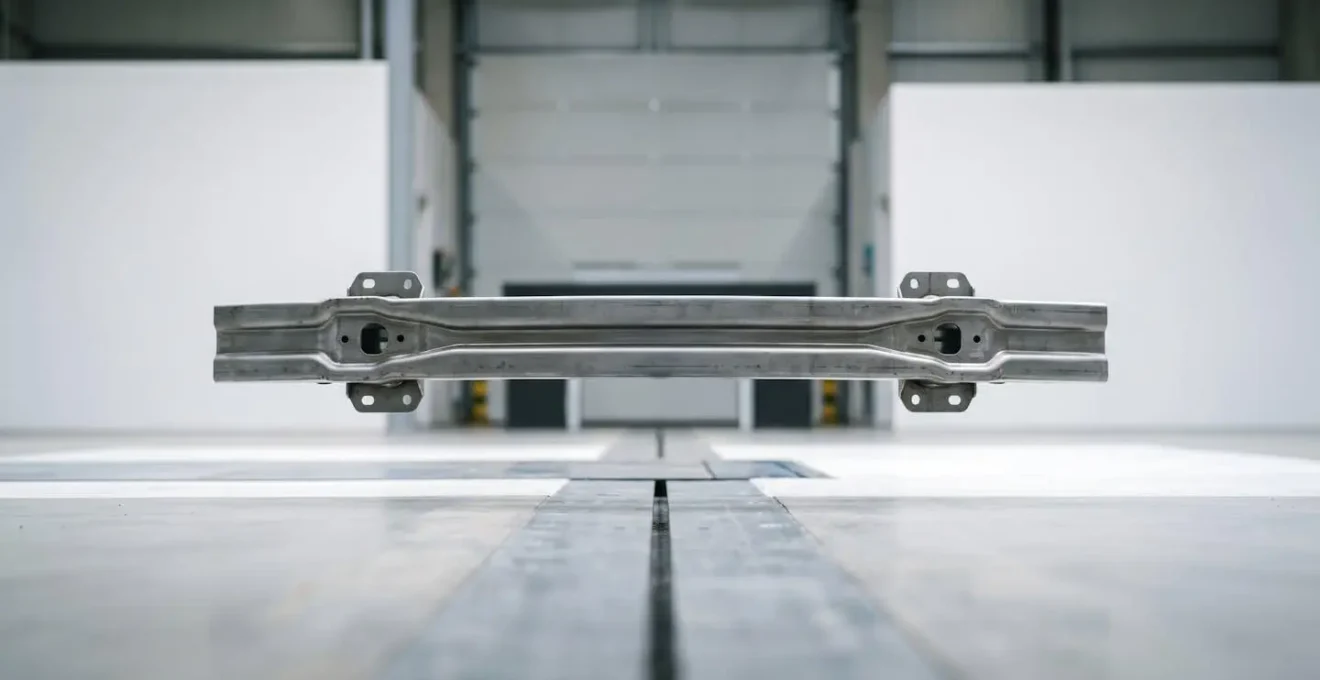
This isn’t speculation. The Insurance Institute for Highway Safety (IIHS) has studied this very issue. In IIHS crash tests of Honda Fit vehicles comparing OEM to aftermarket structural parts, they emphasized that for a vehicle to maintain its safety rating, any replacement part must exactly replicate the original’s material and design specifications. Using a non-compliant part invalidates the original crash test rating your car was given. When an insurer pushes for a generic bumper reinforcement, they are not just saving money; they are actively compromising your vehicle’s documented safety systems.
When to Buy Critical OEM Spares Before They Are Discontinued Forever?
For owners of older, specialty, or low-production vehicles, there’s another dimension to the parts debate: availability. Manufacturers are typically obligated to supply replacement parts for a set period, often around 10 years after a model ceases production. After that, they can discontinue them at any time. As vehicles age, the supply of new OEM parts dries up, and owners are forced into the aftermarket or used-part markets, where quality is a lottery.
This creates a strategic imperative for discerning owners. If you plan to keep a vehicle for the long term, it is wise to identify and purchase critical, model-specific OEM parts while they are still available. These are not wear-and-tear items like brakes, but components that are unique to your vehicle and have a high likelihood of failure or damage over time. This includes things like unique electronic modules, specific trim pieces, complex sensors, or even body panels for cars prone to rust.
Think of it as purchasing insurance for your car’s future. Buying a new, OEM electronic control unit and keeping it on a shelf might seem excessive, but it can be the difference between a future repair and having your car permanently taken off the road because a vital, no-longer-produced part has failed. This proactive sourcing is the ultimate way to protect your car’s value, ensuring its originality and serviceability for decades to come, completely independent of the fluctuating quality of the aftermarket.
The « Premium Part » Scam Where Shops Install Budget Brands at OEM Prices
One of the most insidious practices in the repair industry is parts fraud. An unscrupulous shop might provide an estimate that lists OEM or high-quality OES parts, charge you accordingly, but then install cheap, low-grade aftermarket components and pocket the difference. For the average car owner, spotting this bait-and-switch is nearly impossible, as the new part often looks superficially similar to the old one.
This scam not only robs you financially but also leaves your vehicle with the same performance, safety, and value-erosion issues associated with low-quality parts. As the Edmunds automotive team notes, the lines can be blurry as some parts are even made by the same suppliers but sold under different quality tiers. It is your right and responsibility to verify you are getting exactly what you paid for. An honest shop will have no issue with transparency; a dishonest one will create excuses.
You must be your own advocate. Before authorizing a repair, you need a clear verification strategy. This involves setting expectations upfront and knowing what to look for when you inspect the final work. The following verification steps are non-negotiable when dealing with a new or untrusted repair facility.
- Demand Old Parts: Before work begins, state in writing that you want all old parts returned to you. This allows for a side-by-side comparison.
- Request an Itemized Invoice: The final bill should list specific part numbers, not generic descriptions like « alternator » or « control arm. »
- Inspect the New Parts: Look for manufacturer stamps (e.g., « FoMoCo » on Ford parts) or supplier logos (e.g., Bosch, Hella) on the component itself. Many OEM/OES parts also have holograms or QR codes on the box or part.
Local Sourcing vs. Importing: Which Strategy Protects Your Margins During a Crisis?
Once you’ve won the argument for using genuine parts, the next logistical question is sourcing. The choice between buying from a local dealer versus importing from an online distributor (like RockAuto or specialized European parts suppliers) depends entirely on the urgency and nature of the repair. There is no single right answer, only a strategic choice based on time, cost, and risk.
For urgent repairs where the vehicle is undrivable, the local dealer is often the only viable option. You pay a premium for immediate availability. For planned maintenance or non-critical repairs, however, importing OES parts can yield significant savings, even after accounting for shipping and potential import duties. This requires planning, as shipping can take anywhere from a few days to a couple of weeks.
The following table, based on an analysis of auto parts sourcing strategies, breaks down the trade-offs. This is the kind of calculation a professional fleet manager or independent shop owner makes every day. Understanding it allows you to make an informed decision that balances cost and downtime, protecting your wallet without compromising on quality.
| Factor | Local Dealer Sourcing | Online Importing (RockAuto/EU Distributors) |
|---|---|---|
| Part Price | OEM list price (highest) | 30-50% lower than dealer |
| Availability | Immediate to 1-3 days | 5-14 days shipping time |
| Shipping Costs | None or minimal | Variable, can add 10-20% |
| Import Duties | Not applicable | May apply for international orders |
| Best Use Case | Urgent repairs, car undrivable | Planned maintenance, non-urgent |
| Warranty Support | Direct dealer support | Manufacturer warranty, remote support |
Key Takeaways
- Value Over Price: The true cost of a part is measured over its lifetime, including its impact on safety, reliability, and resale value, not its initial sticker price.
- Safety is Non-Negotiable: Aftermarket structural parts are not guaranteed to meet OEM crash-test specifications, posing a direct risk to occupant safety.
- Verification is Mandatory: Always demand itemized invoices with part numbers and inspect the components to ensure you received the quality you paid for.
How to Spot a Fake « Specialist » Before They Dismantle Your Car?
The highest quality part in the world is worthless if it’s installed incorrectly or if it was the wrong diagnosis to begin with. The final piece of the value-protection puzzle is ensuring your vehicle is serviced by a true specialist, not just a general mechanic with a « European Cars » sign. A fake specialist replaces parts until the problem goes away; a real specialist diagnoses the root cause and replaces only what is necessary.
As Tom Torbjornsen, host of America’s Car Show, has pointed out, some aftermarket companies are skilled at reverse-engineering parts. But even a perfectly made part can’t fix a misdiagnosed problem. A true specialist’s value lies in their deep, brand-specific diagnostic knowledge. They invest in manufacturer-specific tools and software (like ISTA for BMW or VCDS for Audi/VW) that allow them to communicate with a vehicle’s complex electronic modules on a level that generic OBD2 scanners cannot. This allows for more accurate fault finding, coding of new modules, and a holistic understanding of the vehicle’s component ecosystem.
Before you let a wrench touch your car, you must vet the technician. A few targeted questions and observations can quickly separate the experts from the imposters.
- Ask About Diagnostic Software: Ask, « What diagnostic software do you use for my car brand? » A real specialist will name brand-specific tools, not a generic « Snap-on scanner. »
- Look for Peer Validation: Search the shop’s name on brand-specific enthusiast forums (e.g., Bimmerpost, Rennlist). Knowledgeable owners are the best source of authentic reviews.
- Observe the Other Patients: A true Porsche specialist’s service bays will be filled with other Porsches, not a random assortment of cars. This is the clearest sign of their focus.
Ultimately, protecting your car’s value is an active process. It requires you to adopt the mindset of an appraiser—questioning every choice, demanding evidence, and prioritizing long-term integrity over short-term savings. When your next repair is due, present your adjuster or service advisor with these facts. Demand the use of OEM or OES parts, require an itemized invoice, and choose a specialist who respects the engineering of your vehicle as much as you do.