The secret to clearing automotive customs faster isn’t found in last-minute fixes, but in building a proactive logistics system that anticipates and neutralizes delays before they occur.
- Proactive tariff classification and binding rulings prevent costly holds and duty miscalculations.
- Data-driven freight selection based on Total Landed Cost, not just transit time, optimizes both budget and reliability.
- Focusing on a supplier’s Total Cost of Ownership (TCO) over their unit price eliminates hidden expenses from documentation errors and delays.
Recommendation: Implement a unified supply chain visibility platform to shift from reactive tracking to proactive « management by exception, » giving you control over multi-carrier shipments.
For an automotive import/export manager, there are few things more frustrating than seeing a critical shipment of transmissions or ECUs stuck in customs. Production lines are waiting, schedules are crumbling, and the pressure mounts. You’ve followed the standard advice: fill out paperwork diligently, communicate with your broker, and hope for the best. Yet, delays persist, eating into margins and damaging your reputation for reliability. These reactive measures are no longer sufficient in today’s volatile supply chain environment.
The common wisdom focuses on fixing problems as they arise. But what if the entire approach is flawed? The true cost of customs issues isn’t just the demurrage fees or the angry calls from production; it’s the systemic inefficiency that bleeds money and opportunity at every step. The key to unlocking faster clearance times without resorting to costly expedited services lies in a fundamental shift in mindset. It’s time to move beyond transactional problem-solving and build a resilient, data-driven logistics system.
This requires viewing your supply chain not as a series of independent events, but as an interconnected ecosystem. The real leverage is found in making strategic, upstream decisions that prevent downstream catastrophes. This guide provides a pragmatic framework for doing just that. We will deconstruct the five most critical choke-points in automotive logistics and provide actionable strategies to transform them from liabilities into competitive advantages. By focusing on proactive control, predictive monitoring, and a total-cost approach, you can build a system that clears customs faster by design, not by chance.
This article will explore the key pillars for building this resilient system, providing a clear roadmap for any logistics manager aiming to achieve operational excellence. The following sections break down the essential strategies you can implement immediately.
Summary: How to Clear Automotive Customs 3 Days Faster Without Paying Expedited Fees?
- Why Your Tariff Classification Could Be Costing You 6% Extra per Shipment?
- Air Freight vs. Sea Freight: Which Is Best for Heavy Transmission Batches?
- How to Track Multi-Carrier Shipments Without Logging Into 5 Different Portals?
- The Packaging Mistake That Destroys 15% of Sensitive ECUs During Shipping
- When to Reroute Your Supply Chain: Signs a Port Is About to Become a Bottleneck
- FOB vs. CIF: Which Incoterm Protects You When Cargo is Delayed?
- Why Cheap Suppliers Are Actually Costing You $5,000 a Month in Delays?
- How to Choose a Freight Forwarder That Won’t Ghost You During a Crisis?
Why Your Tariff Classification Could Be Costing You 6% Extra per Shipment?
Tariff classification is often treated as a simple administrative task, but it’s a major strategic lever for cost and speed. An incorrect Harmonized System (HS) code doesn’t just risk a customs hold; it can lead to significant overpayment of duties or, worse, penalties for underpayment. For an import/export manager, the difference between two similar-looking codes can be a 6% duty differential or more. A single error on a high-value shipment can be costly; an analysis shows that this could mean a five-thousand-dollar swing on one shipment. When repeated across hundreds of shipments, these « minor » errors accumulate into a substantial financial drain.
The problem is that many automotive parts are complex and can arguably fit into multiple classifications. Relying solely on a supplier’s or a forwarder’s generic classification is a high-risk gamble. Their priority is movement, not your bottom line. To gain control, you must treat tariff classification as a core competency. This means developing a deep understanding of your products’ technical specifications and how they relate to the official tariff schedules and explanatory notes.
The most powerful tool for achieving certainty is a Binding Tariff Information (BTI) or Binding Ruling. By proactively submitting a request to the customs authority in your import country, you receive a legally binding decision on the correct HS code for a specific product. This decision provides predictability and eliminates the risk of reclassification during clearance.
Case Study: Certainty Through a Binding Tariff Ruling
An automotive parts company importing specialized components into Germany faced constant uncertainty with their HS code. They submitted a BTI request with detailed product schematics. The customs authority issued a ruling assigning HS code 8708.10.00 with a fixed 4.5% duty rate. For the next three years, every shipment of that part cleared without question, as the ruling provided a predictable and legally protected classification, eliminating delays and financial surprises.
A proactive approach also involves auditing your current classifications. Are they consistent with historical customs rulings for similar parts? Do they expose your company to punitive tariffs, such as Section 301 on Chinese goods or Section 232 on steel and aluminum? Answering these questions transforms classification from a reactive headache into a strategic cost-management tool.
Air Freight vs. Sea Freight: Which Is Best for Heavy Transmission Batches?
The choice between air and sea freight for heavy automotive components like transmission batches is more nuanced than a simple speed vs. cost calculation. While air freight offers unparalleled speed, it comes at a significant premium. In fact, recent assessments confirm that air freight costs 12 to 15 times more than sea transportation. For a logistics manager under pressure to control costs, justifying that expense requires a dire emergency, such as preventing an assembly line shutdown. For planned shipments, sea freight is the default for heavy, non-perishable goods.
However, the decision should be based on the Total Landed Cost and risk profile, not just the freight rate. A delayed sea shipment can incur demurrage, storage, and production downtime costs that dwarf the initial freight savings. The key is to build a data-driven model for mode selection. This involves analyzing lead times, inventory carrying costs, and the true cost of a potential delay for each specific part. For high-value, just-in-time components, a hybrid approach combining sea and air might be optimal.
This strategic view of freight selection is a cornerstone of building a resilient supply chain. It moves the conversation from « which is cheaper? » to « which mode delivers the best value and lowest risk for this specific situation? » For example, a client shipping automotive parts from Shanghai to Hamburg achieved a 32% reduction in logistics costs over six months. They did this by switching 60% of their volume from air to sea, using data-driven tools to make decisions based on timeline, budget, and specific product characteristics.

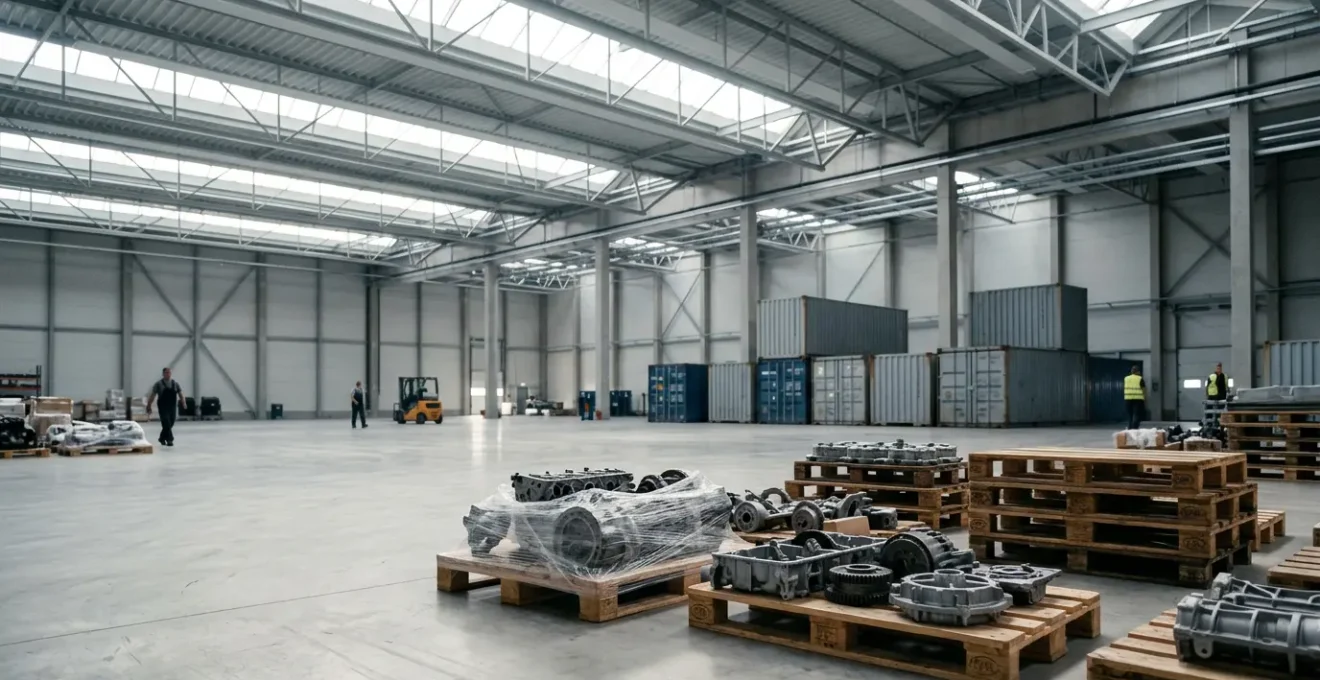
As seen with these heavy-duty components, the material density and value demand a calculated logistics strategy. A robust mode-selection framework might dictate that for a new product launch, air freight is used for the first batch to fill the pipeline, while subsequent replenishment orders are switched to more economical sea freight. This dynamic approach, based on real-time inventory and production needs, is far more effective than a static, one-size-fits-all rule.
How to Track Multi-Carrier Shipments Without Logging Into 5 Different Portals?
For an import/export manager, shipment visibility is a constant battle. You’re juggling carriers, forwarders, and brokers, each with their own tracking portal and update cadence. The time wasted logging into multiple systems to piece together a shipment’s journey is a significant productivity drain. More importantly, this fragmented view is inherently reactive. You only find out about a customs hold or a missed connection after it has already happened, leaving you scrambling to respond. This is not true visibility; it is simply fragmented tracking.
True supply chain visibility provides a single source of truth. Modern visibility platforms like Project44 or FourKites achieve this by integrating with carriers via API, consolidating data across all modes and partners into one dashboard. This shifts the paradigm from « where is my container? » to « what is its status, what are the risks, and what is the predictive ETA? » You can monitor freight from origin to final delivery without the portal-hopping that defines a reactive logistics operation.
The most powerful application of this technology is implementing a « management by exception » workflow. Instead of manually checking the status of every shipment, you configure the system to automatically alert you only when a deviation occurs. This frees up your team to focus on solving problems rather than finding them. You define the rules, and the system monitors for exceptions, such as a container failing to load, an ETA changing by more than 24 hours, or a customs hold notification.
Action Plan: Implementing a Management by Exception Workflow
- Configure Alerts: Set up automated alerts for critical events, such as customs hold notifications, to get immediate information.
- Set Triggers: Establish exception triggers for specific scenarios like « container failed to load » to address issues at the port of origin.
- Enable Notifications: Activate ETA change notifications for any delay exceeding a predefined threshold, such as 24 hours.
- Automate Workflows: Create automated workflows that assign follow-up tasks to the responsible team member when an exception is detected.
- Leverage Advanced Monitoring: Use geofencing and temperature tracking (for sensitive parts) with customizable notification rules for granular control.
By adopting this approach, you transform your role from a shipment tracker to a strategic problem-solver. Your time is spent managing the 5% of shipments that have issues, not the 95% that are on track. This is the foundation of a scalable and resilient logistics operation.
The Packaging Mistake That Destroys 15% of Sensitive ECUs During Shipping
Packaging is one of the most underestimated aspects of automotive logistics, yet it has a direct and significant impact on your bottom line. This is especially true for sensitive electronic components like Engine Control Units (ECUs). Improper packaging—often a result of cutting corners to save a few dollars—can lead to damage from vibration, humidity, or electrostatic discharge. The consequences are severe: returned goods, costly replacements, and potential production line stoppages. Shockingly, industry data indicates that up to 15% of sensitive ECUs are damaged during shipping due to inadequate packaging.
This is a classic example of false economy. Saving $5 on packaging for a $500 ECU is a losing proposition. A pragmatic logistics manager must view packaging not as a cost center, but as an insurance policy. The solution is to develop and enforce a strict packaging standard operating procedure (SOP) for your suppliers, especially for high-value and sensitive parts. This SOP should be non-negotiable and integrated into your supplier agreements.
An effective packaging strategy for ECUs involves multiple layers of protection. This goes far beyond simply putting the component in a box with some bubble wrap. A robust, multi-layered approach is required to protect against the diverse threats encountered during global transit.
A truly advanced strategy includes these critical elements:
- Layer 1: Anti-Static Trays: Use anti-static, thermoformed trays specifically molded to the ECU’s dimensions to prevent movement and electrostatic discharge.
- Layer 2: Vibration Dampening: Apply vibration-dampening foam to absorb the constant micro-vibrations of sea or air transit that can damage solder joints.
- Layer 3: Humidity Protection: Include desiccant packs inside the sealed packaging to protect against humidity and condensation, especially when shipping across different climates.
- Layer 4: Impact Detection: Add shock indicators to the exterior of the packaging. These devices activate if the package is dropped or mishandled, providing crucial evidence for freight claims.
- Layer 5: Customs Documentation: Document the detailed packaging information and materials on the commercial invoice. This level of detail can reduce the likelihood of a physical customs inspection, as it demonstrates a professional and thorough process.
By mandating and auditing these standards, you shift the responsibility upstream to the supplier and significantly reduce the financial and operational impact of in-transit damage.
When to Reroute Your Supply Chain: Signs a Port Is About to Become a Bottleneck
Rerouting a supply chain is a drastic measure, but waiting for a port to become fully congested is a costly mistake. The key to resilience is not reacting to bottlenecks, but anticipating them. A proactive import/export manager must become a student of leading indicators—subtle signals that predict congestion before it makes headlines. Relying on news reports means you’re already too late; the disruption is already underway.
Events like labor strikes, geopolitical tensions, or even government shutdowns can have a swift and dramatic impact on port operations. For instance, historical data from the 2019 U.S. government shutdown revealed a 15 to 20% increase in shipment dwell times due to staff shortages at customs and border patrol. Managers who were monitoring leading indicators had already begun shifting volume to less-affected ports, while reactive managers were caught in the backlog.
Predictive monitoring involves tracking a dashboard of key metrics that act as an early warning system. These are not lagging indicators like « number of ships at anchor, » which confirm a problem that already exists. Instead, they are forward-looking data points that signal rising pressure on the system.
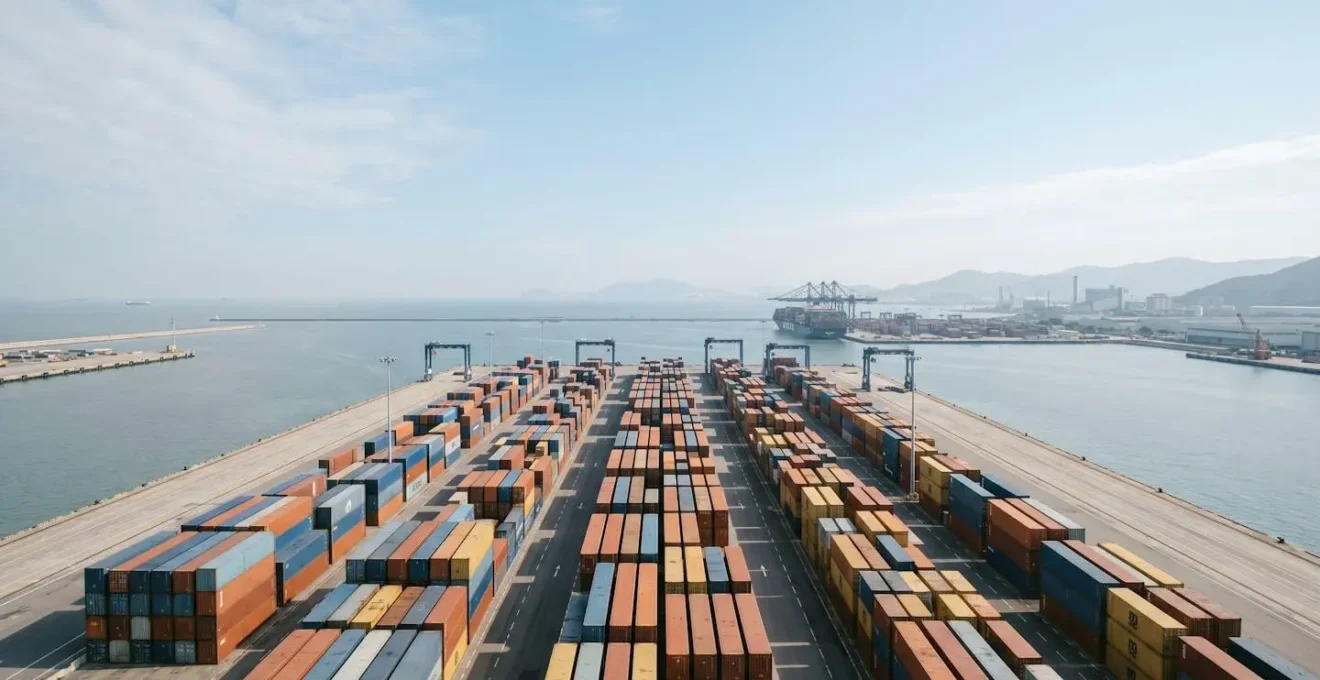
As this overview of a terminal suggests, a port is a complex system with many potential points of failure. To stay ahead of disruption, you should actively track the following leading indicators:
- Vessel Bunching Indexes: Maritime tracking systems provide data on vessel bunching, an early sign that ships are arriving off-schedule and will soon overwhelm terminal capacity.
- Port Dwell Times: Monitor the weekly average dwell times published by port authorities. A steady increase week-over-week is a clear red flag.
- Drayage Turn Times: Analyze the time it takes for trucks to pick up a container and exit the gate. Lengthening turn times indicate terminal yard congestion or labor shortages.
- Labor Negotiations: Keep a close watch on port labor contract expiration dates and the status of negotiations. The mere threat of a strike can cause shippers to front-load cargo, creating preemptive congestion.
- Geopolitical Tensions: Track regional conflicts or political instability near critical shipping lanes (e.g., the Red Sea, South China Sea) that could force carriers to reroute.
By monitoring these data points, you can make an informed decision to reroute cargo to an alternative port or switch to a different freight mode weeks before your competitors are even aware of the impending crisis.
FOB vs. CIF: Which Incoterm Protects You When Cargo is Delayed?
The choice of Incoterms is far more than a contractual formality; it is the single most important decision determining who has control during a logistics crisis. For an automotive import manager, where a single delayed part can halt a production line, maintaining control is paramount. While many buyers default to CIF (Cost, Insurance, and Freight) for convenience, it effectively surrenders control of the main freight leg and customs clearance to the supplier. When a delay occurs under CIF, you are at the mercy of the supplier’s chosen forwarder, who has no direct accountability to you.
The pragmatic solution is to insist on FOB (Free On Board) for all critical or high-value shipments. Under FOB, the buyer assumes responsibility for the main carriage and insurance once the goods are loaded onto the vessel. This means you appoint your own trusted freight forwarder and customs broker. This « control principle » is transformative. Your partners work for you, not the seller. They are motivated to provide clear communication, proactive solutions, and detailed visibility because you are their client.
During a customs hold or port congestion crisis, this direct relationship is your most valuable asset. Instead of chasing a supplier for information, you have a direct line to the people on the ground who are managing the problem. This allows for faster response times and more creative problem-solving. While a newer term like DAP (Delivered at Place) can offer a good middle ground with integrated partners, FOB remains the gold standard for buyers who prioritize control and risk mitigation in volatile supply chains.
The following table breaks down the practical differences in control and visibility for an automotive supply chain manager. The choice directly impacts your ability to manage delays effectively.
| Incoterm | Buyer Control Level | Carrier Selection | Customs Broker Choice | Visibility During Crisis | Best Use Case |
|---|---|---|---|---|---|
| CIF (Cost, Insurance, Freight) | Low | Supplier selects | Supplier selects | Limited – dependent on supplier | Standard purchases from trusted suppliers |
| FOB (Free On Board) | High | Buyer selects | Buyer selects | Full – direct carrier/broker access | High-value or time-critical automotive components |
| DAP (Delivered at Place) | Medium | Integrated logistics partner | Shared decision | Moderate – collaborative approach | Modern automotive supply chains with integrated partners |
As the comparative analysis from logistics experts shows, for industries like automotive manufacturing that are highly vulnerable to delays, choosing an Incoterm where you control the main freight is a critical risk management strategy. It provides superior visibility and a faster, more aligned response during a customs crisis.
Why Cheap Suppliers Are Actually Costing You $5,000 a Month in Delays?
The pressure to reduce procurement costs often leads to selecting suppliers based on the lowest unit price. This is a dangerous trap. In automotive logistics, a « cheap » supplier is often the most expensive partner you have. The initial savings on the part’s price are quickly erased by a cascade of hidden costs stemming from their unreliability and lack of professionalism. These costs manifest as production downtime, premium freight for replacement parts, and excess administrative labor correcting their mistakes.
One of the most common and costly issues is inaccurate or incomplete documentation. Inexperienced suppliers frequently make errors on commercial invoices, packing lists, and certificates of origin. These seemingly small mistakes are a primary cause of customs holds and inspections. Correcting them involves a time-consuming back-and-forth between you, your broker, and the supplier, all while your container sits at the port accruing demurrage fees. In fact, logistics reports confirm a 15-20% error rate in logistics documentation from manual entry alone, a problem far more prevalent with low-cost suppliers who lack automated systems.
A strategic import manager must champion a shift from « unit cost » to a Total Cost of Ownership (TCO) model for supplier evaluation. This framework quantifies the hidden costs associated with a supplier’s performance (or lack thereof). When you calculate the true TCO, the « cheaper » supplier is almost always more expensive in the long run.
To calculate the true cost, you must factor in these common hidden expenses:
- Buffer Inventory: The cost of holding extra safety stock to compensate for a supplier’s unreliable lead times.
- Production Downtime: The massive cost incurred when a delayed part halts an entire automotive assembly line.
- Premium Freight: The expense of air-freighting urgent replacement parts to cover for a delayed sea shipment.
- Manpower Costs: The hours your team spends correcting documentation, chasing updates, and managing the fallout from supplier errors.
- Demurrage & Storage: The fees that accumulate daily while a shipment is held by customs due to incorrect paperwork.
- Customer Penalties: The financial penalties for missing delivery deadlines to your own customers.
When these factors are quantified, a supplier with a 5% higher unit price but a 99% on-time and documentation accuracy rate is vastly more profitable than a cheaper but less reliable alternative.
Key Takeaways
- Proactive Classification Is Profit: Using tools like Binding Tariff Rulings (BTI) transforms customs from a gamble into a predictable, cost-controlled process.
- Control Your Freight, Control Your Fate: Insisting on FOB Incoterms gives you direct control over your broker and forwarder, which is your most powerful tool during a crisis.
- Visibility Is Non-Negotiable: A unified tracking platform enabling « management by exception » is the only way to proactively manage a complex, multi-carrier supply chain.
How to Choose a Freight Forwarder That Won’t Ghost You During a Crisis?
In a stable market, most freight forwarders can move a box from point A to point B. The true test of their value, however, comes during a crisis. When your container is flagged for an intensive customs exam, or a port suddenly becomes congested, a mediocre forwarder will send you a notification and wait for instructions. A great forwarder, however, becomes an active extension of your team, providing solutions, not just updates. Choosing the right partner is arguably the most critical decision for ensuring supply chain resilience.
The selection process must go beyond comparing rates. You are hiring a crisis manager, and your vetting process should reflect that. The key is to simulate a crisis during the interview stage. Instead of asking about their services, present them with real-world scenarios and evaluate the quality and specificity of their response. Their answers will reveal their depth of expertise, their communication protocols, and their technological capabilities.
A forwarder who is truly an expert in automotive logistics will be able to describe their step-by-step process for handling a customs hold, their strategies for mitigating compliance costs during a line stoppage, and their experience with automotive-specific requirements like type approval and emissions certifications. They should also be able to demonstrate the automated alert systems they have in place for critical events. A vague or generic answer is a major red flag.
Consider asking these crisis simulation questions to any potential forwarder:
- Scenario Question: « Our container of ECUs has been flagged for an intensive customs exam. Walk me through your step-by-step response process, from the moment you are notified to the final resolution. »
- Process Question: « How do you help your automotive clients manage compliance costs and the risk of line stoppages when customs issues arise? »
- Communication Question: « What is your exact protocol for updating us during a customs crisis? Define the frequency, the channels you use, and the level of detail we can expect. »
- Technology Question: « Show us the automated alert systems you have for critical events like customs holds or ETA changes that exceed 24 hours. »
Furthermore, look for partners who invest in technology to accelerate processes. For example, some companies are now using automated customs clearance software that can process a declaration in as little as 22 minutes, a 65-fold improvement over manual processes, while achieving 46% cost savings and ensuring compliance.
The next logical step is to audit your current logistics framework against these principles. Begin by evaluating your freight forwarder’s crisis response capabilities and your team’s visibility into multi-carrier shipments to identify the most critical gaps in your supply chain resilience.